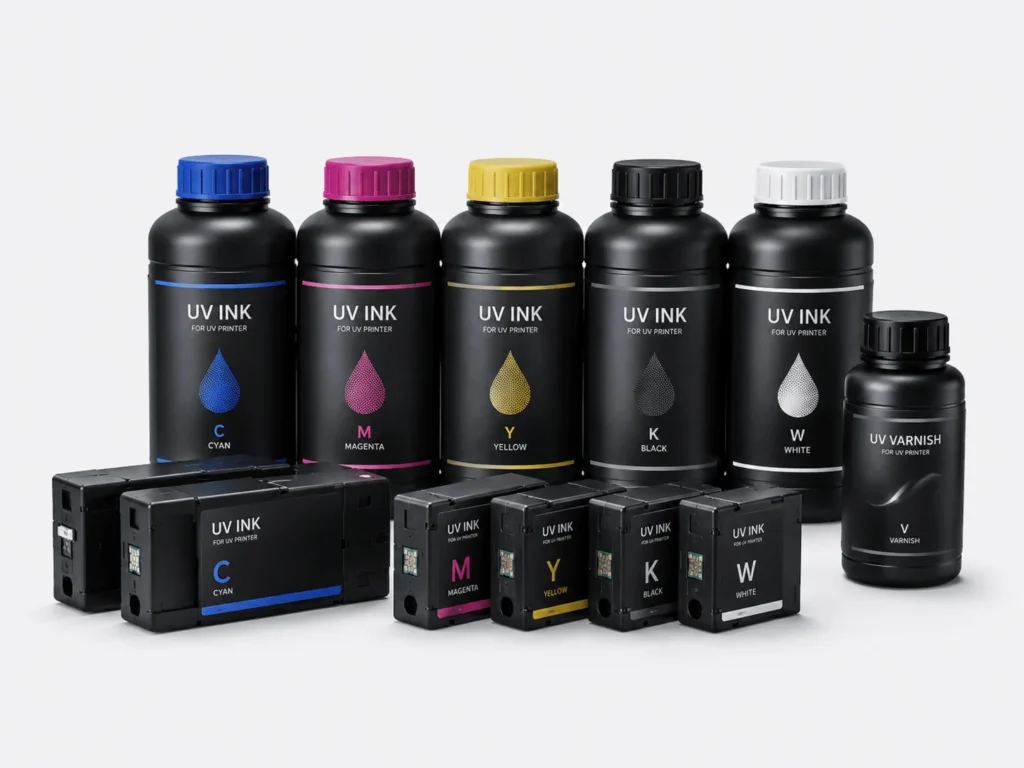
UV LED ink is a special type of ink that uses UV LED light sources for rapid curing. It is widely used in advertising printing, packaging printing, electronic products, industrial marking, glass and ceramics, plastic products, and other fields. Due to differences in product materials, printing effects, application environments, and production processes, standard UV LED ink may not always meet all production requirements. When ordinary ink cannot achieve the required adhesion, color performance, abrasion resistance, or curing speed, customized UV LED ink becomes an important choice for improving printing quality.
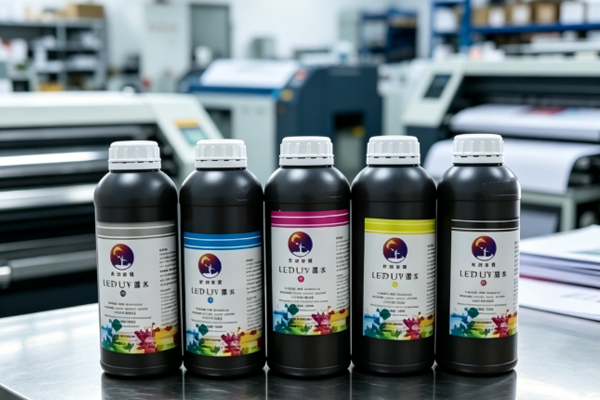
Special Materials Require Customization
During production, different material surfaces have significant differences in structure and properties. Standard UV LED ink may experience problems such as poor adhesion, ink peeling, or cracking. Therefore, when printing on special materials, companies usually need to adjust the ink formula according to the material characteristics, allowing the ink to better bond with the product surface.
Materials with Low Adhesion Require Special Formulations
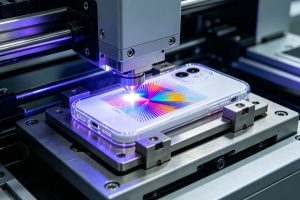
Some materials, such as plastics, metals, acrylic, and glass, have smooth surfaces, making it difficult for ink to naturally penetrate and increasing the risk of ink peeling after printing. When using standard UV LED ink on these products, even if the initial printing effect is good, patterns may become damaged after friction, transportation, or long-term use. Customized UV LED ink can improve the bonding ability between the ink and material by adjusting resin components and adding special additives, making printed patterns more stable. For products such as mobile phone cases, plastic packaging boxes, and metal nameplates, customized ink can enhance surface adhesion performance.
Special Industrial Materials Require Compatible Ink Performance
Some industrial products use materials with special requirements, such as high-temperature resistance, chemical corrosion resistance, and waterproof performance. Standard UV LED ink may not meet the conditions for long-term use. Therefore, applications such as medical equipment housings, industrial components, and electronic component markings require specially developed inks based on actual product environments. Through customization, the ink’s temperature resistance, solvent resistance, and scratch resistance can be optimized, allowing printed results to adapt to more complex operating conditions.
Appearance Requirements Require Customization
Different customers have different requirements for printing effects. Some products not only require clear patterns but also need special colors, gloss levels, or unique visual effects. When standard UV LED ink cannot achieve the desired results, customized ink can help achieve more precise printing performance.
Brand Colors Require Accurate Reproduction
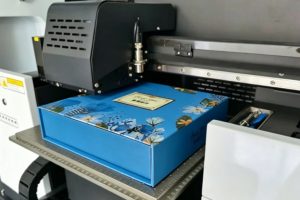
Some companies have strict requirements for color accuracy in product packaging, brand displays, and advertising signs. Standard ink may not fully reproduce the colors in the design file due to differences in pigment ratios, equipment settings, and material colors. Customized UV LED ink can be formulated according to the customer’s color standards, making printed colors closer to the design requirements. Especially in brand packaging, product appearance decoration, and high-end gift customization, color consistency directly affects the product image.
Special Visual Effects Require Ink Adjustment
Some products need to achieve effects such as 3D relief textures, matte finishes, transparency, metallic textures, or high gloss. These special effects usually require specialized ink combined with printing equipment. For example, printing on transparent materials may require customized transparent ink or high-opacity ink. When creating three-dimensional texture effects, the ink leveling properties and curing characteristics need to be adjusted so that the ink layer can maintain a stable structure.
Process Requirements Require Customization
Different companies have significant differences in production processes, including printing speed, curing methods, equipment models, and production environments. If ink performance does not match the production process, it may affect production efficiency and product quality.
High-Speed Production Requires Optimized Curing Speed
Some factories need to complete large volumes of printing tasks every day and have high requirements for production efficiency. If UV LED ink does not cure fast enough, it may slow down production schedules and even cause problems such as pattern contamination and surface sticking. Through customized ink development, the ratio of photoinitiators and the ink formulation can be adjusted to better suit high-speed UV LED equipment, improving curing efficiency and meeting continuous production requirements.
Special Printing Equipment Requires Matching Ink Parameters
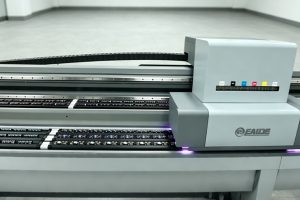
Different brands and models of UV printing equipment vary in print head types, inkjet methods, and droplet control systems. If ink viscosity or fluidity does not meet equipment requirements, it may cause print head clogging, broken printing lines, or unstable colors. Customized UV LED ink can be adjusted according to equipment parameters, allowing better compatibility between the ink and printing system, improving equipment operation stability.
Environmental Requirements Require Customization
The final application environment of a product directly affects ink performance. For example, outdoor products need to withstand sunlight, rain, and temperature changes for long periods, while electronic products may face friction and cleaning agents. Therefore, special application environments usually require targeted ink development.
Outdoor Products Require Improved Weather Resistance
Outdoor advertising boards, signs, architectural decorative materials, and other products are exposed to outdoor environments for long periods. If the ink does not have sufficient UV resistance, problems such as fading and yellowing may occur. Customized UV LED ink can improve weather resistance, extend color retention time, and enhance the ink layer’s ability to withstand environmental changes.
Frequently Used Products Require Improved Abrasion Resistance
Some products frequently come into contact with users during daily use, such as equipment control panels, electronic product housings, and tool markings. If ink abrasion resistance is insufficient, surface patterns can easily wear away. For these products, customization can improve ink hardness and surface protection performance, making printed content more durable.
Frequently Asked Questions
Q1: Does all UV LED printing require customized ink?
Not all applications require customized UV LED ink. If the printing material is common, the usage environment is simple, and there are no strict requirements for color or durability, standard UV LED ink can usually meet the requirements. However, if products involve special materials, high-end packaging, industrial applications, or long-term usage scenarios, customized ink can solve problems that standard ink cannot handle and improve overall product quality.
Q2: What information is required when customizing UV LED ink?
When customers customize UV LED ink, they generally need to provide information such as the printing material type, application environment, equipment model, target color, and performance requirements. For example, when printing on glass, adhesion is a key consideration; for outdoor products, weather resistance is important; for electronic products, abrasion resistance and chemical resistance need to be considered.
Q3: Is customized UV LED ink more expensive?
Since customized ink requires formula adjustments, testing, and performance optimization, its cost is usually higher than standard ink. However, for special products, customized ink can reduce rework, improve product qualification rates, and provide higher value from a long-term production perspective.
Customized UV LED ink is mainly used in situations where standard ink cannot meet product requirements. When printing materials are special, appearance requirements are high, production speeds are fast, or products need to withstand special environments, choosing specially formulated UV LED ink can improve printing stability and product quality. When deciding whether to customize UV LED ink, companies need to evaluate actual production conditions, including material type, printing effect, equipment conditions, and final product applications. If the application is only ordinary decorative printing, standard ink may already be sufficient. However, for high-demand products, customized ink can provide better adhesion, more stable color performance, and longer service life. By selecting the appropriate type of UV LED ink, companies can reduce quality problems during production, improve printing results, and achieve a better balance between product appearance and functional requirements.