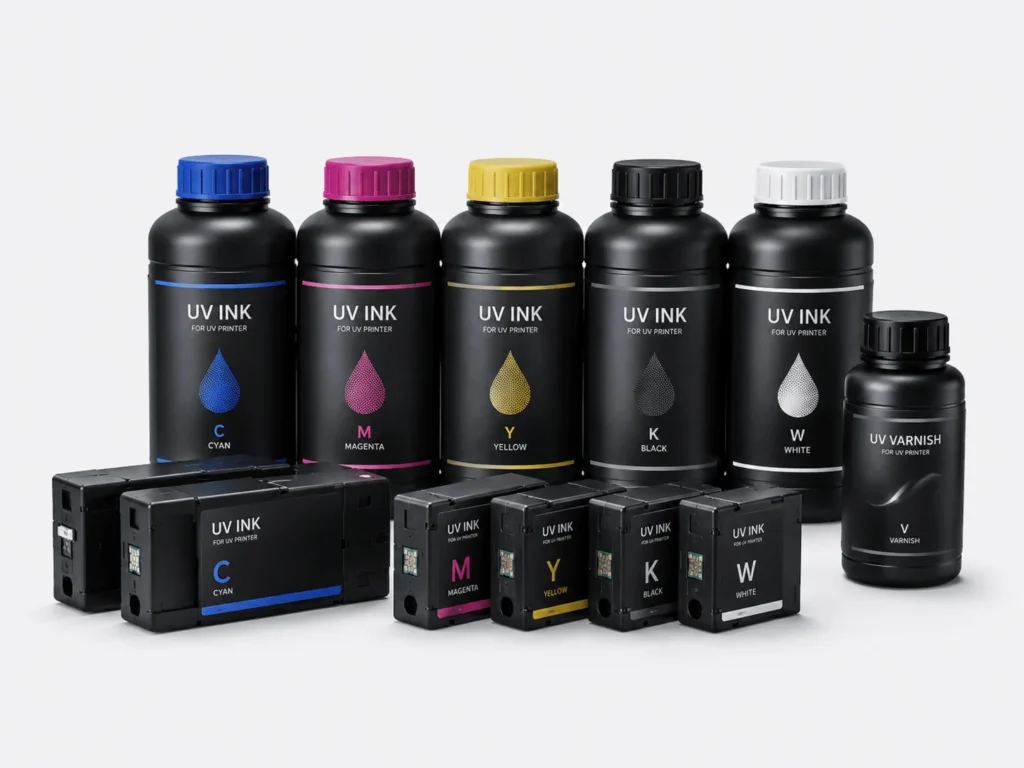
UV LED ink is increasingly used in packaging printing, product surface decoration, advertising printing, industrial marking, and other fields. Different customers have significantly different requirements for color effects. Especially in brand packaging, electronic product housings, high-end gifts, and customized products, color accuracy directly affects product quality. Therefore, precise color matching is a very important step when customizing UV LED ink. By analyzing customer requirements, adjusting ink formulations, testing printing results, and continuously optimizing parameters, the final color can be made closer to the design standard and meet the visual requirements of different products.
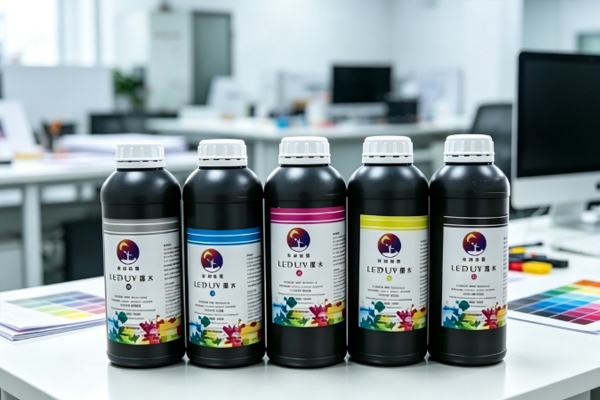
Color Requirement Confirmation
When performing precise color matching for customized UV LED ink, it is necessary to first clarify the customer’s specific color requirements. Since different equipment, materials, and printing environments can affect the final appearance, color matching is not simply about changing color proportions. Instead, it requires establishing a complete color standard.
Determine the Target Color Standard
Before adjusting UV LED ink colors, it is necessary to confirm the desired color effect of the customer. Some customers provide Pantone color numbers, design files, or physical samples, and ink manufacturers can analyze the colors based on these standards.
● Selecting colors according to Pantone color cards provides a clear reference for color formulation.
● Using customer-provided samples allows adjustments based on actual printing effects.
● Analyzing design files helps determine color composition ratios and develop color matching solutions.
By establishing color standards in advance, the number of subsequent tests can be reduced, improving the efficiency of customized UV LED ink color matching.
Analyze the Impact of Printing Materials
Different materials can affect color performance. The same UV LED ink printed on white plastic, transparent acrylic, metal surfaces, or glass materials may produce different visual effects. For example, transparent materials may reduce color saturation, while dark materials may affect ink coverage performance. Therefore, during the color matching process, actual printing materials need to be tested to avoid differences between the printed color and the designed color.
Ink Formula Adjustment
The core step of precise color matching is ink formula optimization. UV LED ink consists of pigments, resins, additives, and other components. Changes in the proportion of different ingredients will affect color performance, glossiness, and the final curing effect.
Adjust Pigment Ratios
The color of UV LED ink is mainly determined by pigments. Different colors require different pigment combinations for formulation. For example, basic colors such as red, blue, and yellow can be mixed in appropriate proportions to create the special colors required by customers.
● Increasing the proportion of a certain pigment can enhance the corresponding color performance.
● Reducing the proportion of a certain pigment can decrease color deviation.
● Adjusting pigment concentration can change the depth of the color.
During the color matching process, pigment ratios need to be continuously tested to ensure that the color reaches the target effect while maintaining ink stability.
Optimize Ink Transparency and Concentration
In addition to the color itself, ink transparency and concentration also affect the final visual effect. If the ink concentration is insufficient, the printed color may appear lighter; if the concentration is too high, it may affect inkjet smoothness. When customizing UV LED ink, the ink concentration needs to be adjusted according to printing requirements, ensuring accurate color presentation without affecting equipment operation. For high-precision printing products, ink fineness and color uniformity are equally important.
Printing Test and Adjustment
After completing the initial formula design, actual printing tests are required to verify the color effect. Colors in the laboratory may differ from those in real production environments, so printing tests are an essential step for achieving precise color matching.
Conduct Sample Printing Tests
Ink manufacturers usually use the customer’s actual printing equipment and materials for testing. The actual printing results are then evaluated to determine whether the color meets requirements.
During testing, the following aspects need to be observed:
● Whether the printed color is close to the target standard.
● Whether the color changes after the ink is cured.
● Whether the surface gloss meets product requirements.
Through sample testing, problems in the formulation can be identified, and further adjustments can be made based on actual results.
Adjust Equipment Printing Parameters
UV LED printing equipment parameters also affect color performance. Factors such as ink volume, printing speed, and curing intensity can change the final color effect. Even when using the same ink, different equipment settings may produce different visual results. Therefore, when customizing UV LED ink, printing parameters need to be adjusted according to equipment conditions to ensure that ink performance matches the equipment status.
Multiple Calibrations Ensure Consistency
Precise color matching is usually not completed in a single step. It requires multiple rounds of testing and adjustment. After each adjustment, samples need to be printed again and compared with the target color. Through repeated calibration, color differences can gradually be reduced, ensuring stable color performance during final production.
Quality Inspection and Control
After completing UV LED ink color matching, quality inspections are still required to ensure that the ink not only has accurate colors but also maintains stable application performance.
Test Color Stability
During mass production, if there are significant color differences between different batches of ink, the overall product appearance will be affected. Therefore, it is necessary to test color variations between different ink batches. Through standardized inspection procedures, UV LED ink used in each production batch can maintain similar colors, preventing inconsistent product appearance.
Test Printing Results
Color accuracy is not only reflected in visual appearance but also in actual printing performance. For example, it is necessary to check whether the ink changes color after curing, whether the surface is uniform, and whether color differences appear. Customized UV LED ink that has undergone complete testing can better meet high-quality printing requirements.
Frequently Asked Questions
Q1: Why are samples required for UV LED ink color matching?
Customer-provided samples help ink manufacturers better understand the target color effect. Different materials and surface treatments can affect color appearance, and it is difficult to completely reproduce actual requirements based only on text descriptions or images. Through sample testing, color deviations can be reduced and the matching accuracy of customized ink can be improved.
Q2: Can UV LED ink completely reproduce the design color?
UV LED ink color matching can achieve the closest possible result to the design color, but the actual effect will still be affected by factors such as materials, equipment, and lighting conditions. To achieve more accurate results, actual printing tests are usually required instead of judging only based on colors displayed on a computer screen.
Q3: How long does customized UV LED ink color matching take?
The color matching time depends on color complexity, the number of tests, and performance requirements. Standard color adjustments can be completed relatively quickly, while special colors and high-precision colors usually require more testing. If customers can provide clear color standards and application requirements, the efficiency of color matching can be improved.
Customized UV LED ink achieves precise color matching through multiple steps, including color confirmation, formula adjustment, printing tests, and quality inspection. Precise color matching is not simply changing the ink color but requires comprehensive adjustments based on product materials, printing equipment, and actual application environments. For ordinary printing requirements, standard UV LED ink may already meet usage needs. However, for applications such as brand packaging, electronic product appearance decoration, high-end decorative products, and industrial marking, color accuracy often directly affects product quality. Therefore, professional color matching through customized UV LED ink can effectively reduce color deviations and improve printing consistency. During production, customers need to provide clear color standards, material information, and application requirements, which can help ink manufacturers complete color matching more efficiently. After professional testing and adjustment, UV LED ink can not only achieve printing effects closer to the target color but also maintain excellent adhesion, curing performance, and production stability, providing reliable protection for product appearance quality.