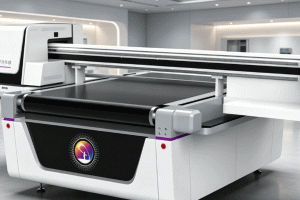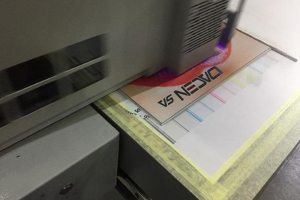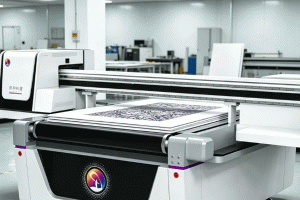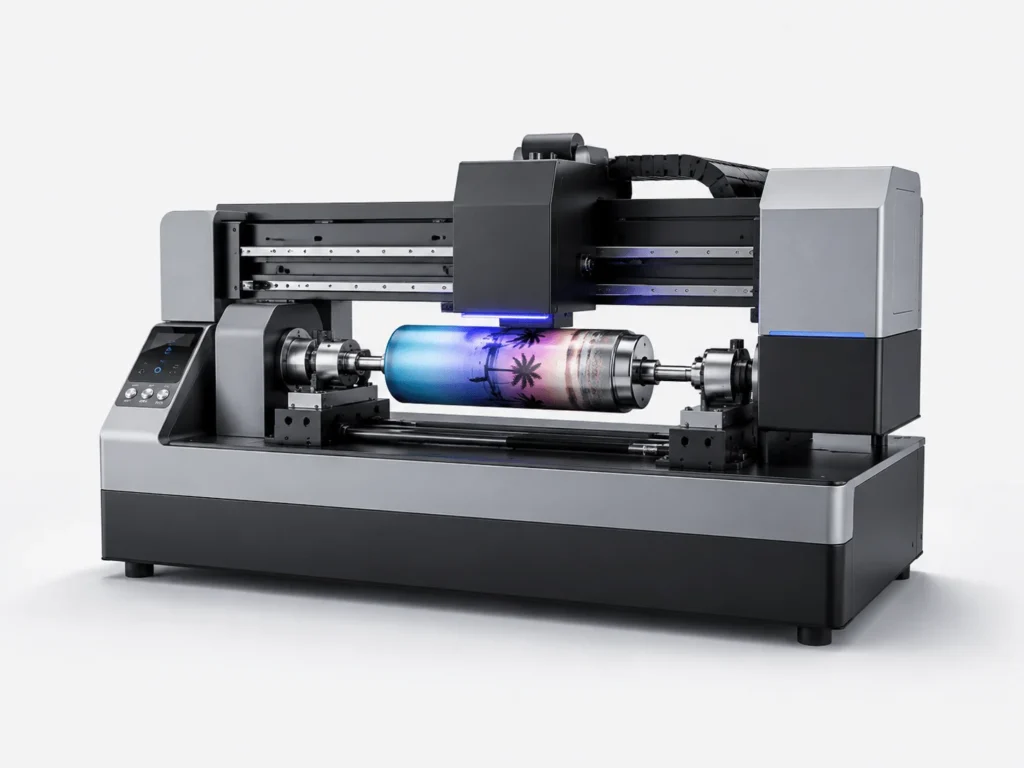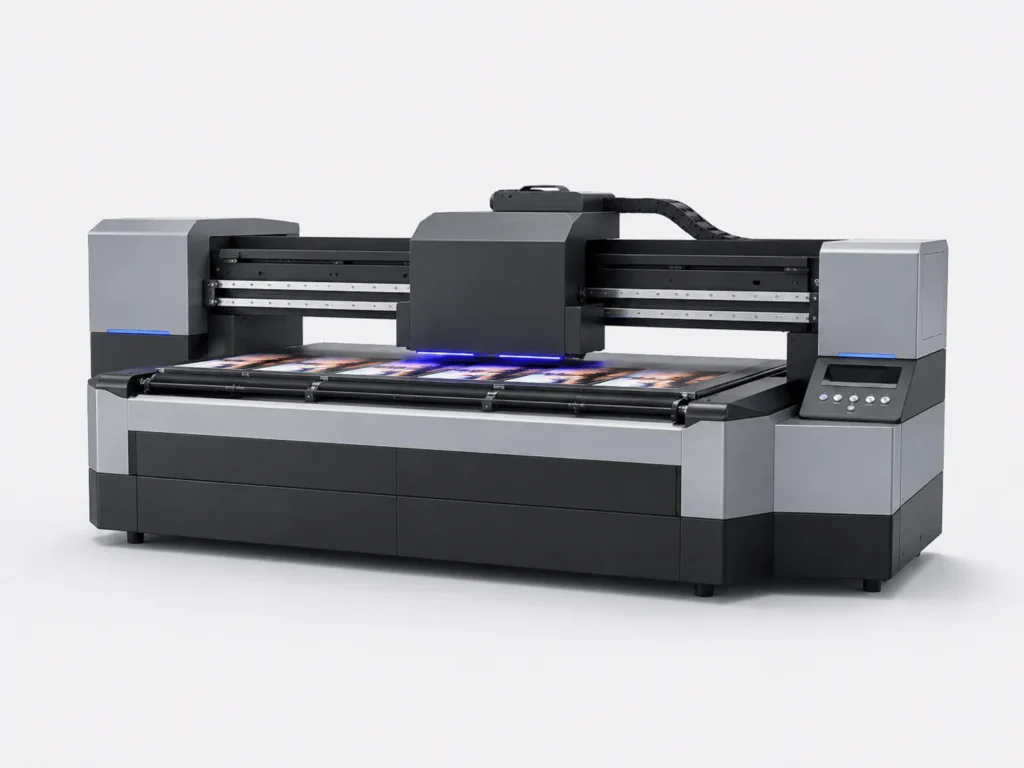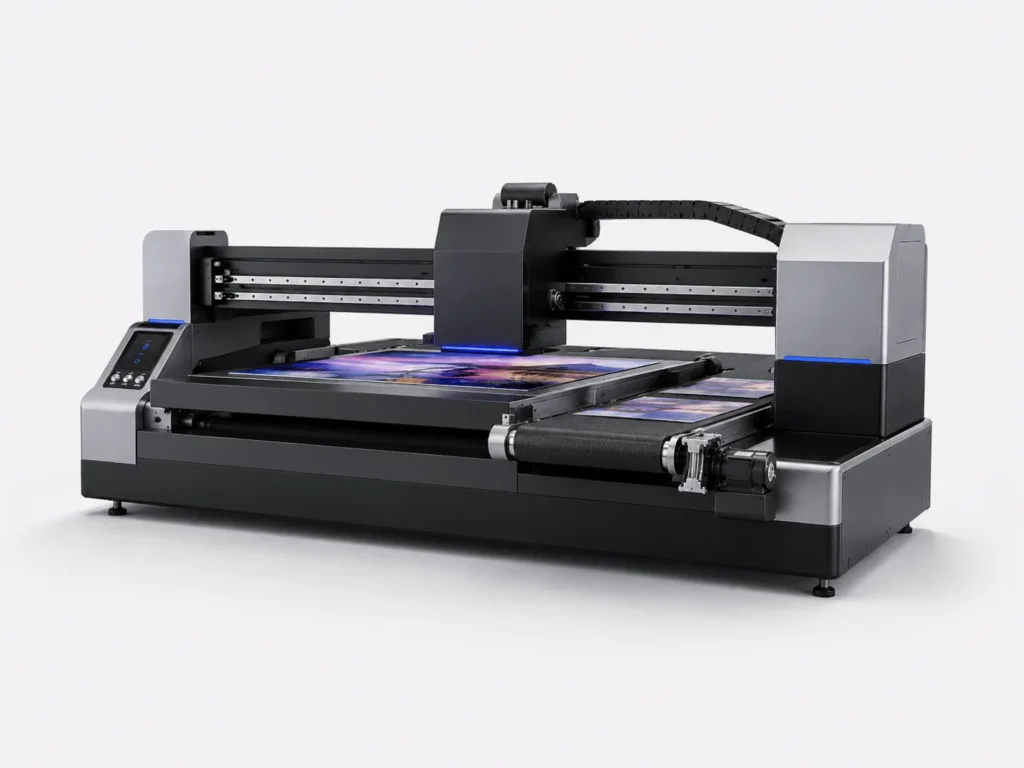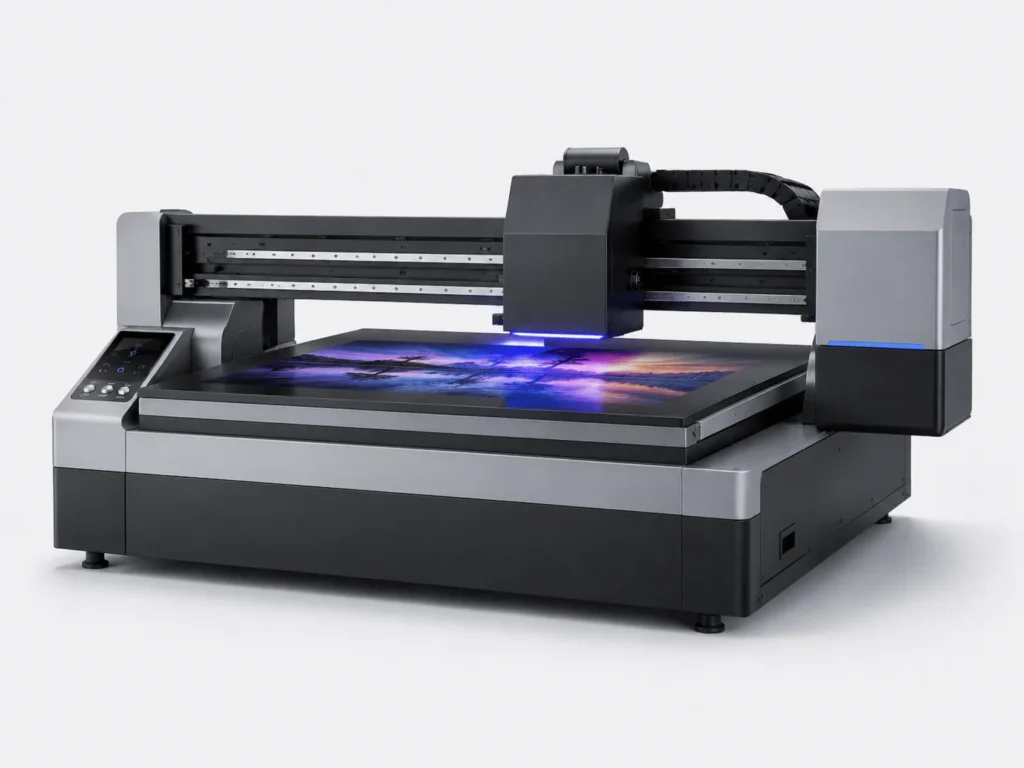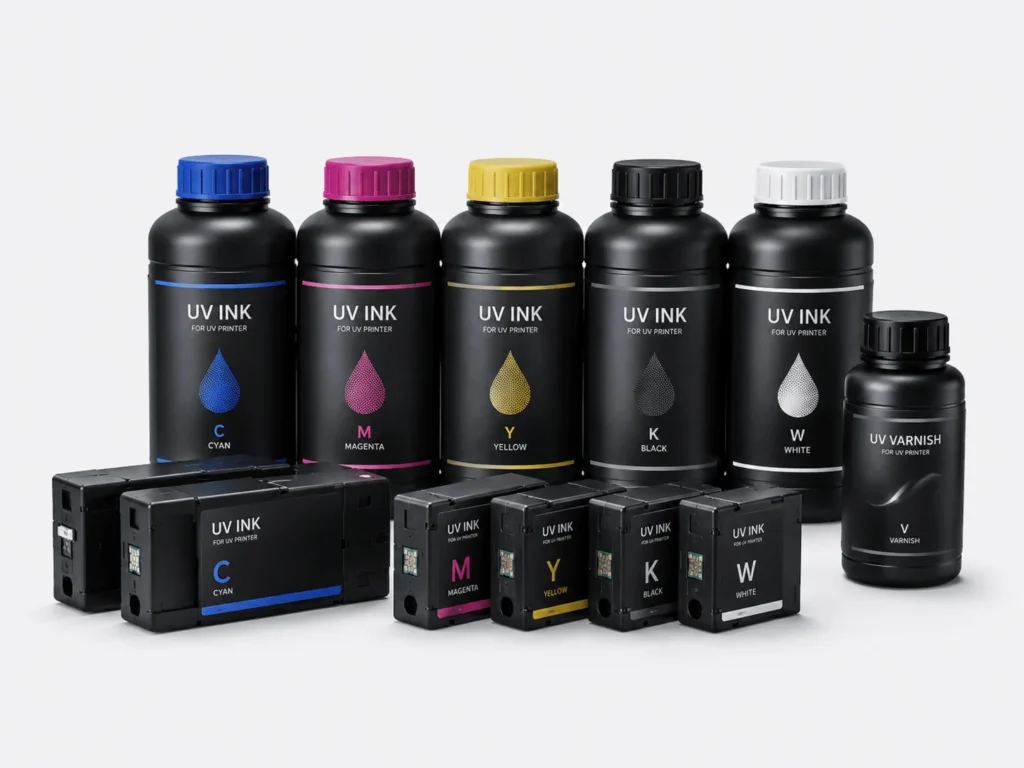
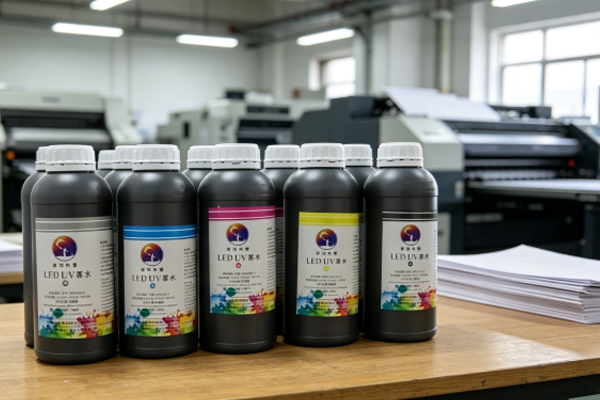
With the increasingly widespread application of UV LED printing technology in advertising production, packaging printing, industrial manufacturing, and personalized customization industries, the consumption of UV LED ink has also continued to increase. During daily production, in addition to normal printing consumption, certain amounts of waste ink are also generated, including expired ink, waste ink produced during equipment cleaning, leftover ink from printing tests, and residual ink that can no longer be used. If these waste materials are discarded improperly, they may not only result in resource waste but may also have certain impacts on the environment. Therefore, companies using UV LED ink need to understand proper disposal methods and carry out classified management based on ink types, local environmental protection requirements, and actual production conditions, allowing waste ink to be handled in a more reasonable and responsible manner.
Classification Should Be Completed Before Disposing of UV LED Ink
Distinguish Between Reusable Ink and Truly Waste Ink
Before disposing of UV LED ink, it is necessary to first determine whether the ink is completely unusable, because some ink that appears to be waste may still have practical value. Some inks may only develop slight sedimentation after being stored for a long time and can still be used for test printing or non-critical product production after sufficient stirring and filtration. Directly discarding such ink would increase material waste. Therefore, when cleaning inventory or maintaining equipment, companies should first check the condition of the ink and only handle it as waste after confirming that it has deteriorated, cured, or exceeded its usable period.
Collect Different Types of Waste Ink Separately
Waste ink generated during production comes from different sources, and the disposal methods may also vary. For example, waste ink from printhead cleaning, mixed waste liquid generated during equipment maintenance, and remaining ink in packaging containers should be collected separately. This helps prevent different chemical components from mixing together and increasing disposal difficulties. Companies can set up dedicated waste ink collection containers with clear labels to facilitate later management and treatment.
Avoid Pouring Waste Ink Directly Into sewer
When handling small amounts of waste ink, some small processing facilities may overlook environmental requirements and directly pour it into drainage systems. UV LED ink may contain components such as resins, pigments, and additives. Direct discharge without proper treatment may affect water environments and may also cause pipeline contamination. Therefore, regardless of the amount of waste ink generated, simple dumping methods are not recommended. Waste ink should be recycled or handled through proper disposal procedures.
Common Disposal Methods for UV LED Ink
Send Waste Ink to Professional Treatment Organizations
For companies generating large amounts of waste ink, using professional disposal organizations is a safer option. Professional organizations usually have appropriate equipment and procedures to classify and process waste ink according to its characteristics. Companies only need to properly collect, store, and record the transfer process, reducing problems caused by self-processing while meeting environmental management requirements.
Classify and Dispose of Waste Ink According to Local Environmental Regulations
Different regions may have different requirements for managing printing waste, so companies need to understand local regulations. Some areas apply special management requirements to waste ink containing chemical components, requiring businesses to register, store waste separately, or send it to designated treatment organizations. Following these regulations not only helps avoid environmental risks but also helps companies establish more standardized production management systems.
Use Appropriate Methods for Resource Utilization
After professional treatment, some waste ink may be reused to a certain extent. For example, some companies use leftover ink that is unsuitable for formal product manufacturing for equipment adjustment, color testing, or employee training. Although it cannot completely replace new ink, reasonable reuse can reduce unnecessary waste and improve material utilization efficiency.
How Can Companies Reduce UV LED Ink Waste?
Control Ink Purchasing Quantities Reasonably
A large amount of waste ink comes from poor inventory management, such as purchasing excessive quantities at once and allowing ink to remain unused beyond its storage period. When purchasing UV LED ink, companies should develop procurement plans based on actual order volume, production cycles, and equipment usage frequency. Avoiding excessive stock of rarely used colors or special ink models can reduce expired ink generation while minimizing unnecessary inventory costs.
Improve Ink Storage Management
Proper storage can extend the service life of UV LED ink and reduce waste caused by improper storage conditions. Ink generally needs to be stored in suitable environments and protected from long-term exposure to high temperatures, direct sunlight, or contamination. Keeping containers properly sealed and following the first-in, first-out inventory principle can reduce the possibility of ink deterioration and allow more ink to be used normally in production.
Reduce Waste Ink Generated During Equipment Cleaning
During routine maintenance of UV printing equipment, cleaning printheads and ink supply systems produces a certain amount of waste ink. Companies can reduce unnecessary cleaning frequency through standardized operation methods, such as maintaining stable equipment operation, performing regular printhead maintenance, and preventing blockages caused by long periods of inactivity. The more stable the equipment operation, the more reasonable the cleaning frequency, and the less waste ink will be generated.
Frequently Asked Questions
Can Expired UV LED Ink Still Be Used?
If the ink has only exceeded its recommended storage period but does not show obvious clumping, unusual odor, or severe separation, it can be tested before use. However, ink that has already cured, experienced performance degradation, or affects printing quality should not be used for formal production and should be handled as waste ink.
Can Small Amounts of Waste Ink Be Thrown Away Directly?
Although a small amount of ink may appear insignificant, continuous accumulation can eventually create a considerable amount of waste. Companies or individuals that frequently use UV printing equipment should establish a simple waste ink collection method instead of mixing it with regular household waste or disposing of it randomly.
How Should UV LED Ink Containers Be Handled?
The disposal of ink containers after use also requires attention. If residual ink remains inside the container, it should first be managed as waste ink and should not be discarded directly as ordinary packaging waste. After proper cleaning and confirmation that local requirements are met, the containers can be recycled according to their corresponding waste categories.
Although UV LED ink can improve printing efficiency and product quality, the proper handling of waste ink after use is equally important. Companies should not simply dispose of waste ink through dumping or mixed disposal methods. Instead, they should implement proper collection, storage, and treatment procedures according to relevant requirements. Standardized management not only reduces environmental impact but also helps companies establish more complete production processes. At the same time, reducing waste ink generation does not rely only on disposal methods; production control is even more important. Reasonable purchasing, proper storage, equipment maintenance, and scientific usage practices can all reduce waste ink generation. By optimizing every stage of ink usage, companies can minimize material loss, improve ink utilization rates, and reduce production costs.