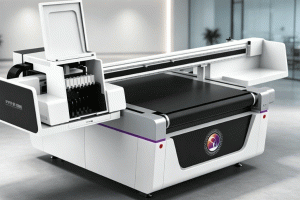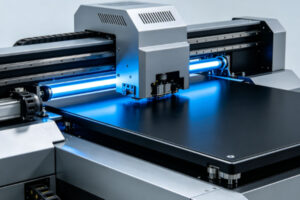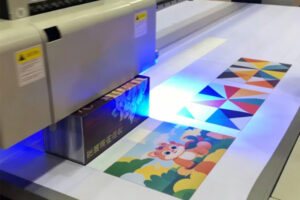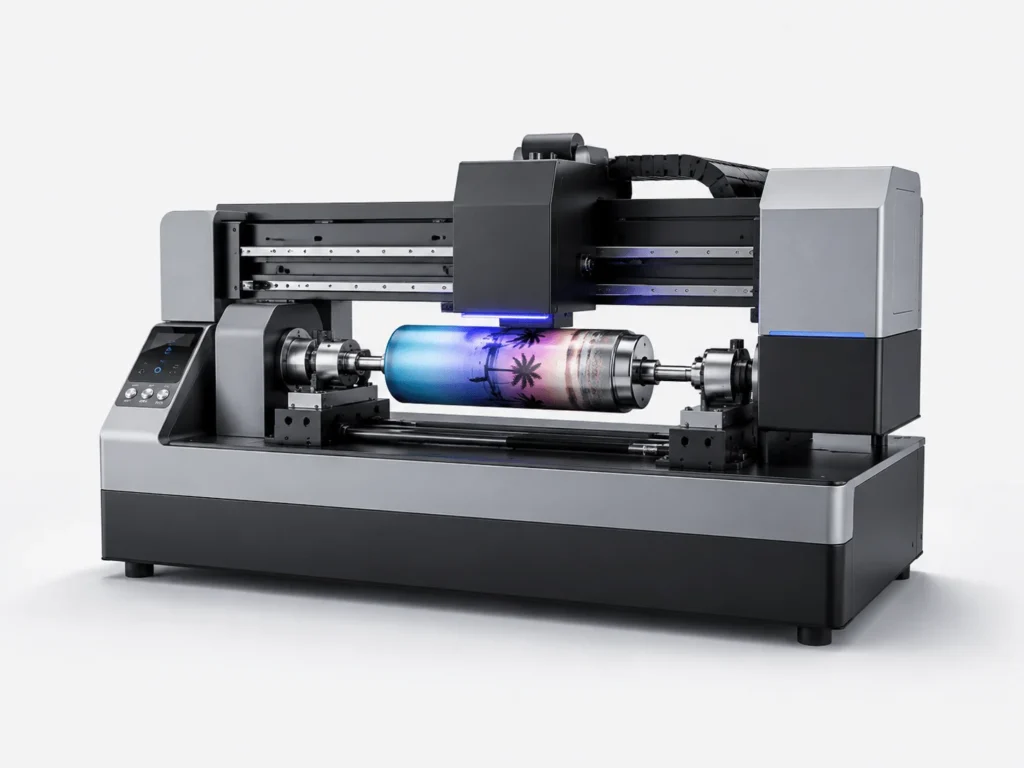
With the increasing application of UV LED printing technology in advertising production, packaging printing, industrial signage, electronic products, and personalized customization industries, the number of UV LED ink brands and product types available on the market has also continued to grow. It is difficult to determine whether an ink is reliable simply by its appearance, because different products may look similar in color but have significant differences in printing performance, curing ability, adhesion, and long-term stability. High-quality UV LED ink not only ensures clear printed images and consistent colors but also helps reduce printhead clogging, rework, and material waste. Therefore, when selecting UV LED ink, it is necessary to evaluate multiple practical performance aspects rather than focusing only on the price.
Judge UV LED Ink Quality Through Printing Performance
Observe Color Reproduction Capability
Color performance is one of the important criteria for evaluating UV LED ink quality, especially for advertising, packaging, and decorative products, where color effects directly influence the final product value. High-quality UV LED ink usually provides high color saturation and excellent consistency. Printed images should appear vibrant, with smooth color transitions and minimal color deviation. During continuous production, the same batch of ink should also maintain good color consistency. If the ink frequently produces color variations, uneven shades, or unstable printing results, it may indicate problems with the ink formulation or production control.
Check Printing Clarity
Printing clarity reflects ink particle control and inkjet performance, making it another important method for evaluating ink quality. Premium UV LED ink undergoes fine grinding and filtration processes, resulting in more uniform particle distribution and allowing printheads to produce stable, small ink droplets. When printing text, lines, or small graphics, the edges should remain sharp without blurring, broken lines, or rough edges. Poor detail reproduction may affect the overall quality of the final product.
Examine Ink Layer Performance
The condition of the ink layer after UV LED ink curing can also demonstrate ink quality. High-quality ink generally forms a smooth surface after exposure to ultraviolet light, with good gloss and strong adhesion. After printing, the surface should not feel noticeably sticky when lightly touched, and problems such as cracking or peeling should not easily occur. A stable ink layer improves wear resistance and allows printed graphics to maintain their appearance for a longer period.
Judge Ink Stability Through Actual Usage
Observe Printhead Operating Conditions
Stable UV LED ink has good fluidity and can maintain continuous ink supply without easily causing sedimentation, clumping, or filtration system blockages. During long periods of equipment operation, inkjet performance should remain consistent while reducing the frequency of printhead cleaning. If problems such as frequent ink interruption, ink splashing, or abnormal nozzle performance occur during use, the quality of the ink should be carefully evaluated.
Check Ink Flow Performance
Ink flow characteristics directly affect printing stability, making them an important indicator of product quality. High-quality UV LED ink has properly controlled viscosity and maintains good flow performance under different working environments without significant changes caused by temperature fluctuations. If the ink is too thick, it may cause difficulties in ink delivery; if it is too thin, it may affect printing coverage. Therefore, stable viscosity performance helps ensure normal equipment operation.
Observe Storage Stability
The condition of ink during storage can also reflect the quality of the manufacturing process. High-quality UV LED ink should not experience severe separation, sedimentation, or deterioration within its recommended storage period. After opening the package, the ink should return to a normal usable condition after proper mixing. If the ink develops obvious clumps, unusual odor changes, or cannot be properly mixed after long-term storage, it indicates that the product may have insufficient stability.
Judge UV LED Ink Quality Through Curing Performance
Test Curing Speed
UV LED ink relies mainly on ultraviolet light for curing, making curing performance a critical factor. High-quality ink can quickly cure under a compatible LED UV light source and form a stable ink layer. If the printed surface remains sticky for a long time after printing or the color easily rubs off with light wiping, the curing performance may be insufficient. Good curing performance improves production efficiency and reduces damage during subsequent processing.
Test Adhesion Performance
Different materials have different requirements for ink adhesion, making adhesion testing extremely important. Printing tests can be performed on commonly used materials such as acrylic, glass, metal, and PVC to evaluate whether the ink adheres firmly. High-quality UV LED ink can maintain strong bonding performance across different materials and is less likely to experience peeling, detachment, or cracking.
Observe Wear Resistance
Many products need to be used for extended periods, making ink wear resistance another important quality indicator. For example, industrial signs, equipment panels, and outdoor advertising materials must withstand friction, cleaning, and environmental changes. High-quality UV LED ink provides good scratch resistance after curing, preventing printed graphics from being easily damaged during normal use and extending product service life.
Frequently Asked Questions
Is More Expensive UV LED Ink Always Better?
The price of ink is influenced by factors such as brand, raw materials, manufacturing processes, and market positioning. When making a selection, companies should not focus only on price but should also consider printing performance, equipment compatibility, stability, and actual application requirements.
How Can UV LED Ink Quality Be Tested Simply?
A simple printing test can provide an initial evaluation. By printing small text, gradient images, and large color blocks, users can observe color performance, clarity, and curing results. At the same time, checking printhead stability and testing adhesion after printing can help evaluate the basic performance of the ink.
Can Different Brands of UV LED Ink Be Mixed?
Different brands of ink may have different formulations, so direct mixing is not recommended. Even if the colors appear identical, different brands may use different resins, additives, and photoinitiators. Mixing them may cause sedimentation, abnormal curing, or printhead clogging. If changing brands is necessary, the ink supply system should be cleaned first and testing should be performed before full production.
Judging the quality of UV LED ink requires evaluating multiple aspects of actual performance. Color consistency, printing detail clarity, printhead operation stability, curing performance, and adhesion reliability are all important reference standards. High-quality UV LED ink not only improves printing quality but also reduces equipment maintenance requirements, minimizes material waste, and enhances overall production efficiency. When selecting ink, companies should conduct tests based on their own equipment, printing materials, and product requirements rather than simply comparing prices. Through proper selection and standardized use, UV LED printing equipment can achieve more stable performance and maintain consistent production quality over the long term.