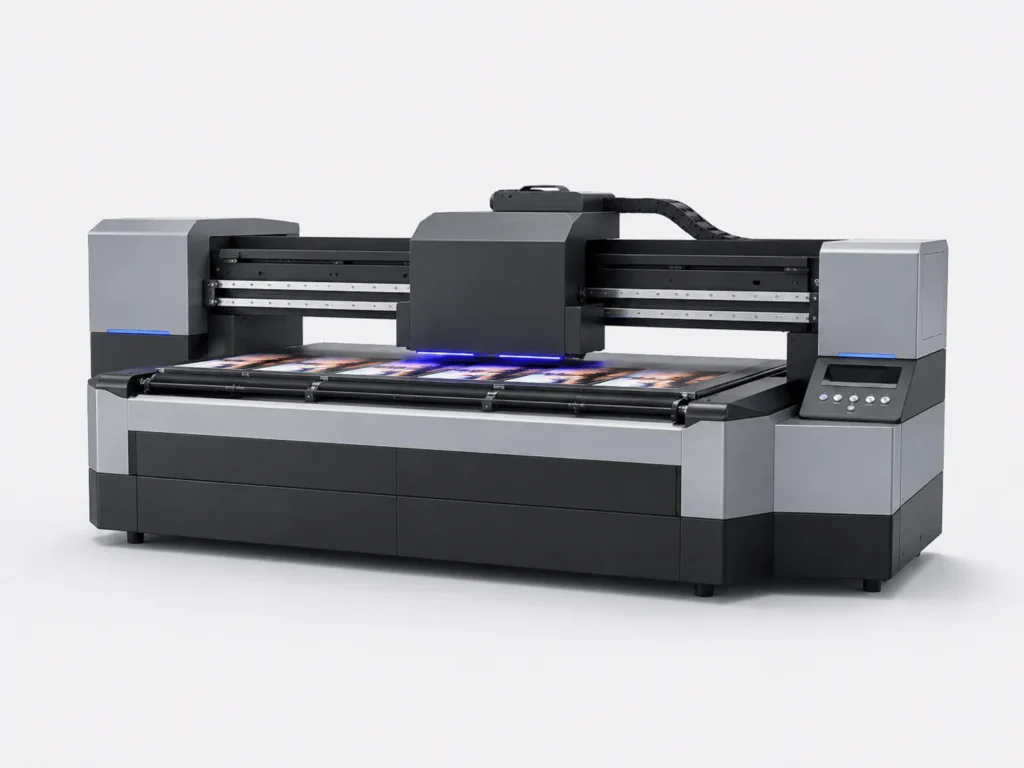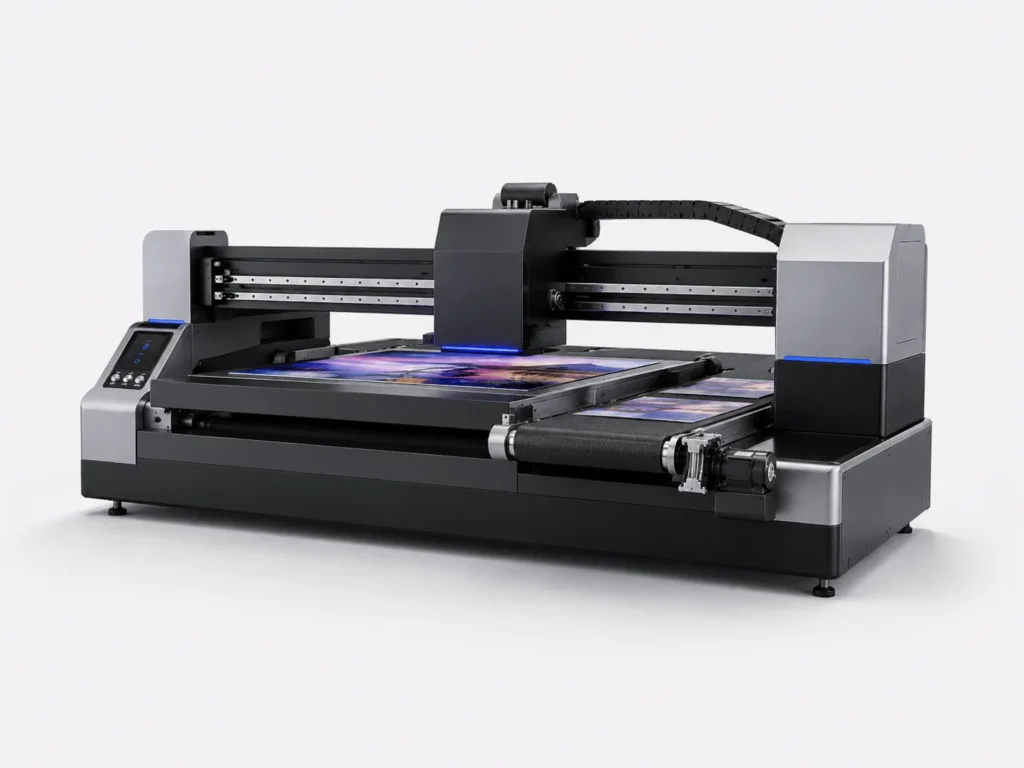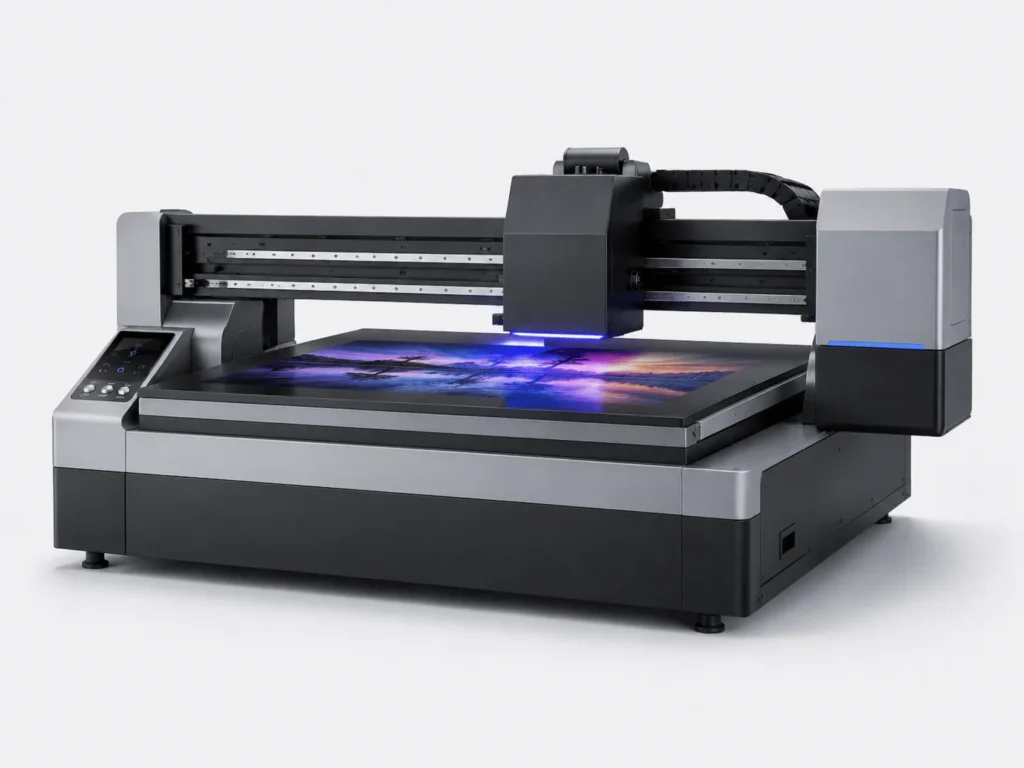
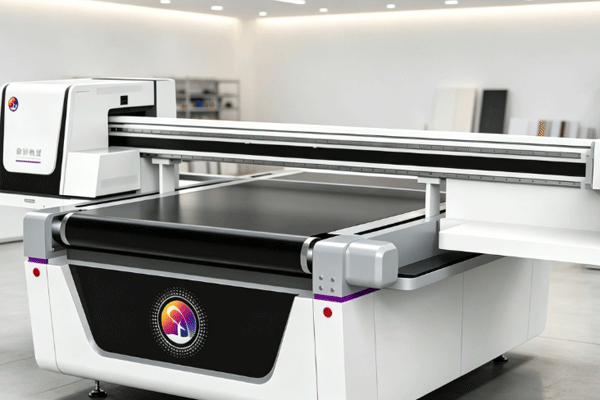
Demand for personalized customization, short lead-time delivery, and multi-material processing continues to grow, and the role of UV flatbed conveyor printers in the production chain is also rising. They are no longer just single-purpose devices for image output, but are gradually becoming an important link connecting design creativity, process execution, and order fulfillment. Understanding future development directions in advance helps companies plan equipment investment, technology upgrades, and service models earlier, so they can secure higher-value orders in a highly competitive market.
Intelligent Control Drives Equipment Upgrades
Intelligence is changing the operating logic of equipment and making production management more efficient and precise.
Automation Will Continue to Increase
Automation upgrades are making equipment operation smoother while further reducing the need for manual intervention.
- Remote monitoring functions will become more common, allowing operating status, abnormal alerts, and key parameters to be tracked in real time. Even when managers are not on site, they can quickly understand production conditions.
- Automatic cleaning, automatic alarms, and automatic calibration will gradually become standard features. These designs can significantly reduce the frequency of manual intervention and lower the risk of downtime caused by operational oversight.
- Parameter recall and process switching will become more convenient. When companies handle multiple orders, multiple designs, and multiple production batches, both changeover efficiency and continuous operation capability will improve at the same time.
Intelligent upgrades will move UV flatbed conveyor printers from “able to print” toward “able to coordinate management,” making production rhythms more stable.
Data Management Will Gain More Attention
Data management capability is becoming a new focus in equipment competition and will directly affect factory operating efficiency.
- Output statistics, consumable usage, fault records, and maintenance information will be integrated into a unified management system, enabling companies to understand equipment usage and cost changes more clearly.
- Order progress, equipment status, maintenance schedules, and production anomalies will become more transparent. Managers can adjust production planning in time based on real-time data, reducing waiting time and idle operation.
- Using data analysis to optimize production processes will become a routine practice for more and more factories. Equipment will no longer only execute tasks, but also participate in overall decision-making.
Future equipment competition will not only depend on whether print quality is stable, but also on whether data management is efficient and production coordination is smooth.
Material Compatibility Will Continue to Expand
Improved material compatibility is continuously broadening application scenarios and increasing the commercial value of the equipment.
Multi-Material Printing Will Become the Norm
The stronger the material compatibility, the more industries the equipment can cover, and the wider its application boundaries will become.
- Acrylic, glass, metal, wood panels, leather, and other common materials will continue to be widely used, and the equipment’s performance on different substrates will become increasingly mature.
- Packaging boards, decorative panels, gift shells, and some industrial components can all gain richer visual layers and higher added value through UV printing.
- As material adaptability improves, equipment applications will expand from traditional advertising processing into more fields such as home furnishing, cultural products, and industrial manufacturing.
The value of UV flatbed conveyor printers is shifting from a single processing tool to a comprehensive production device covering multiple industries.
Flexible Production Demand Will Drive Segmented Applications
The trend toward flexible manufacturing is pushing equipment toward greater adaptability and flexibility. Small-batch customized orders will become more common, companies will need to respond to customer demands faster, sample development cycles will continue to shorten, and design concepts will be implemented more quickly. At the same time, the increase in order switching frequency will make equipment response speed, stability, and ease of operation even more important. Flexible production is changing the way factories are organized, and UV flatbed conveyor printers will continue evolving toward greater flexibility, higher adaptability, and easier switching.
Green and Energy-Saving Performance Will Become a Competitive Focus
Environmental protection and energy efficiency are shifting from auxiliary conditions to important standards in equipment selection, and they will also affect long-term operating costs.
Eco-Friendly Processes Will Accelerate Adoption
Environmental requirements are gradually influencing equipment selection, production methods, and brand competition.
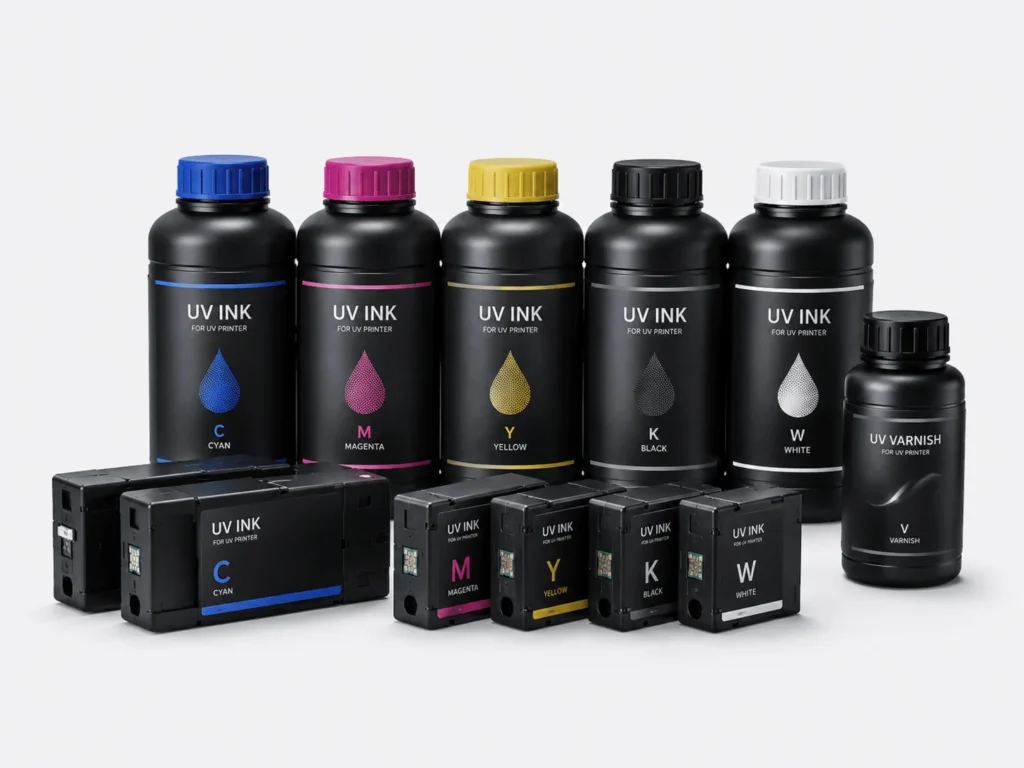
- Low-VOC UV inks will attract increasing attention. These materials better align with environmental trends and are more suitable for production environments with strict workshop requirements.
- As curing efficiency improves, workshop odor, emission pressure, and energy consumption will all decrease, making the overall production environment more favorable.
- The concept of green production is influencing purchasing decisions. More companies will treat environmental performance as an important evaluation criterion rather than just an optional reference.
Environmental protection is no longer just an added advantage; it is gradually becoming central to equipment selection and brand competition.
Low-Energy Design Will Increase Value
Energy-saving equipment is becoming an important choice for companies seeking cost control and efficiency improvement, and it also better fits the future direction of factory development.
- LED curing solutions will continue to spread, as they offer clear advantages in energy consumption control and service life, making them suitable for long-term continuous operation.
- Equipment structure and transmission systems will continue to improve, reducing ineffective losses during operation and making overall performance more stable.
- In long-duration continuous production scenarios, low-energy equipment not only lowers electricity costs but also helps companies reduce maintenance pressure and overall operating expenses.
Energy-efficient equipment not only reduces daily costs, but also aligns with the long-term trends of sustainable production and green manufacturing.
Service Models Are Moving Toward Integrated Solutions
Customer expectations for equipment have expanded from single-machine performance to complete production support capabilities, and service models are changing accordingly.
Equipment Sales Are Shifting Toward System Delivery
Customer demand is gradually moving from standalone equipment purchases toward integrated solutions, with greater emphasis on actual production results. Printing, curing, and conveying processes require more efficient coordination, and the cooperation efficiency between devices directly affects output and finished product quality. Software, consumables, training, and process support are also increasingly bundled together. Customers want not just a machine, but a production capability that can be implemented quickly. Delivery methods are also shifting from standalone procurement to line-based thinking, and companies are paying more attention to whether the equipment is easy to expand and suitable for future upgrades. When purchasing UV flatbed conveyor printers, customers are increasingly focused not only on the equipment itself, but also on whether the entire production system is mature.
After-Sales Upgrades Will Determine Long-Term Competitiveness
Comprehensive after-sales service is becoming an important part of brand competition and will directly affect customer repurchase willingness.
- Remote diagnostic functions can shorten downtime and help companies locate problems faster and resume production when equipment abnormalities occur.
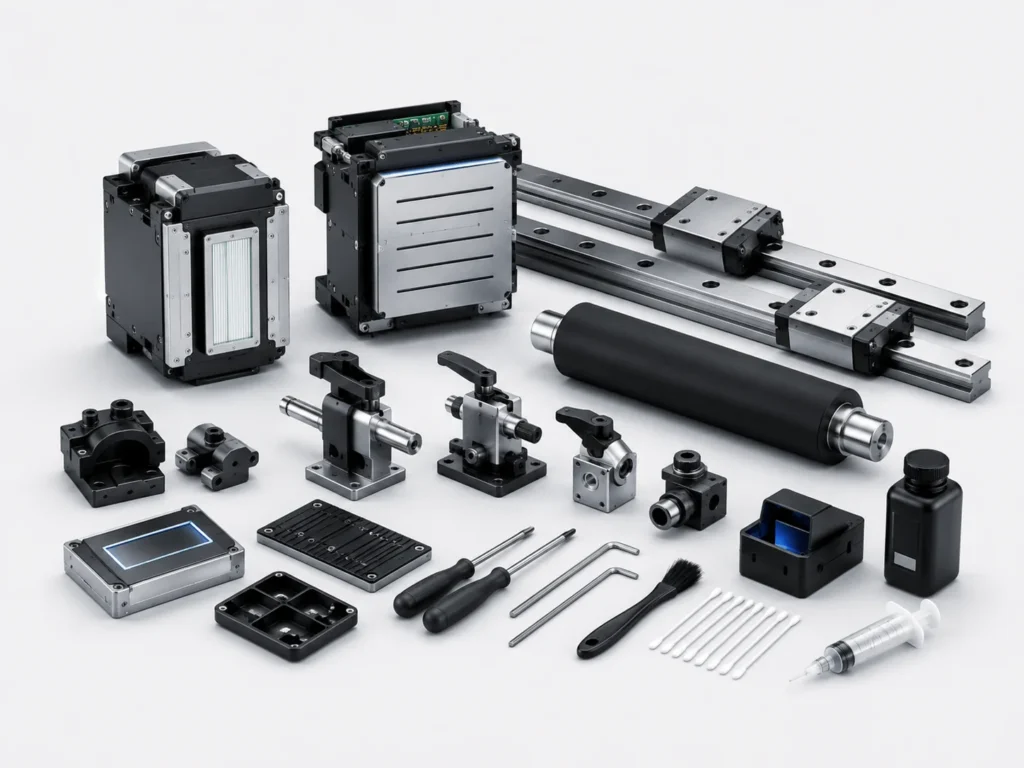
- Modular maintenance methods make servicing and repairs more efficient, reducing time loss and labor costs caused by complex disassembly.
- Equipment with greater expansion potential can more easily adapt to capacity upgrades and business growth, making it more suitable for long-term investment logic.
Truly competitive brands in the future will not only sell equipment, but also continuously provide stable, reliable, and scalable production support.
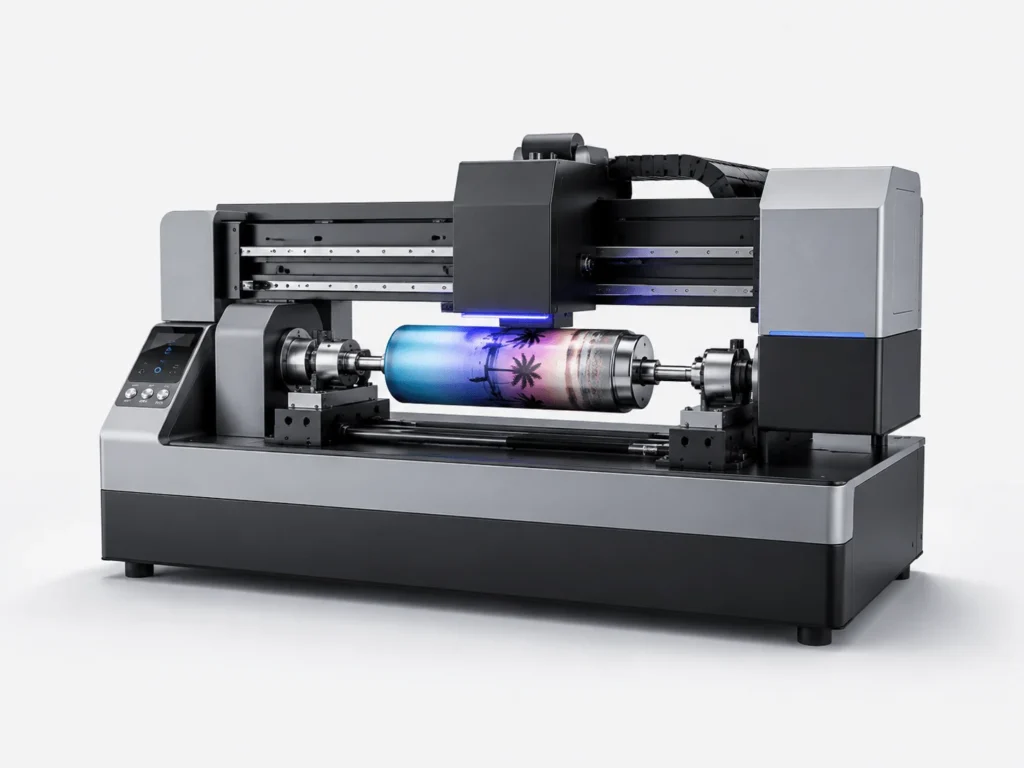
Future UV flatbed conveyor printers will continue evolving along four paths: intelligence, material compatibility, green energy efficiency, and integrated solutions. What companies focus on will gradually shift from standalone price to overall efficiency, delivery speed, and long-term service. As application scenarios continue to expand, equipment stability and scalability will also become important standards in purchasing decisions. Springyprinter specializes in the R&D and manufacturing of UV flatbed conveyor printing equipment and can provide customers with solutions that are more closely aligned with real production scenarios.