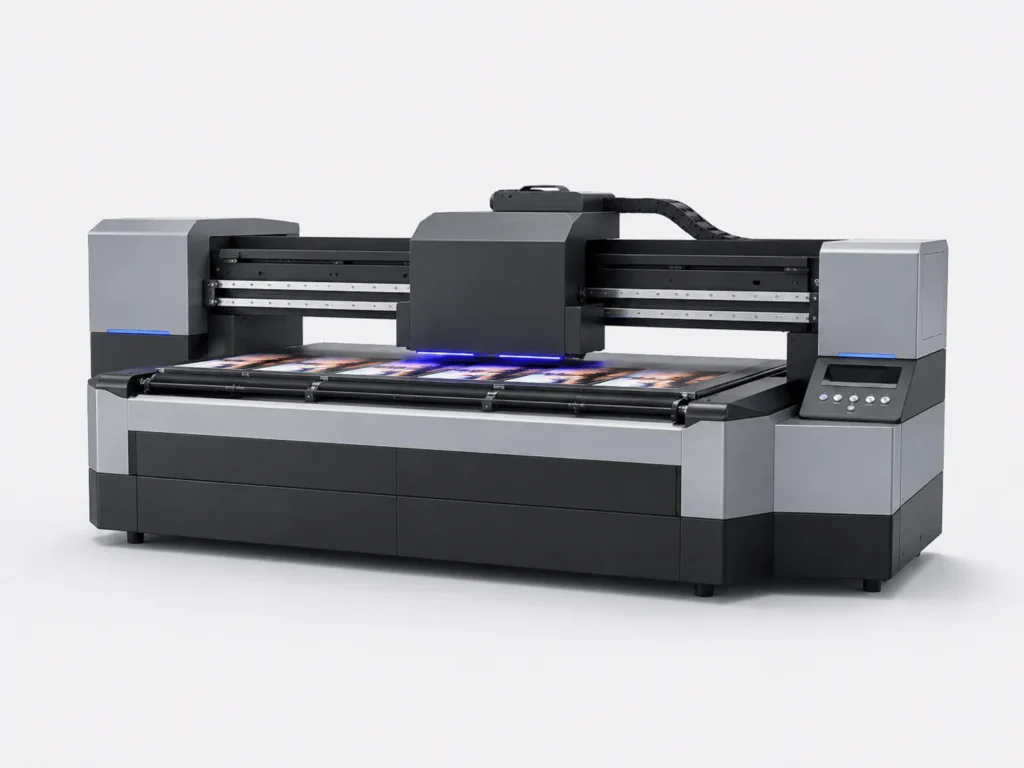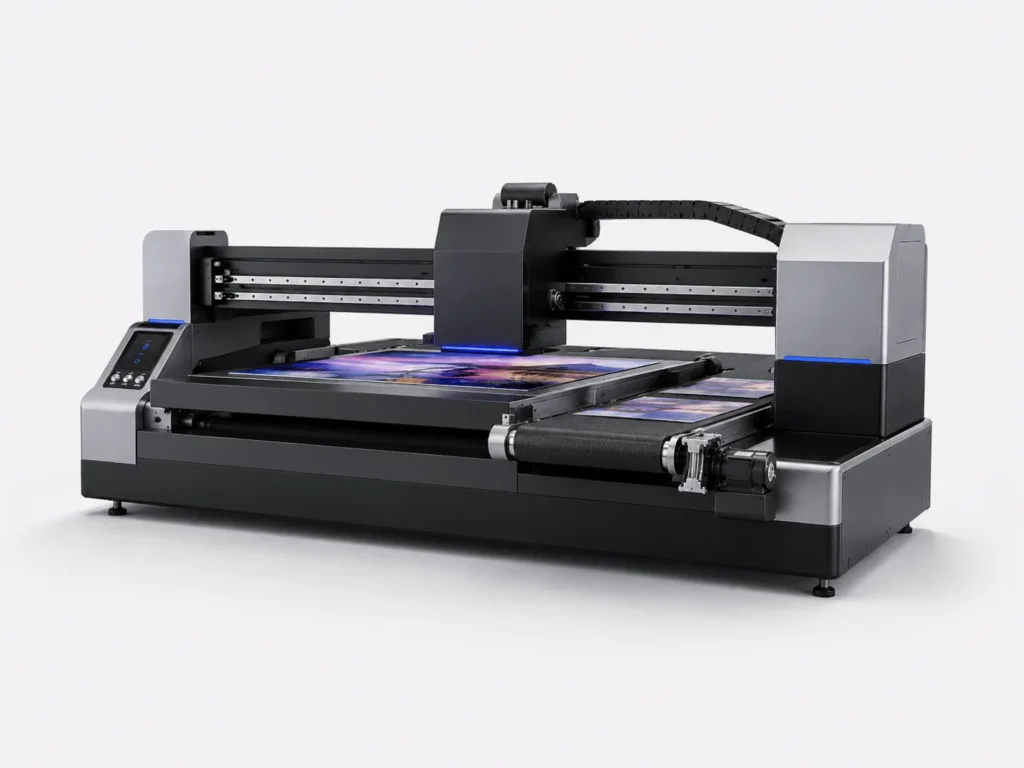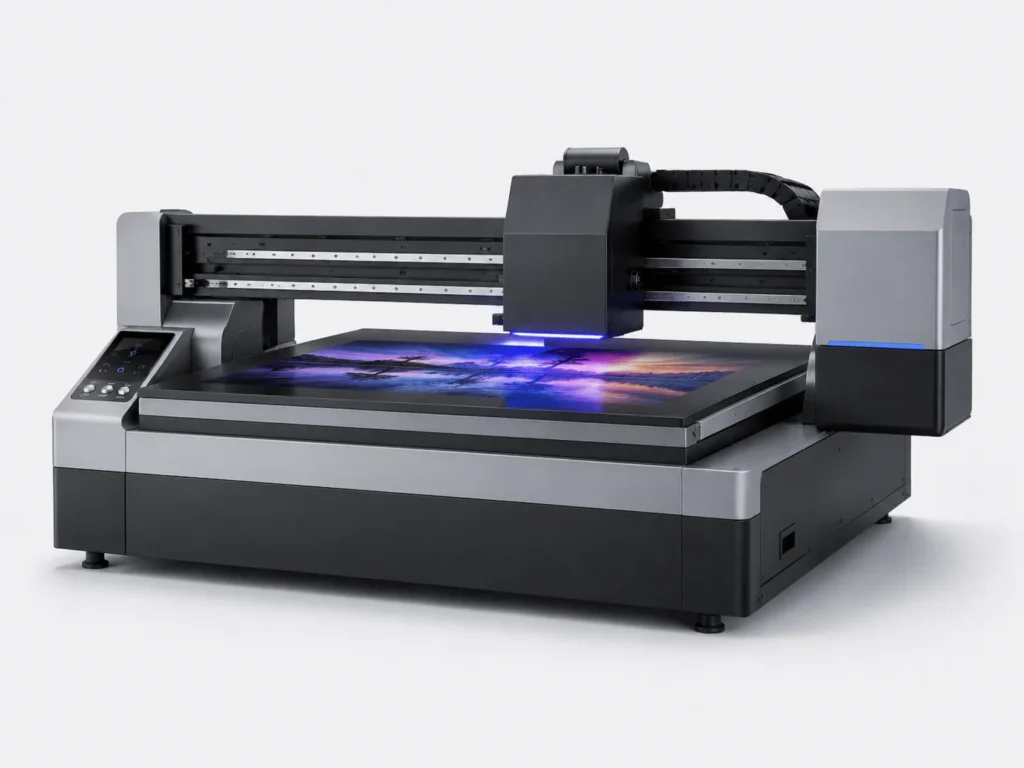
Many people notice that after UV ink is printed onto a material surface and exposed to UV light, it quickly forms a stable ink layer without requiring the long natural drying time associated with conventional water-based or solvent-based inks. The rapid curing of UV ink is not simply a matter of “drying.” Instead, it is a photochemical reaction triggered by ultraviolet light. After the photoinitiator absorbs UV energy within a specific wavelength range, it initiates the polymerization and cross-linking of monomers and oligomers, rapidly transforming the liquid ink into a solid film. This instant film-forming characteristic is also one of the important reasons why UV printing is suitable for non-absorbent materials such as glass, plastic, metal, and acrylic.
Core Principle of Rapid UV Ink Curing
Unlike traditional inks that rely on moisture evaporation, solvent evaporation, or material absorption to dry, UV ink uses ultraviolet light to trigger curing, rapidly transforming the liquid ink layer into a solid layer.
Photoinitiators Start the Curing Process
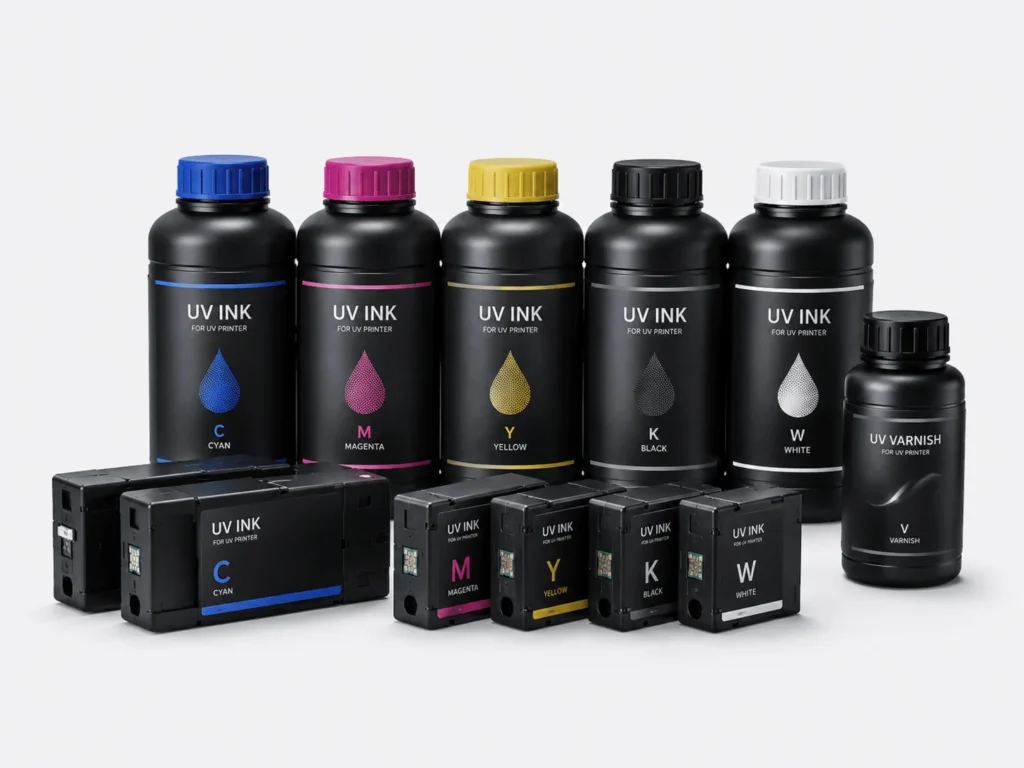
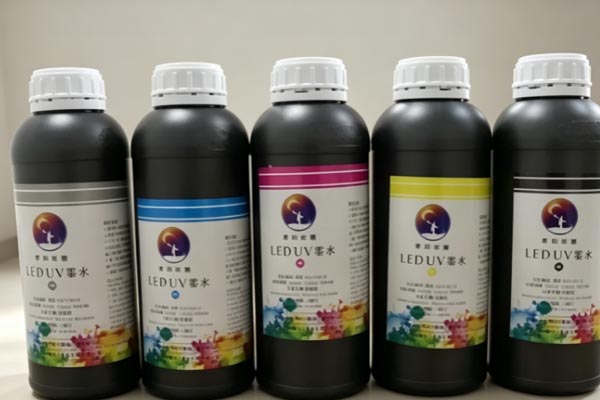
UV ink typically contains monomers, oligomers, pigments, and photoinitiators. After the ink droplets land on the material surface, the photoinitiator absorbs UV energy and initiates the polymerization reaction, gradually curing the ink layer.
- The ink droplets land on the material surface;
- UV light irradiates the ink layer;
- The photoinitiator absorbs ultraviolet energy;
- The polymerization reaction begins;
- The ink layer cures rapidly.
This transformation is a photopolymerization reaction. It does not rely on the evaporation of large amounts of water or solvent, allowing the film-forming process to be completed in a short time.
Ink Formulation Determines the Curing Response
UV light triggers the curing reaction, while the ink formulation determines the curing performance. Different components must be properly balanced to achieve both curing speed and finished-product quality.
- Monomers participate in the polymerization reaction;
- Oligomers affect hardness, flexibility, and adhesion;
- Photoinitiators absorb UV light and initiate the reaction;
- Pigments affect opacity and light penetration;
- Additives improve leveling, wetting, and inkjet stability;
- Formulation ratios affect abrasion resistance, weather resistance, and surface appearance.
A well-designed formulation allows the ink to cure quickly while maintaining good adhesion, hardness, and flexibility.
Why Can UV Light Make Ink Form a Film Quickly?
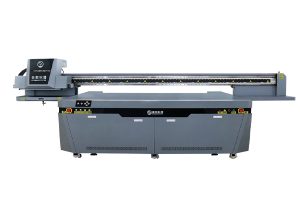
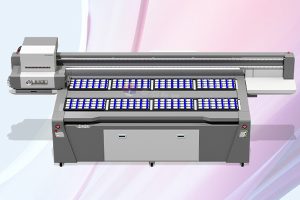
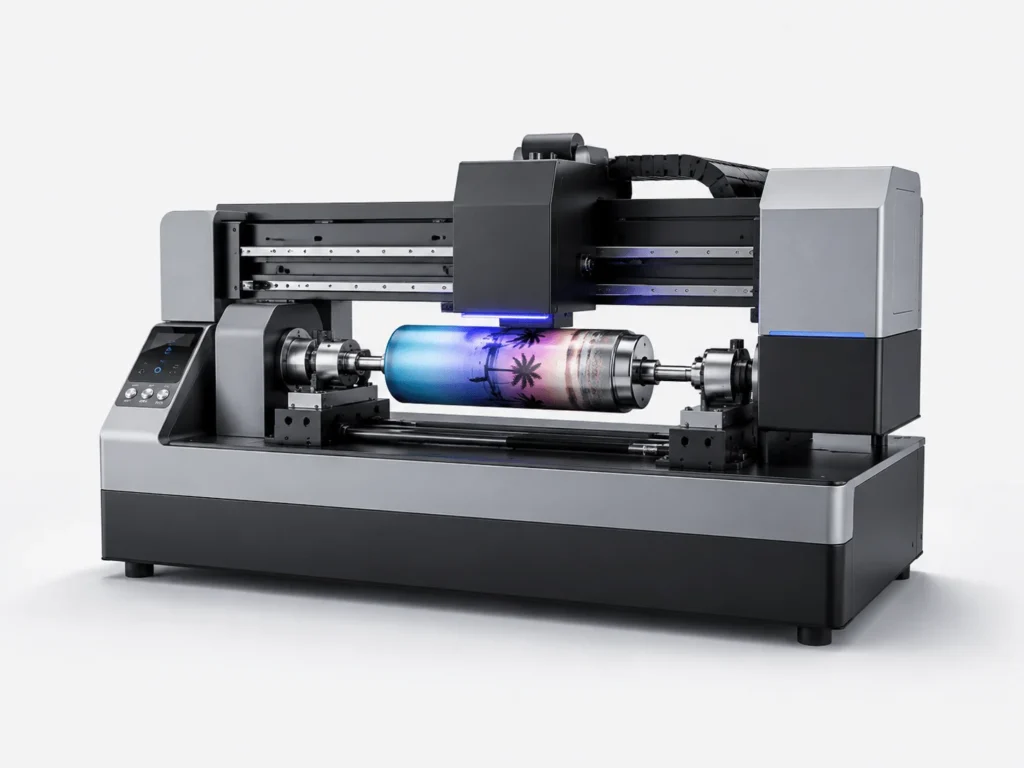
The curing system in a UV printing machine is an important part of rapid film formation. After the ink is ejected, the light source must provide the appropriate ultraviolet energy in time to ensure that the polymerization reaction proceeds smoothly.
UV Light Directly Activates Photoinitiators
After the UV light source irradiates the ink layer, the photoinitiator is activated, driving the ink to quickly change from a liquid to a solid state. Curing performance is mainly affected by the following factors:
- Whether the UV light source wavelength matches the ink;
- Light intensity and irradiation distance;
- Printing speed;
- Ink layer thickness and ink volume.
Common UV light sources include mercury lamps and UV LEDs. UV LEDs offer fast response, relatively low energy consumption, and lower heat generation, but they must be properly matched with the ink parameters.
“Pinning” and “Full Curing” Can Work Together
Some digital UV printing machines use an initial curing process. After the ink droplets land on the material surface, a low dose of UV light is applied to stabilize the droplets quickly, reducing excessive spreading and interference between colors. More sufficient UV energy is then used to complete the subsequent curing process, allowing the ink layer to reach a stable state. This method helps control the edges of fine text, lines, and complex patterns, thereby improving printing accuracy.
What Value Does Rapid Curing Bring to UV Printing?
The ability of UV ink to rapidly form a solid ink film not only reduces waiting time but also affects production efficiency, material compatibility, and finished-product handling.
Printed Products Can Quickly Enter Subsequent Processes
After UV ink cures, printed products can proceed more quickly to cutting, folding, laminating, and packaging. The main advantages include:
- Shortening the production cycle;
- Reducing drying waiting time;
- Lowering the risk of scuffing and ink transfer;
- Facilitating connection with subsequent processing equipment;
- Improving production efficiency;
- Reducing the space required for finished-product storage.
UV printing is suitable for production applications that require fast delivery, such as packaging, advertising signs, decorative panels, and industrial panels.
More Suitable for Printing on Non-Absorbent Materials
Materials such as glass, metal, acrylic, plastic, and coated panels do not readily absorb ink. Traditional inks may dry slowly and have poor adhesion on these surfaces. UV ink can cure directly on the material surface to form a film, making it suitable for a wide range of substrates, including:
- Drying does not depend on material absorption;
- A stable ink layer can form on the surface;
- Suitable for materials such as glass, metal, and plastic;
- Can be used for decorative panels, signs, and industrial panels;
- Supports printing on various rigid and non-absorbent substrates.
However, rapid curing does not necessarily mean strong adhesion. The material surface, ink formulation, UV energy, and pretreatment process must be properly matched. When necessary, cleaning, coating treatment, or adhesion testing may also be required.
What Factors Affect UV Ink Curing Performance?
“Fast curing” and “good curing” are not exactly the same concept. In actual production, UV energy, ink layer thickness, printing speed, material characteristics, and ink condition can all affect the final result.
UV Energy and Printing Speed Must Be Properly Matched
As the operating speed of the equipment increases, the time the material passes under the UV light source becomes shorter, and the UV energy received per unit area also changes. When the ink layer is thick, white ink coverage is high, or the ink volume of the pattern is large, the curing energy requirements are usually higher.During production, UV parameters can be adjusted according to printing speed, ink volume, and material type. Testing should then be conducted to evaluate the surface condition, adhesion, and abrasion resistance. Simply increasing the light intensity does not necessarily produce better results. Excessive curing may also affect the flexibility and surface appearance of the ink layer.
Material Surface and Ink Condition Are Equally Important
In addition to equipment parameters, the condition of the material and ink can also affect curing performance. Before production, pay attention to the following:
- Remove dust, oil, and moisture from the material surface;
- Check for release agents or other residues;
- Determine whether pretreatment is required based on the material;
- Store and use UV ink according to the specified requirements;
- Check the ink’s storage temperature, usage period, and condition;
- Confirm stable inkjet performance to avoid uneven ink layers;
- Conduct small-sample testing before using new materials or new ink.
Keep the material surface clean and store the ink properly. Before mass production, check curing performance, adhesion, and color results.
The quality of UV-printed products depends not only on whether the ink can cure quickly but also on equipment parameters, material characteristics, and the production environment. Properly matching printing speed, ink volume, light intensity, and substrate type helps improve image clarity, adhesion strength, and batch-production stability. For different application requirements, companies should select suitable equipment and consumables based on material testing and process verification. Springyprinter specializes in the research, development, and manufacturing of industrial UV digital printing equipment, providing professional UV printing solutions for different materials and production applications.