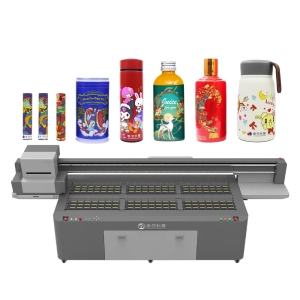
When choosing a printing process, “whether it fades” is often one of the most important concerns for businesses. In applications such as outdoor advertising, packaging customization, and industrial labeling, print durability directly affects product quality and brand image. As a widely used digital printing technology in recent years, UV printing is often questioned for its stability: does UV printing really fade? Under what conditions might fading occur? How durable is it in real use? To answer these questions, we need to analyze materials, processes, and usage environments.
Why UV Printing Is Usually Not Easy to Fade?
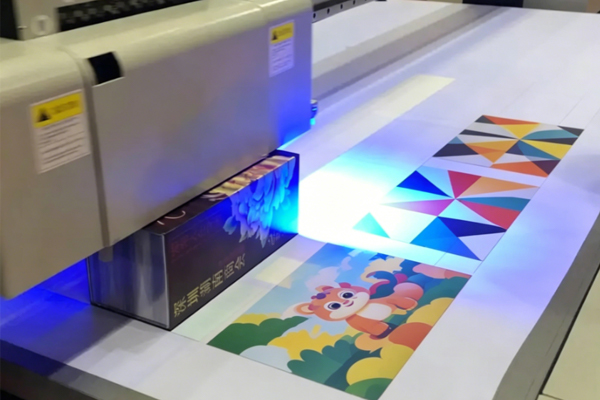
The durability of UV printing mainly comes from its curing method, which is different from traditional printing.
Under normal conditions:
- UV ink is instantly cured into a film by ultraviolet light
- The ink layer forms a protective coating on the material surface
- It does not rely on absorption, but on physical and chemical bonding
- After curing, it has high hardness and wear resistance
Compared with traditional inks that rely on natural drying or absorption, UV printing is more stable. Therefore, in everyday environments—especially indoor applications such as gifts, packaging, and electronic product shells—it generally maintains good color retention.
When UV Printing May Fade?
Although UV printing is relatively stable, fading or wear may still occur under certain conditions.
Common causes include:
- Long-term strong UV exposure (outdoor sunlight)
- Improper surface pretreatment leading to weak adhesion
- Low-quality UV ink or unstable machine settings
- Long-term friction or chemical corrosion
For example, outdoor billboards exposed to sunlight for long periods may gradually fade if no protective coating is applied. In addition, overly smooth or oily surfaces can also weaken ink adhesion, increasing the risk of fading.
How to Improve UV Printing Durability?
In production, proper process control can significantly improve the stability and lifespan of UV prints.
Common optimization methods include:
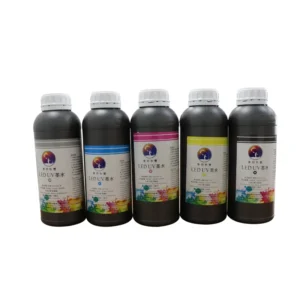
- Using high-quality UV ink to improve color fastness
- Applying white ink base or primer coating
- Adding varnish (gloss coating) for protection
- Adjusting UV curing intensity and printing parameters
- Pretreating special materials (cleaning or priming)
For example, when printing on metal or glass, surface treatment can greatly improve adhesion, making the design more durable and less likely to peel. These techniques are already well-developed in industrial production.
Application Performance of UV Printing
The performance of UV printing depends heavily on the application scenario, and different uses require different durability levels.
Common applications include:
- Cosmetic packaging and brand labeling
- Tumblers and personalized gifts
- Industrial panels and equipment markings
- Acrylic displays and advertising products
In most of these cases, products are not exposed to extreme environments for long periods, so UV printing can meet usage requirements well. However, for long-term outdoor exposure or high-wear environments, additional protective processes are needed to extend lifespan.
Industry Development and Technological Progress
With continuous improvements in materials and ink technology, the stability of UV printing continues to improve.
Future development trends include:
- More weather-resistant UV inks
- Higher adhesion material compatibility solutions
- Automated production and smart control systems
- More eco-friendly and low-energy curing technologies
These advancements will further reduce fading risks and expand UV printing into more complex applications.
UV printing is not “absolutely fade-proof,” but under proper processes and normal usage conditions, it offers excellent durability and stability. SpringYprinter specializes in UV printing equipment solutions, providing stable and efficient digital printing support for businesses.