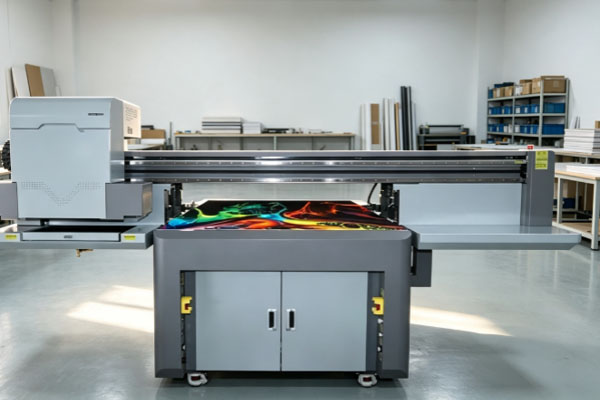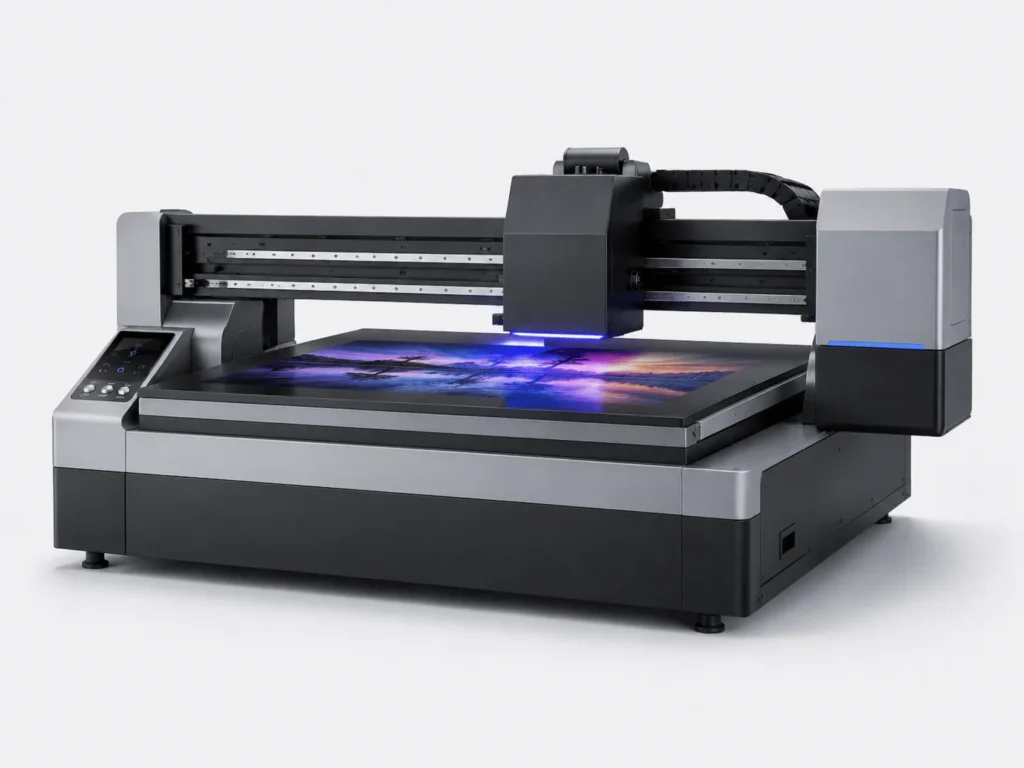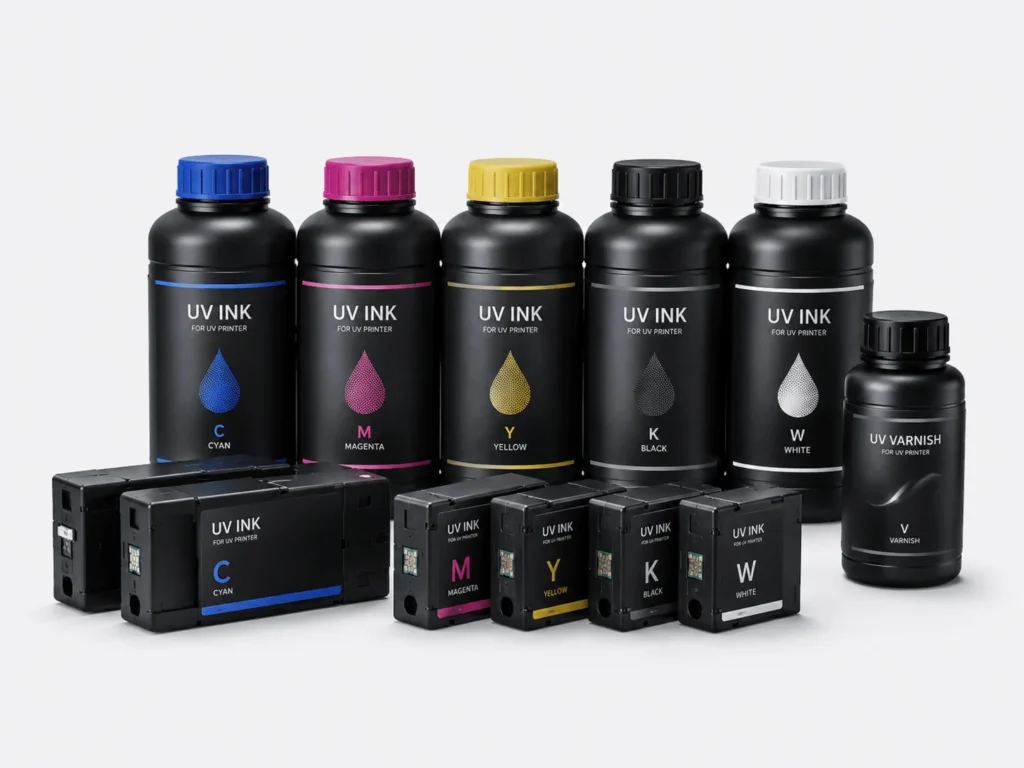
In the industrial digital printing equipment market, the price range of UV flatbed conveyor printers varies significantly, from tens of thousands to hundreds of thousands of yuan or even higher. For companies that are new to this type of equipment, it is easy to wonder: why do seemingly similar machines differ so much in price? The reason behind the price gap is not just brand influence, but a combination of core configuration, mechanical structure, automation level, and long-term operating costs. Understanding these factors helps businesses make more rational purchasing decisions and avoid focusing only on price while overlooking overall production value.
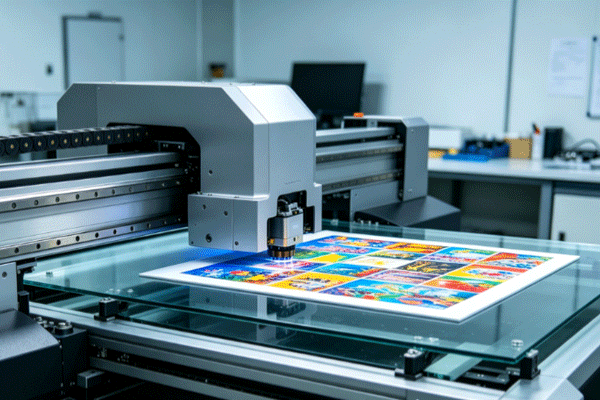
Differences in Core Configuration Lead to Price Differences
The core components of the equipment directly determine overall performance and are also the most intuitive factor affecting the price of the whole machine.
Differences in Printhead Grade and Quantity
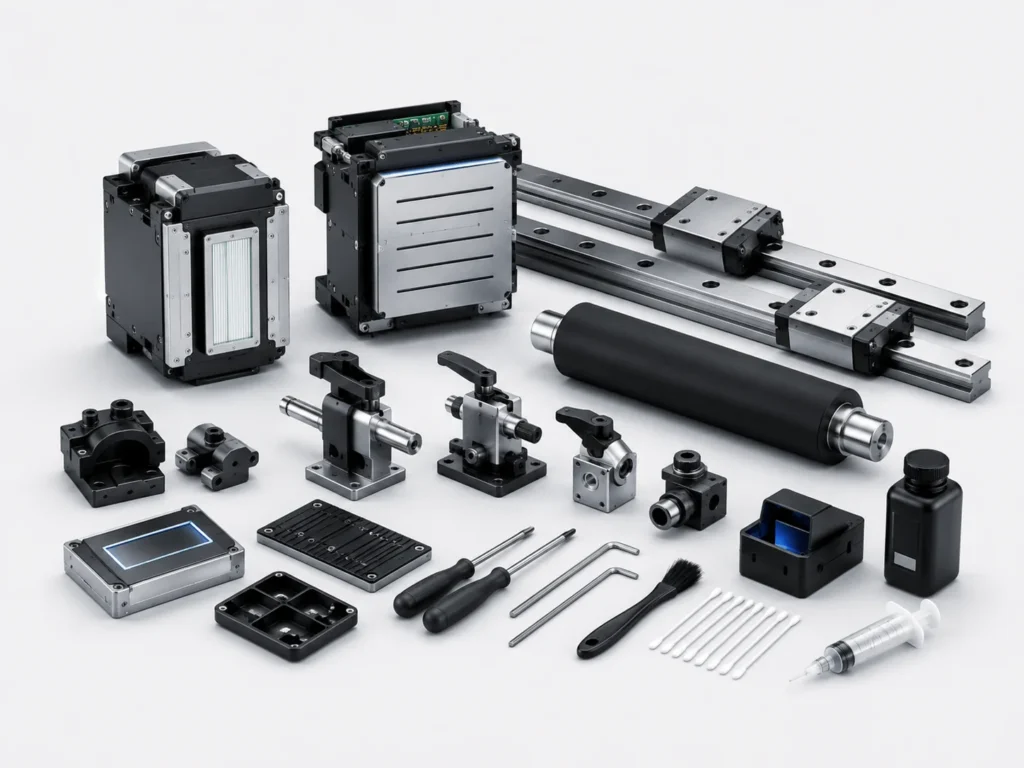
The printhead is the key component that determines print quality and production efficiency. Different grades, models, and quantities of printheads will directly affect the output capability and overall cost of the equipment.
- High-end printheads are much more expensive than standard models, and they usually offer better precision, stability, and jet consistency.
- The precision of different printheads affects image detail, and the difference becomes especially noticeable when printing small text, gradient patterns, and complex images.
- Stability determines whether continuous production is reliable. If the printhead is prone to clogging or misfiring, it will directly affect the delivery efficiency of batch orders.
- Differences in service life also affect long-term investment costs. Although printheads with a longer lifespan require higher initial investment, they are often more cost-effective in the long run.
Printhead cost often accounts for a large proportion of the whole machine, so the price gap between different configurations can be very obvious.
Differences in Control Systems and Electronic Components
The control system determines whether the equipment runs stably, while electronic components affect response speed and failure rate. These invisible parts are often the real key to widening the price gap.
- Industrial-grade control systems cost more, but they can maintain a more stable output state during long-term continuous operation.
- There are obvious differences in motherboard and drive system performance. Different solutions vary in data processing speed, signal transmission efficiency, and anti-interference capability.
- The stronger the stability, the lower the failure rate, and the lower the probability of production stoppages for the enterprise.
- The faster the response speed, the higher the production efficiency, especially in multi-task switching and high-speed printing scenarios.
Differences in electronic systems often directly create different price tiers for the equipment.
Mechanical Structure and Manufacturing Process Affect Cost
In addition to core configuration, the structural design and manufacturing precision of the equipment itself also significantly affect the price.
Differences in Frame and Machining Precision
The frame is the foundation for stable equipment operation. The more precise the structure, the more stable the printing result usually is, but this also means higher material costs and processing requirements. A high-strength frame requires better materials and more complex manufacturing processes. Precision machining can improve equipment lifespan and reduce deformation and loosening during long-term use. Better shock resistance also helps ensure image stability during high-speed printing. The more solid the structure, the more reliable the equipment, and naturally the higher the manufacturing cost.
Differences in Conveyor System Design
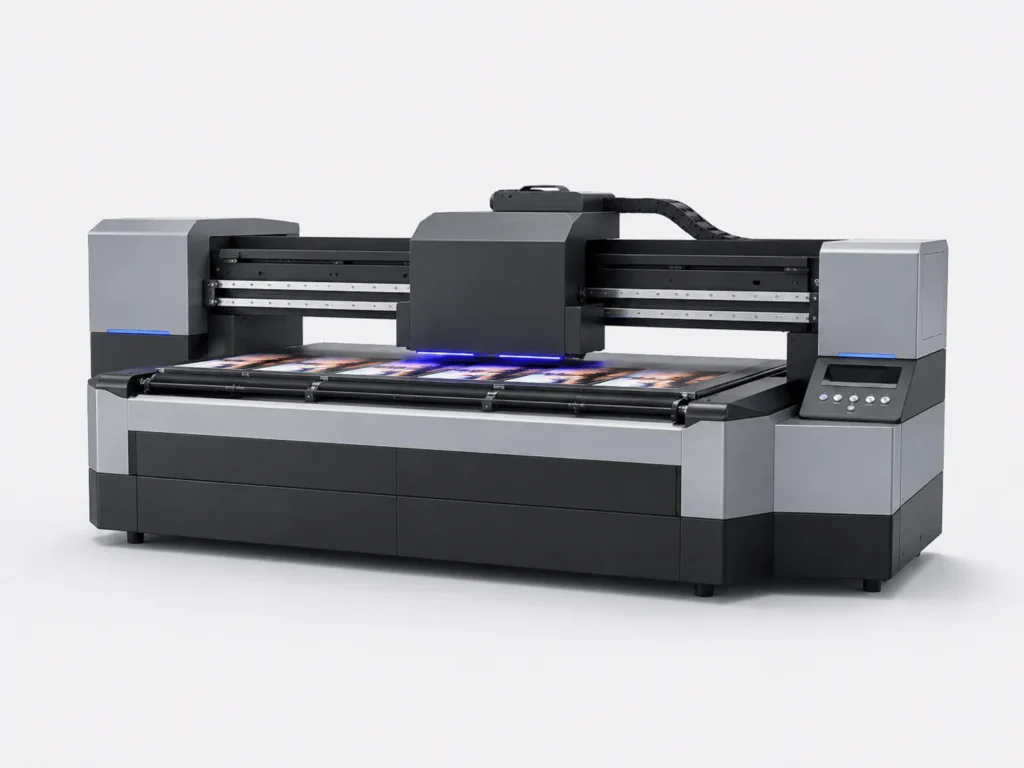
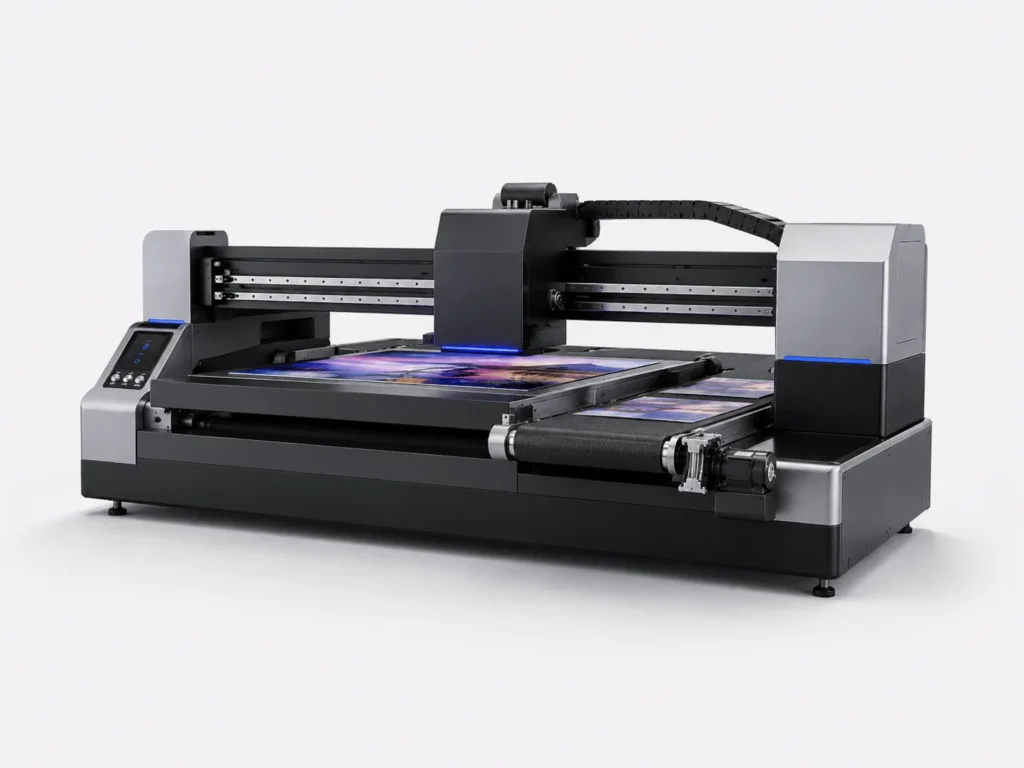
Conveyor-type equipment places high demands on the feeding system. The complexity, stability, and automation level of the conveyor structure all directly affect the equipment price.
- High-end conveyor belts are more wear-resistant and durable, and they can maintain smooth feeding during long-term operation while reducing maintenance frequency caused by wear.
- Automatic correction systems increase manufacturing costs, but they can effectively prevent material deviation and improve consistency in batch production.
- Servo drive systems are usually more precise and can better match material feeding speed with printing rhythm.
- Conveyor systems with stronger long-term operational stability are often more suitable for enterprises with high requirements for efficiency and yield rate.
The more complete the conveyor system design, the higher the equipment price usually is.
Differences in Automation and Production Capacity
The higher the automation level, the less manual intervention the equipment requires. However, the corresponding R&D and manufacturing costs also increase, so the price naturally varies significantly.
Differences in Automation Function Configuration
Automation functions can help enterprises reduce labor costs, improve production continuity, and minimize errors and instability caused by manual operation.
- Automatic feeding systems increase equipment cost because they require more complex mechanical structures and control logic to achieve stable feeding.
- Automatic cleaning systems are more complex, but they help keep the printhead in good condition and reduce manual maintenance time.
- Automatic height detection improves printing accuracy, especially when producing materials of different thicknesses in mixed batches.
- Automatic correction systems help maintain operational stability and reduce waste caused by material deviation.
The higher the automation level, the greater the value of the equipment, and the more suitable it is for batch production scenarios.
Production Speed and Material Compatibility Range
The production capacity and material compatibility of the equipment are also important factors in determining the price, because machines that can adapt to more application scenarios usually require greater technical investment.
- High-speed printing while maintaining high precision places higher demands on printhead control, motion systems, and software coordination.
- Stronger long-term operational stability indicates that the equipment has undergone stricter design in terms of heat dissipation, structure, and control systems.
- Higher batch production capacity means the equipment can better meet the needs of continuous order intake and fast delivery in factories.
- Support for multiple rigid materials and a wider application range gives the equipment greater value in advertising, packaging, home appliances, and industrial manufacturing.
Equipment that can adapt to more materials and meet the needs of more industries is usually positioned at a higher-end level.
Differences in After-Sales Service and Brand Value
Many companies tend to overlook the service system when purchasing equipment, but in fact, after-sales support and brand technical accumulation also affect the price of the equipment, and this influence often becomes more apparent during later use.
Technical Support and Service Capability
A complete service system requires more manpower and resources, so it is reflected in the equipment price. However, the value it brings is often far greater than the apparent cost difference. A professional engineering team can provide support during installation, debugging, and daily maintenance. The combination of remote and on-site service also makes fault handling more flexible. Fast response helps reduce downtime and order delay risks, while long-term maintenance support ensures more stable usage throughout the equipment’s lifecycle. The stronger the service capability, the lower the user’s later operational risk, and the higher the overall purchasing value.
Brand R&D and Technical Investment
The R&D capability behind a brand determines whether the equipment has continuous upgrade potential and stable iteration capability, and these investments are ultimately reflected in the product price.
- R&D investment costs are high because continuous resources are needed from structural design to software optimization.
- Core technologies continue to improve, allowing the equipment to advance in printing precision, stability, and compatibility.
- Product iteration speeds vary. Brands with strong R&D capabilities can usually launch new solutions that better meet market demand more quickly.
- Brand reputation affects market premium capability, and users are often willing to pay a higher price for a more stable and reliable brand.
The deeper the technical accumulation, the better the equipment usually performs in stability, compatibility, and long-term user experience.
The essence of the price difference in UV flatbed conveyor printers is not caused by a single factor, but by the combined influence of core configuration, mechanical structure, automation level, and after-sales system. When purchasing equipment, companies should start from their actual production needs and comprehensively evaluate performance and long-term cost rather than focusing only on the initial purchase price. Choosing the right equipment can truly improve production efficiency and product quality, achieving long-term stable returns. Springyprinter specializes in the R&D and manufacturing of industrial UV digital printing equipment and provides customers with professional UV flatbed conveyor printer solutions and technical support services.