In the context of continuous upgrades in the advertising industry, acrylic materials are widely used in store signage, brand display systems, lightbox panels, and various commercial visual design applications due to their high transparency, excellent gloss, and strong formability. However, as market demand for visual quality continues to rise, traditional screen printing and spray printing methods are gradually showing limitations such as low efficiency, high cost, and poor flexibility when handling small-batch customization, high-precision image reproduction, and fast delivery requirements. Therefore, the UV printing application solution for acrylic advertising based on the UV flatbed printer is becoming an important upgrade direction in the advertising production industry.
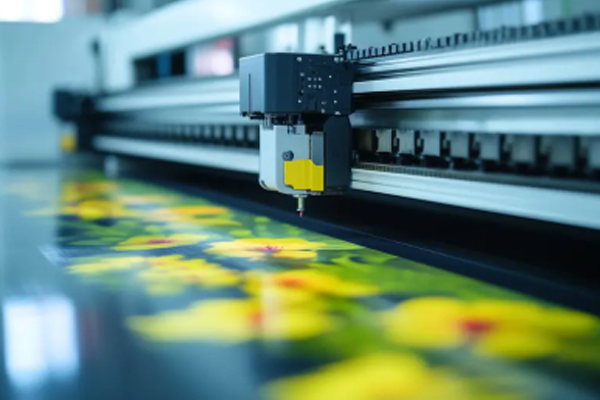
Application Characteristics and Printing Requirements of Acrylic Advertising Materials
Acrylic is one of the most commonly used materials in the advertising industry, known for its strong light transmission, good plasticity, and excellent visual performance. It is especially suitable for illuminated and display-based advertising products. However, its smooth surface and weak adhesion characteristics also place higher demands on printing processes. If the process is not properly selected, issues such as unstable patterns, color fading, or peeling after long-term use may occur.
Impact of Material Properties on Printing Performance
In practical applications, acrylic has a dense and smooth surface structure. While this helps achieve a high-gloss visual effect, it also increases the difficulty of ink adhesion, requiring higher printing stability.
Common impacts include:
- Insufficient ink adhesion leading to local peeling or edge detachment
- High-gloss reflection affecting image clarity and contrast
- Color fading or aging in long-term outdoor use
- Difficult control of uniformity on curved or irregular surfaces
If these issues are not properly addressed, they can directly affect the display quality of advertising products and brand image, especially in commercial storefronts and high-traffic environments where visual quality strongly influences first impressions.
Core Advantages of UV Flatbed Printers in Acrylic Advertising
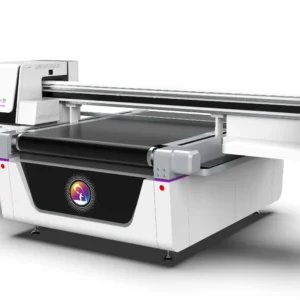
In acrylic advertising production, UV flatbed printers use a digital direct-printing method that eliminates traditional plate-making processes, improving both production efficiency and image quality stability. At the same time, UV curing technology ensures that ink quickly adheres to the material surface, meeting the advertising industry’s dual demands for quality and efficiency.
| Comparison Dimension | Traditional Screen/Spray Printing | UV Flatbed Printing Solution |
| Production Cycle | Long | Short |
| Plate-making | Required | Not required |
| Color Performance | Moderate | High-definition and fine |
| Adhesion Strength | Medium | UV-cured high adhesion |
| Order Type | Large batch | Small batch + multi-SKU |
| Flexibility | Low | High |
| Outdoor Durability | Average | Stronger |
These advantages make UV printing an increasingly mainstream solution in the acrylic advertising sector, especially for commercial scenarios requiring fast response and high-quality output.
Core Capabilities of UV Flatbed Printing in Acrylic Advertising
In advertising production, both visual performance and production efficiency are important. UV flatbed printers excel in both aspects, enabling high-precision color output while meeting complex design and diversified production needs.
High-Precision Color Output Capability
In commercial advertising, image quality directly affects brand communication effectiveness, making color accuracy and detail reproduction extremely important.
Key performance includes:
- High-resolution image output with clear details
- Smooth gradient transitions suitable for complex designs
- Multi-layer UV printing for enhanced 3D visual effects
- High color consistency for standardized branding applications
These capabilities ensure strong visual impact even in illuminated environments.
Strong Adhesion and Weather Resistance
UV curing technology instantly solidifies ink, significantly improving adhesion and durability on acrylic surfaces.
Key advantages include:
- UV curing enhances ink adhesion strength
- Improved scratch and wear resistance
- Better outdoor weather durability
- Resistance to cleaning agents and environmental exposure
This stability ensures long-lasting visual quality.
Flexible Production and Fast Delivery
Advertising production requires high responsiveness due to frequent order changes. UV printing provides clear advantages in this area.
Key features include:
- Direct printing without plate-making
- Support for small-batch and multi-design production
- Fast switching between different designs
- Proofing and mass production on the same machine
Application Scenarios of UV Printing in Acrylic Advertising
With the continuous expansion of commercial visual demands, UV printing technology is now widely used across multiple advertising scenarios, becoming a key tool for brand visual expression.
Store Signage and Brand Visual Systems
Common applications include:
- Store logo signage
- Brand wall decoration
- Directional signage systems
- Display cabinet visual elements
Commercial Lightboxes and Illuminated Advertising
Main applications include:
- LED lightbox panels
- Illuminated advertising signs
- Night-time display systems
- Shopping mall guidance systems
Exhibition and Event Visual Materials
Applications include:
- Booth background panels
- Event promotional signage
- Temporary advertising graphics
- Brand promotional materials
In the context of continuous digitalization and quality upgrading in the advertising industry, UV printing for acrylic advertising applications is becoming an important technological upgrade direction. It not only enhances visual performance but also optimizes production efficiency and cost structure, enabling brands to respond more quickly to market demands and improve display effectiveness. SpringYprinter provides stable and efficient UV flatbed printer solutions for the advertising industry.