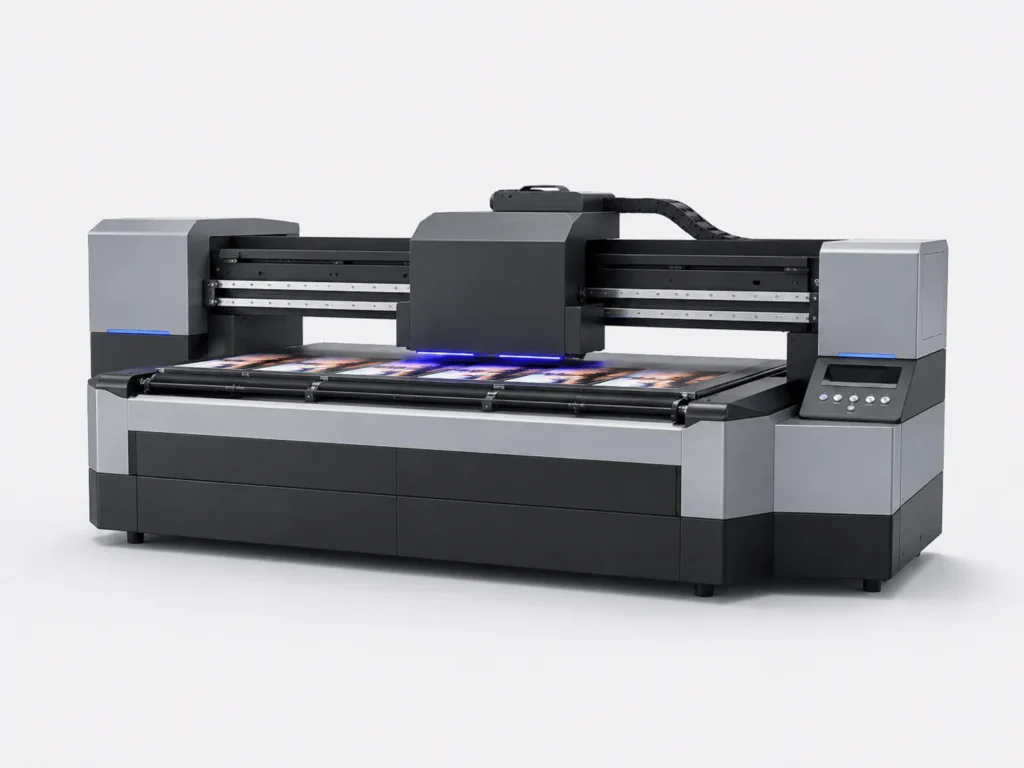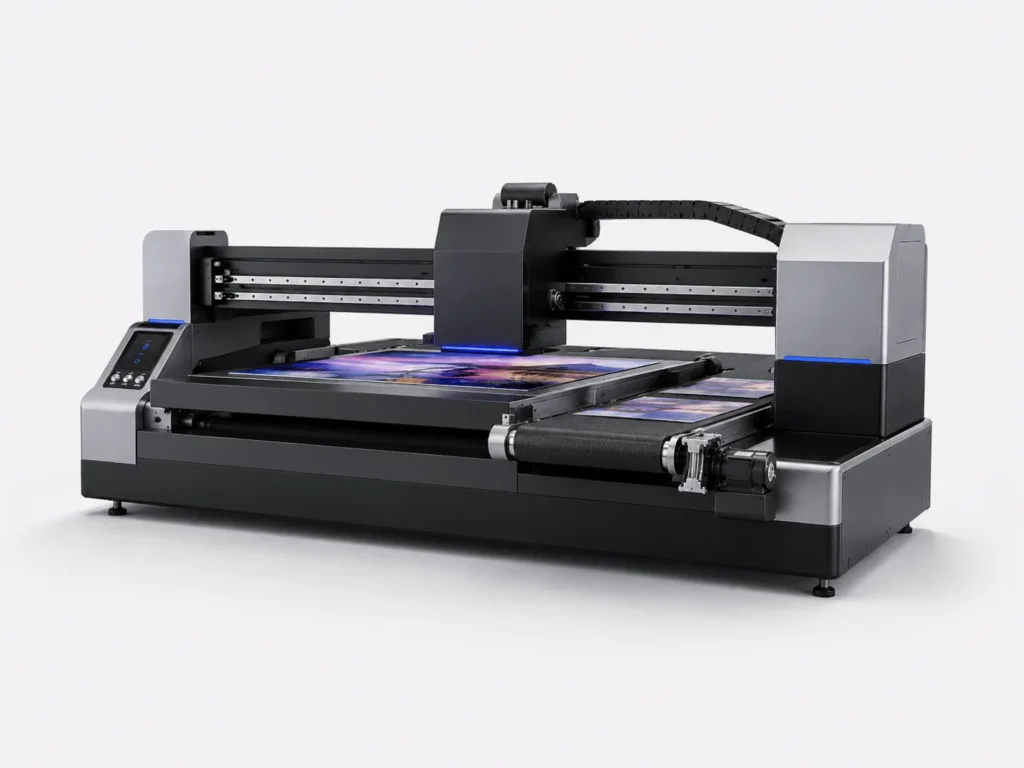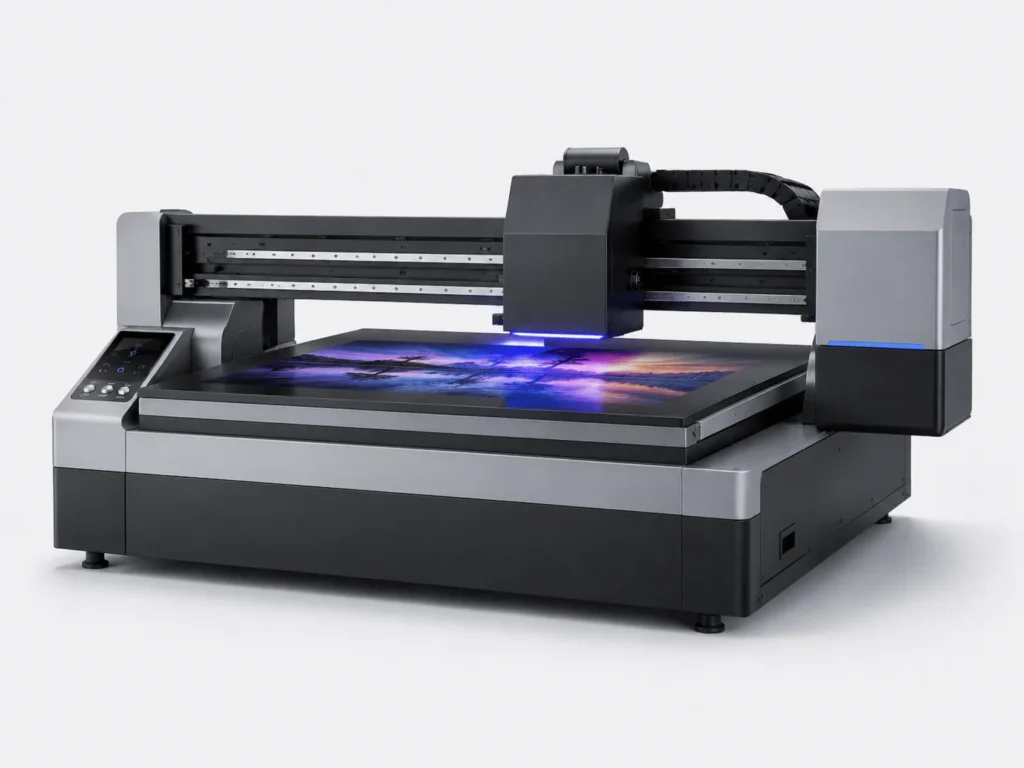
In today’s era of continuous upgrades in industrial manufacturing and digital printing, UV flatbed conveyor printing devices have been widely applied in packaging printing, appliance panels, advertising signage, industrial customization, and many other fields. For enterprises, whether a machine is stable and reliable is often more important than simply pursuing printing speed or a low price. Stability not only determines whether production can continue smoothly, but also directly affects product yield, delivery cycles, and overall operating costs. If the equipment frequently experiences ink interruption, misalignment, system lag, or inconsistent print results during operation, then even the most attractive specifications will struggle to truly meet industrial production requirements. When purchasing a UV flatbed conveyor printing device, learning how to evaluate its stability and reliability from multiple dimensions is an important step in avoiding future losses and improving return on investment.
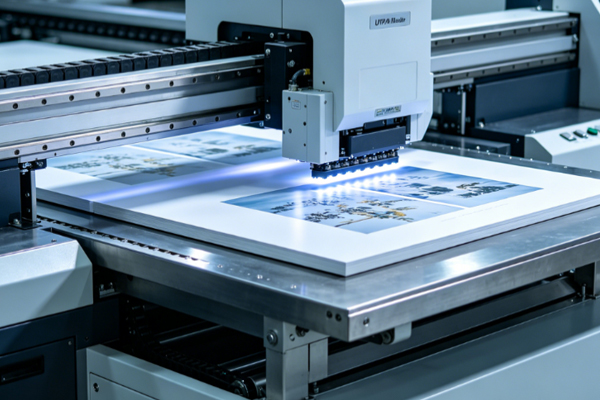
Does the Machine Structure Determine Long-Term Stable Operation?
The mechanical structure is the foundation of the stability of a UV flatbed conveyor printing device, and it is also an important prerequisite for judging whether the equipment is suitable for long-term production.
Rigidity of the Frame and Motion System
Highly stable equipment usually has a more solid mechanical foundation, and the rigidity of the frame and motion system directly affects overall printing performance.
- Whether the frame uses a high-strength metal structure that can maintain sufficient support and deformation resistance during long-term operation.
- Whether there is obvious vibration during operation, as excessive vibration often affects printhead positioning accuracy and edge sharpness.
- Whether the machine body is prone to deformation or loosening after long-term use, which is directly related to the equipment’s long-term stability and service life.
- Whether the printhead movement path remains smooth and steady, because only when the motion process is stable enough can printing errors be minimized.
The more solid the structure, the easier it is to control errors during high-speed operation, and the higher the consistency of finished products will be.
Precision of the Guide Rails and Transmission System
The transmission system determines the accuracy of printhead movement, while the precision of the guide rails and transmission components is an important factor affecting print quality.
- Whether high-precision linear guide rails are used, since higher guide rail precision means the printhead movement path is more stable.
- Whether the belt or lead screw has stable tension control, because only when tension remains uniform will the machine be less likely to deviate during operation.
- Whether loosening, shaking, or positional deviation occurs after long-term operation, as these issues will gradually amplify printing errors.
- Whether the transmission components have good wear resistance, since industrial equipment often needs to work continuously for long periods, and wear resistance directly affects service life.
A high-quality transmission system not only reduces failure rates, but also enables the equipment to maintain greater consistency in batch production.
Are the Printhead and Ink Supply Systems Stable and Reliable?
The printhead and ink supply system are the core output components of a UV flatbed conveyor printing device, and they are also the areas where stability problems are most likely to appear.
Is the Printhead Working State Stable?
The printhead is one of the most critical components of the machine, and its condition directly affects print quality, so it must be carefully checked. First, observe whether the machine is prone to ink interruption, ink splashing, or uneven jetting, as these problems usually indicate abnormalities in the printhead or ink supply system. Next, check whether multiple printheads can output synchronously, because only with good synchronization can batch printing produce more consistent results. It is also important to observe whether print quality remains stable after long periods of operation, since this determines whether the machine can support continuous production. In addition, automatic cleaning and protection functions are very important, as they help reduce clogging issues and extend printhead life. The more stable the printhead, the more reliable the machine operation will be.
Is the Ink Circulation System Smooth?
The ink system is responsible for delivering ink steadily to the printheads, so its design quality directly affects the reliability of the entire printing process.
- Whether ink delivery is uniform and stable, because unstable supply often leads to uneven color density or local ink shortage.
- Whether air bubbles or clogging are likely to occur inside the system, since once these problems appear, printing continuity will be significantly affected.
- Whether the white ink circulation system is well designed, as white ink settles quickly and poor circulation design will noticeably increase maintenance costs later.
- Whether the machine can easily return to normal operation after being idle for a long time, because faster recovery makes the equipment more suitable for high-frequency production environments.
The more reasonable the ink system design, the higher the durability and stability of the equipment during long-term operation.
Are the Control System and Software Mature?
A stable control system can reduce human error and allow the machine to maintain better operating conditions in complex production environments.
Stability of the Industrial-Grade Control System
The control system is like the brain of the machine, and its stability directly affects overall performance. Whether industrial-grade motherboards and chips are used is crucial, because such configurations usually offer stronger anti-interference capability and more stable operation. It is also important to see whether the system is prone to freezing or lagging during long-term work, since the more stable the system is, the fewer production interruptions there will be. Whether multitasking runs smoothly is equally important, especially during batch printing and frequent task switching, as system performance directly affects efficiency. In addition, whether the machine supports resume printing after interruption is worth confirming, because this can reduce material waste in the event of a power outage or malfunction. The more mature the system, the stronger the machine’s continuous production capability.
RIP Software and Data Processing Capability
Software optimization not only affects the user experience, but also directly influences final output quality and production efficiency.
- Whether image processing remains stable without crashing, because frequent software errors will affect the entire production workflow.
- Whether multi-file layout is efficient, since higher layout efficiency also improves equipment utilization.
- Whether color management is consistent, as stable color output is especially important for branded products and batch orders.
- Whether different file formats can be converted quickly, which helps reduce design file processing time and improve overall work efficiency.
The more mature the software, the easier it is for enterprises to achieve efficient, stable, and standardized production in actual operation.
How to Judge the Continuous Operating Capability of the Equipment
Industrial equipment must withstand long hours of operation, and continuous operating capability is often the most direct way to judge stability.
Performance in Long-Term Printing Tests
Whether the equipment can maintain stability during long printing runs is one of the key indicators of its industrial suitability.
- Whether it supports 24-hour continuous operation, since true industrial equipment usually needs to handle high-intensity production tasks.
- Whether print quality fluctuates during operation, because stable equipment should maintain consistent output even after long periods of use.
- Whether temperature abnormalities or system alarms occur easily, as these issues often affect continuous operation.
- Whether output consistency can always be maintained, because only with sufficient consistency can batch orders pass quality inspection more easily.
The stronger the continuous operating capability, the more the equipment meets industrial-grade production standards.
Load Capacity and Batch Production Performance
Real production environments are often more complex than laboratory tests, so the machine’s performance under high load better reveals its true quality.
- Whether batch tasks are prone to lag or delay, since smooth performance under high load directly affects delivery efficiency.
- Whether different materials can be stably adapted, because stronger material compatibility means a wider range of applications.
- Whether stable output is still maintained under high-intensity tasks, which is especially important for factory customers.
- Whether an automatic protection mechanism is available, so that losses can be reduced and core components protected when abnormalities occur.
The stronger the load capacity, the more suitable the equipment is for long-term industrial applications, and the better it can meet actual production needs.
Are the After-Sales Service and Manufacturer Capabilities Reliable?
The stability of the equipment comes not only from the machine itself, but also from the manufacturer’s technical support and service system.
Technical Support Response Speed
When equipment problems occur, the manufacturer’s response speed often directly affects downtime losses, so this is a very important factor to consider.
- Whether remote technical support is provided, so problems can be quickly diagnosed at an early stage and waiting time reduced.
- Whether fault response is timely, because the faster the issue is handled, the smaller the losses caused by production interruption.
- Whether there is a professional engineering team, since professionals can more accurately identify problems and provide effective solutions.
- Whether problems can be located quickly, because the more accurate the diagnosis, the higher the maintenance efficiency.
The stronger the service capability, the more peace of mind enterprises will have when using the equipment, and the easier it will be to ensure production continuity.
Spare Parts Supply and Maintenance System
Long-term equipment use depends on stable spare parts supply and a complete maintenance system, which is also an important standard for judging whether a manufacturer is reliable.
- Whether commonly used spare parts are sufficiently stocked, since timely parts supply directly affects maintenance efficiency.
- Whether replacement cycles are clearly defined, as clear maintenance schedules help enterprises arrange production plans in advance.
- Whether standardized maintenance solutions are provided, so equipment servicing can be more systematic and service life can be extended more easily.
- Whether continuous technical upgrade support is available, because continuously optimized equipment and service systems are better able to adapt to industry changes.
A complete supply system can ensure long-term stable operation of the equipment and help enterprises reduce later maintenance costs.
To determine whether a UV flatbed conveyor printing device is stable and reliable, it is necessary to conduct a comprehensive evaluation from multiple dimensions such as structural design, printhead system, ink control, software performance, and manufacturer service, rather than relying solely on a single specification or price level. A truly stable machine must be able to maintain consistent output in long-term, high-intensity industrial environments while also offering a low failure rate and manageable maintenance costs. Only by choosing reliable equipment can enterprises improve production efficiency while achieving sustainable profitability. Springyprinter specializes in the R&D and manufacturing of industrial UV digital printing equipment and can provide customers with stable and reliable UV printing solutions as well as professional technical support services.