In the fields of industrial manufacturing, advertising signage, equipment nameplates, and product labeling, metal nameplates have always played a very important role. Whether it is a parameter nameplate on mechanical equipment or a metal signboard at a company entrance, all of them require clear graphics, strong wear resistance, and a long service life. With the growing demand for personalized customization and small-batch production, traditional processes such as screen printing and chemical etching are no longer able to meet the increasing requirements for efficiency and flexibility. As a result, UV flatbed printers have gradually become essential production equipment in the metal nameplate processing industry. Compared with traditional methods, UV printing does not require plate making and can directly output design files onto metal surfaces, achieving one-step printing of text, logos, QR codes, and full-color graphics. With a wide variety of models and configurations on the market—some emphasizing high speed, some highlighting high precision, and others focusing on industrial production capability—it can be overwhelming to choose.
What Configurations Should Be Considered for Metal Nameplate UV Printers?
Printhead Determines Output Quality
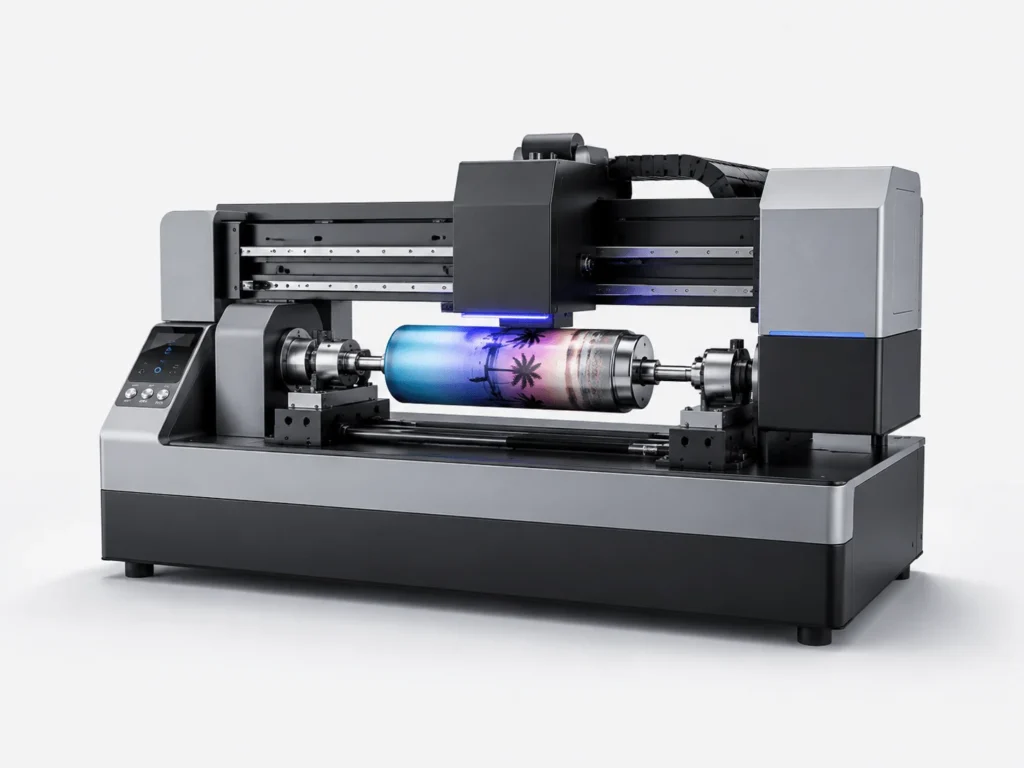
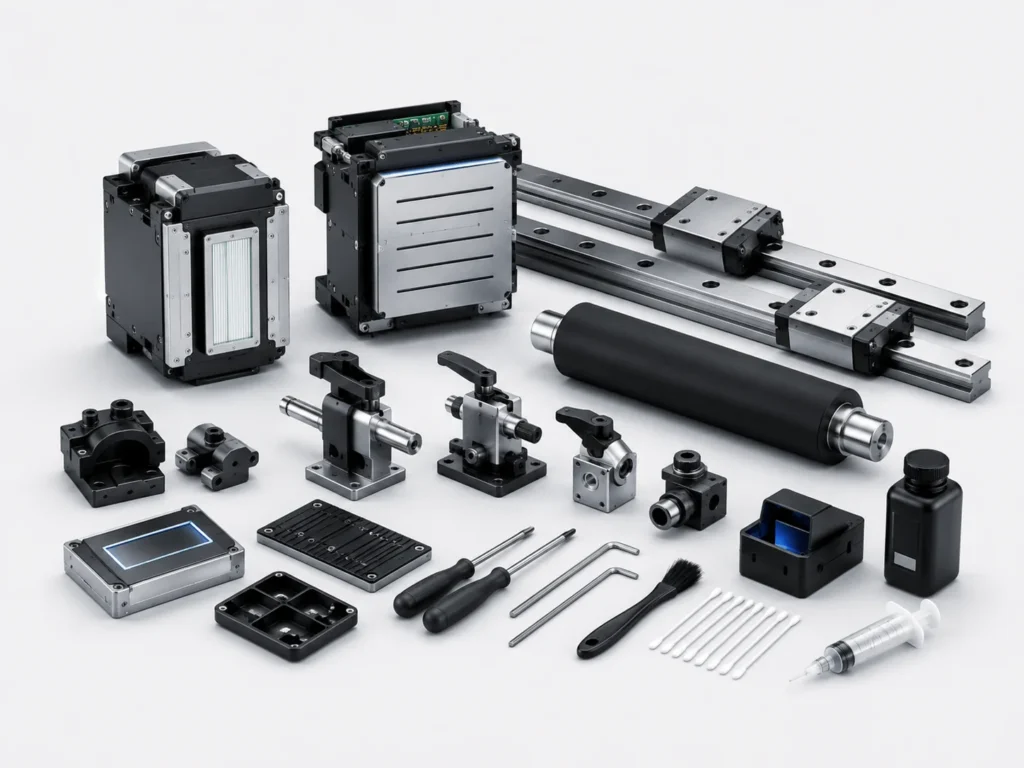
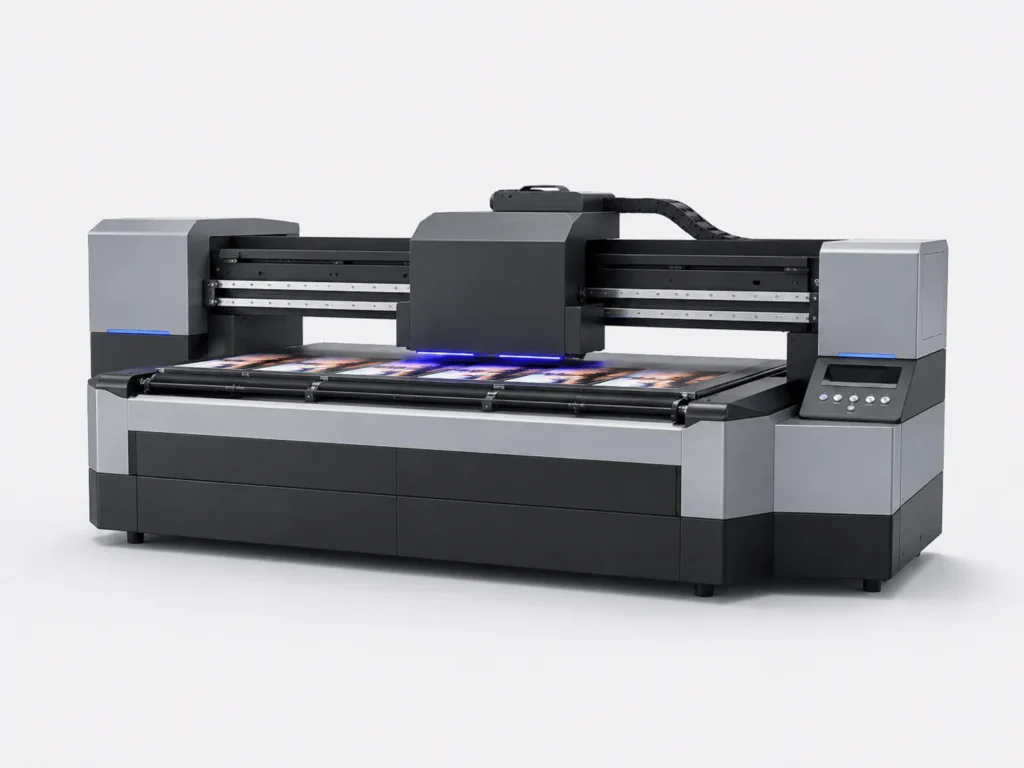
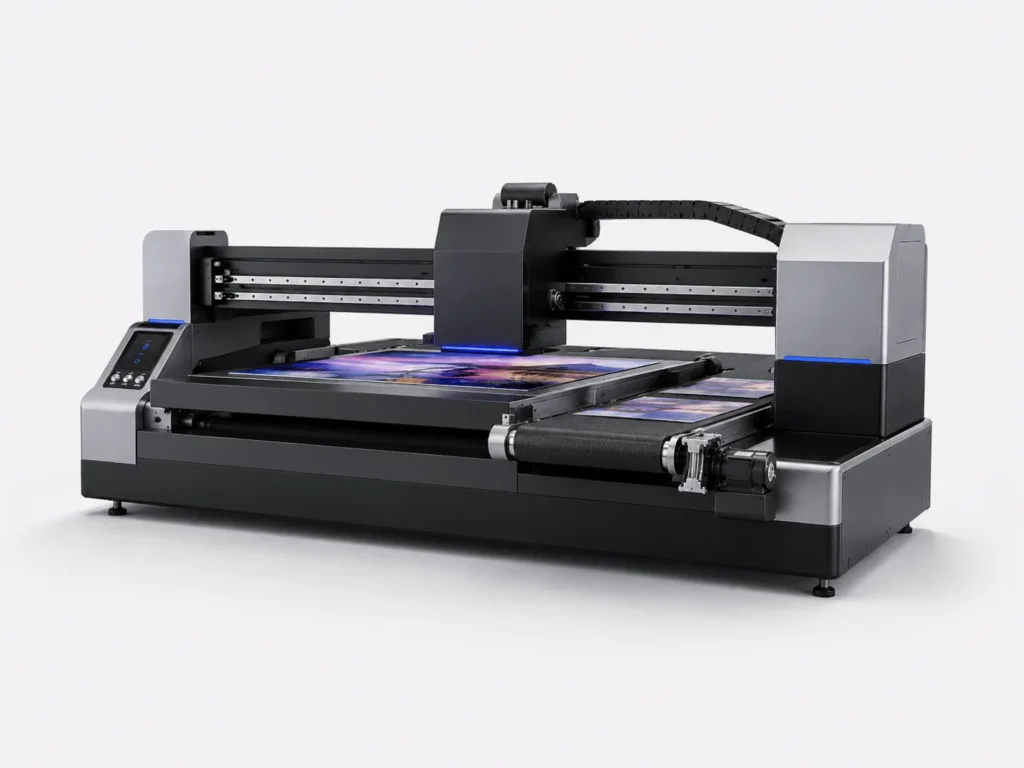
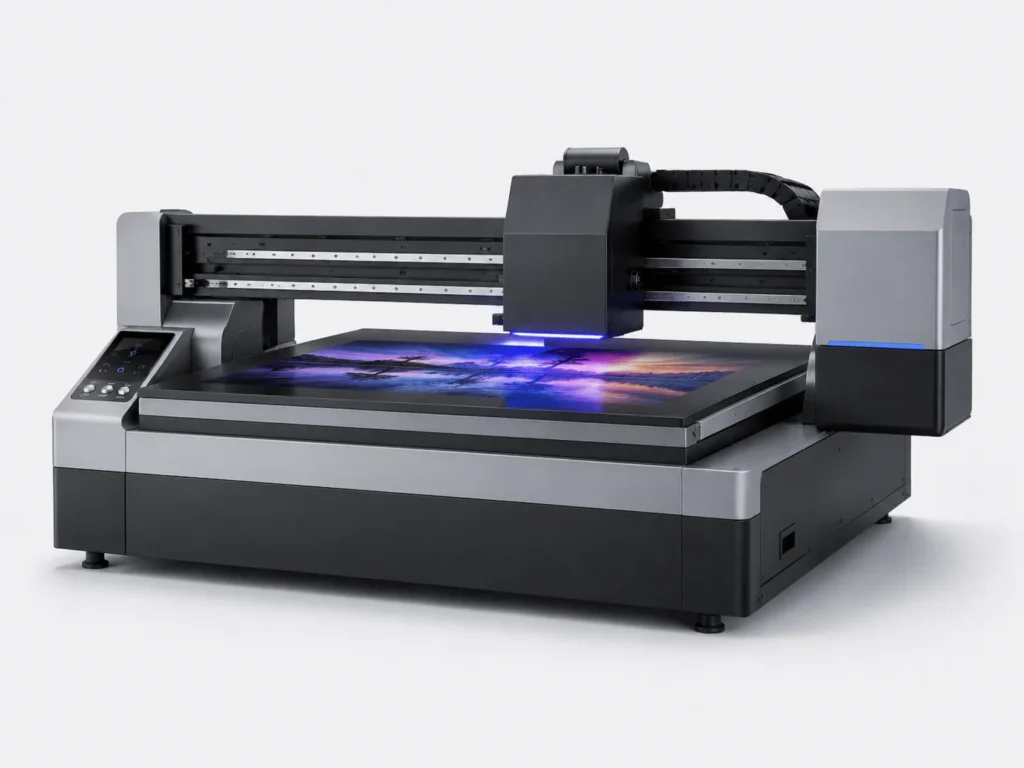
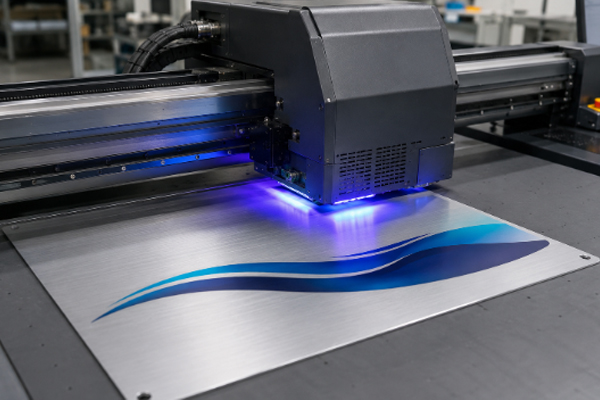
The printhead of a UV flatbed printer is like the “core engine” of the equipment, directly affecting image quality and production efficiency. Many users focus on printhead configuration when purchasing equipment, as printhead performance often determines the final output quality. At present, there are many types of industrial printheads on the market, including Ricoh G5, Ricoh G6, Kyocera, and Seiko models. For metal nameplate production, the Ricoh G6 printhead is favored by many companies due to its high precision and stability. Taking the 2513 industrial UV flatbed printer shown in the image as an example, it is equipped with Ricoh G6 printheads, which enable finer ink droplet control, making image edges sharper and color transitions richer.
If small text, QR codes, and complex graphics are frequently printed, insufficient printhead precision may result in blurry text or unclear lines. High-quality printheads ensure better detail reproduction, making finished products look more professional. At the same time, printhead stability also affects continuous production capability, reducing clogging and downtime. Therefore, printhead configuration is a key factor that must be carefully considered during selection.
Platform Structure Affects Production Stability
Metal materials are generally heavier than acrylic or PVC materials. If the machine frame lacks sufficient strength, long-term use may lead to platform deformation or positioning errors. These issues become more noticeable in batch production and may gradually affect product consistency.
High-quality equipment typically includes:
● High-strength steel frame structure
● Vacuum suction platform
● High-precision guide rail system
● Stable servo drive system
These configurations ensure that materials remain flat and stable during printing while reducing vibration caused by high-speed operation. For factories requiring long hours of continuous production, a solid machine structure not only improves printing accuracy but also reduces maintenance costs.
UV Curing Capability Cannot Be Ignored
Many people think that UV printing mainly depends on inkjet performance, but UV curing capability is equally important. Especially in metal printing, where surfaces are relatively smooth, curing quality directly affects adhesion and wear resistance. After ink is sprayed onto the surface, it must be quickly cured by UV light. If curing is insufficient, issues such as ink spreading, color deviation, or reduced adhesion may occur.
When selecting equipment, it is important to consider:
● UV lamp power
● Curing uniformity
● Lamp lifespan
● Cooling system performance
A good curing system allows the ink to form a strong protective layer quickly, improving durability and print stability.
Choosing Equipment Size Based on Production Needs
Small-Batch Processing Businesses
Companies that are just entering the industry or mainly focus on customization do not necessarily need oversized equipment. Many users have limited order volume in the early stage, and choosing large machines blindly may increase investment pressure.
Typical products include:
● Small nameplates
● Metal labels
● Craft signage
● Gift customization products
These products are usually small in size, and medium or small UV printers can already meet production needs. They occupy less space, are easy to operate, and help businesses start quickly.
Medium and Large-Scale Factory Production
If a company frequently handles industrial nameplates, advertising signage, or large decorative panel orders, large-format equipment has clear advantages. For example, the 2513 industrial UV flatbed printer has a printing area of approximately 2500mm × 1300mm, allowing multiple products to be printed simultaneously. Printing several nameplates at once improves machine utilization and reduces manual handling.
This type of equipment is especially suitable for:
● Corporate signage
● Industrial control panels
● Metal decorative panels
● Large-scale signage systems
For businesses with high batch demand, large-format equipment can significantly improve productivity.
Reserve Future Production Capacity
Equipment purchase is not a short-term investment, and many companies use it for several years or even longer. Therefore, when selecting machine size, future business growth should also be considered. Many companies find that their equipment becomes insufficient after expansion, forcing them to purchase new machines. This increases costs and disrupts production planning. If budget allows, choosing a slightly larger machine can reduce future reinvestment.
What Matters Most in Metal Nameplate Printing?
Image Adhesion Strength
Whether the print is durable is often more important than whether the colors are vivid. Many products need to be installed for long periods on equipment, outdoor environments, or public spaces. If the image easily peels off, product quality will be seriously affected.
When purchasing equipment, manufacturers may be asked to provide:
● Cross-hatch adhesion test samples
● Alcohol wipe test samples
● Wear resistance test samples
● Outdoor application cases
These real tests provide a clearer understanding of print quality than promotional materials alone.
Color Reproduction Ability
Corporate logos and brand identities usually follow strict color standards, so accurate color reproduction is crucial. High-quality UV printers offer precise color control, making reds brighter, blues purer, and gradients smoother. For branding products, good color performance enhances overall visual quality.
Long-Term Operating Stability
Many processing companies run production continuously for several hours or even more than ten hours a day. If the equipment lacks stability and frequently stops or malfunctions, it will reduce efficiency and increase maintenance costs. Therefore, it is recommended to conduct on-site testing before purchasing. Real production performance is often more reliable than specification sheets.
After-Sales Service Capability
Even the best equipment requires maintenance. As industrial machines, UV printers depend heavily on training, technical support, and spare parts availability.
A complete after-sales service system usually includes:
● Installation training
● Technical support
● Spare parts supply
● Remote assistance
Quick problem resolution helps reduce downtime losses when issues occur.
Frequently Asked Questions
Is an Industrial UV Printer Necessary for Metal Nameplates?
If production is only occasional and small-scale, a standard printer may be sufficient. However, for long-term industrial production or bulk orders, industrial-grade machines offer better stability and durability, meeting high-load production requirements.
Is the Ricoh G6 Printhead Suitable for Metal Nameplates?
Yes. The Ricoh G6 printhead balances speed and precision, allowing clear printing of small text, QR codes, and complex patterns. It is widely used in industrial nameplate production.
Is Primer Required for Metal Printing?
Some materials require it. Mirror stainless steel, electroplated metals, and high-gloss surfaces typically need a special primer to improve ink adhesion.
Does a Higher Price Mean a Better Machine?
Not necessarily. Price does not directly determine suitability. The best choice is the equipment that matches your product structure and production needs.
When purchasing a UV printer for metal nameplates, many users tend to focus mainly on specifications and price. However, the real determinant of production results is how well the equipment matches actual business needs. Printhead performance affects image precision, platform structure influences operational stability, UV curing systems determine adhesion quality, and machine size impacts production efficiency. Only by considering all these factors together can the most suitable equipment be selected.
A stable, easy-to-maintain printer with reliable output quality can reduce rework rates and improve customer satisfaction. At the same time, it is recommended to inspect real samples and conduct on-site testing to understand actual performance rather than relying solely on promotional materials. For example, the 2513 industrial UV flatbed printer equipped with Ricoh G6 printheads already meets the production needs of most metal nameplate manufacturers with its high precision, large-format capability, and stable operation. Making a choice based on order type, budget, and production capacity is often more practical than simply pursuing high-end configurations, and it is more beneficial for long-term stable business growth.