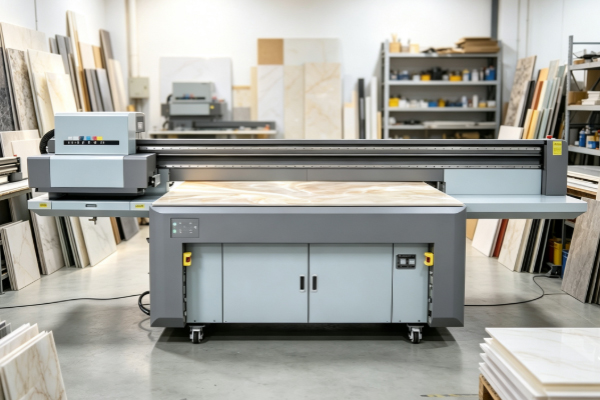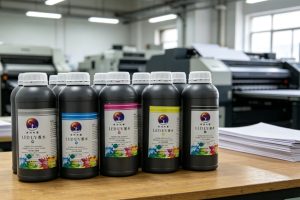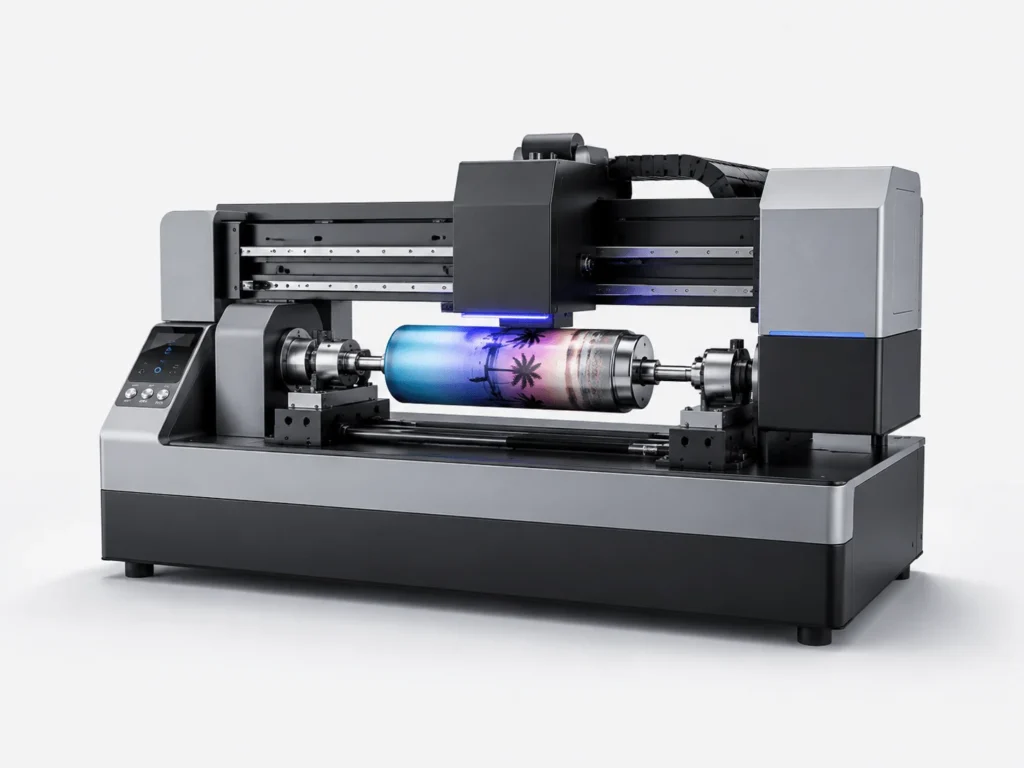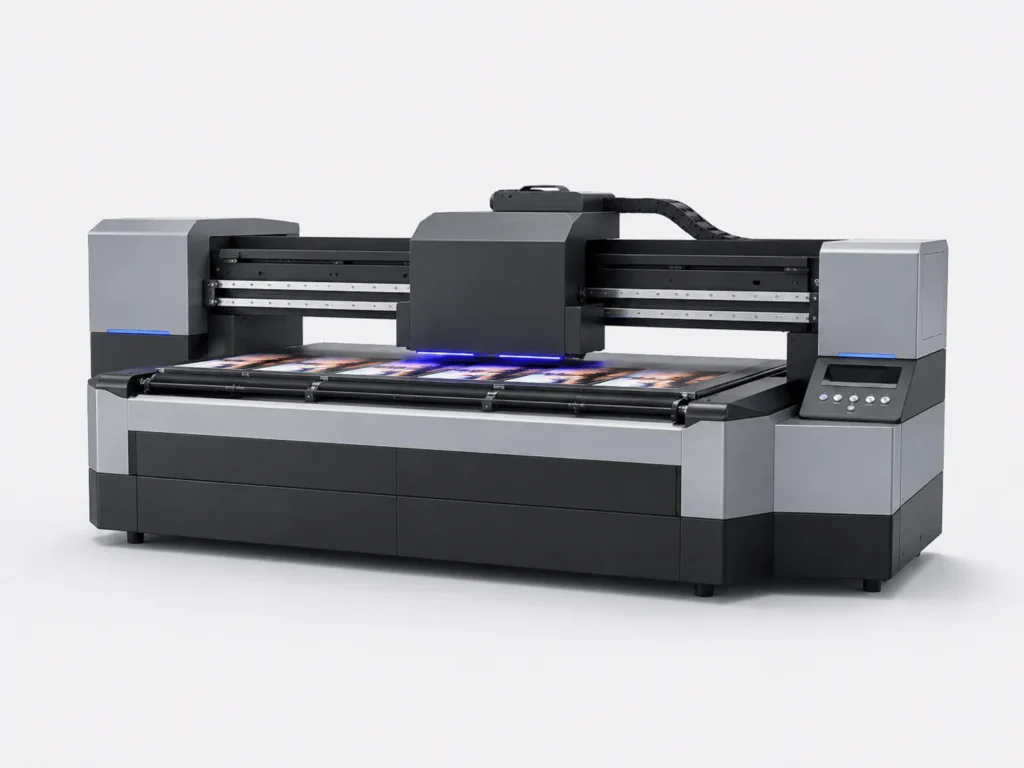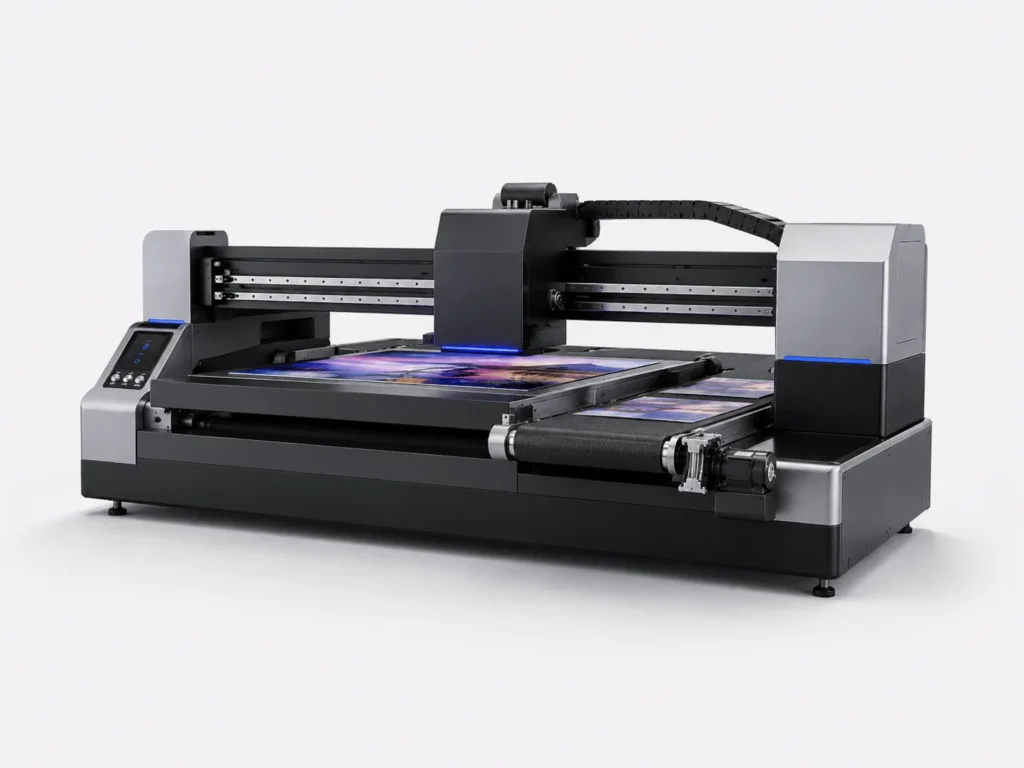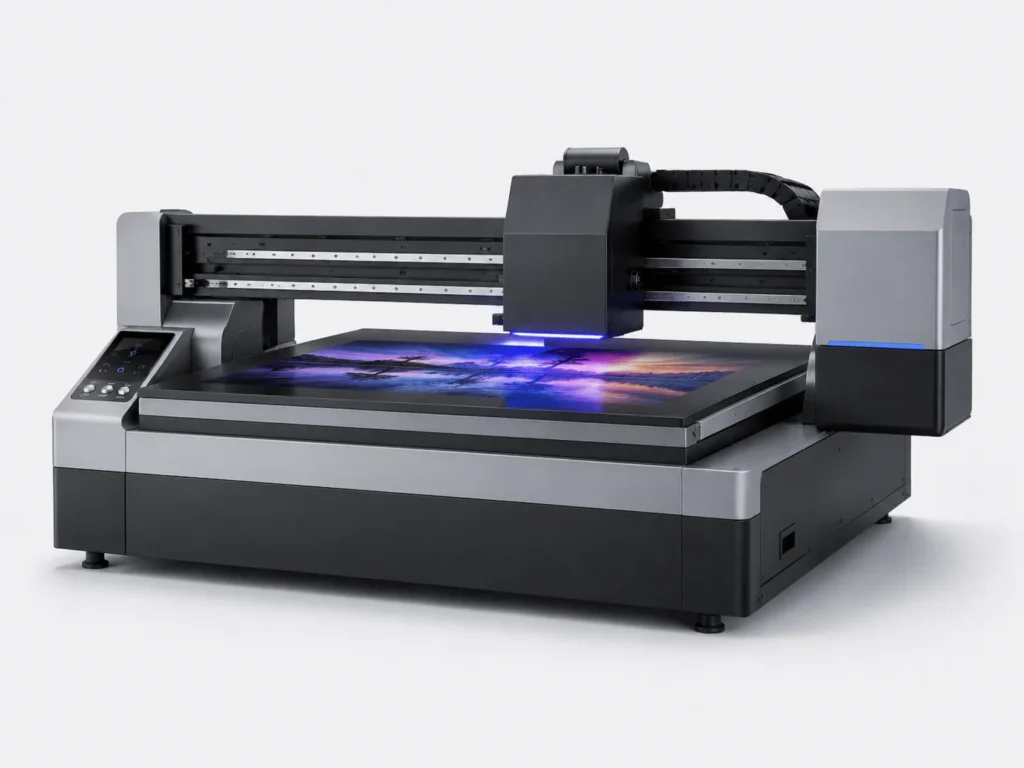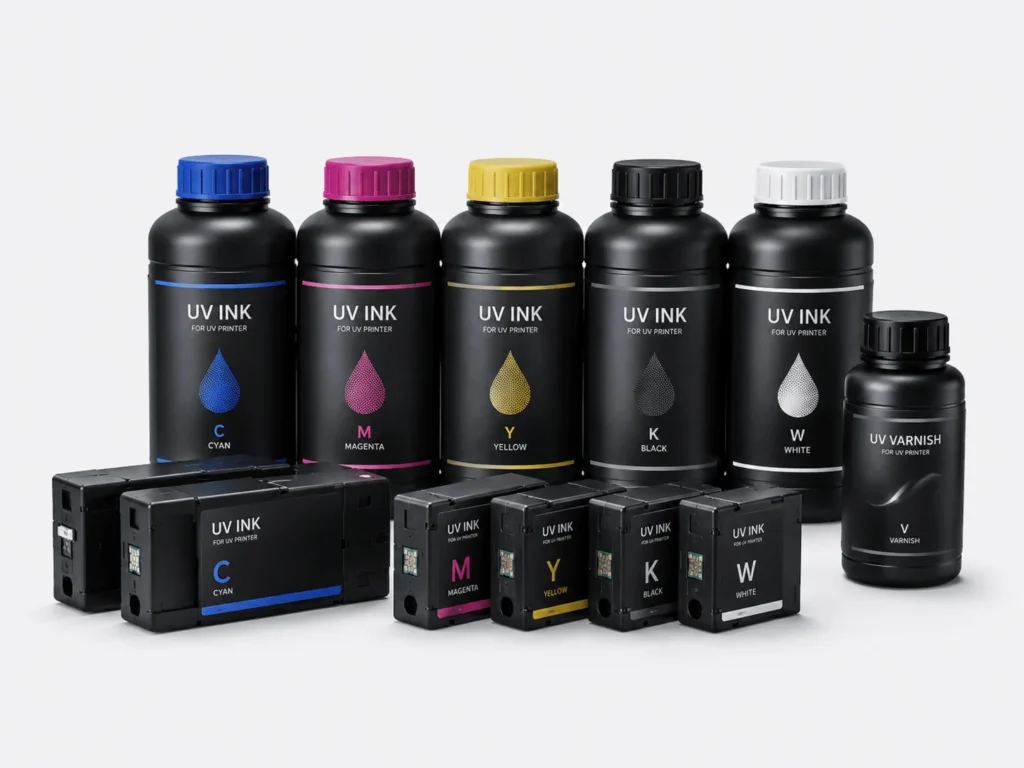
Against the backdrop of rapid digital printing development, more and more manufacturing companies are adopting industrial-grade UV flatbed conveyor printers to improve production efficiency and product added value. Compared with ordinary UV printing equipment, industrial-grade machines offer higher production capacity, stronger stability, a higher level of automation, and continuous operating capability. They are widely used in packaging printing, appliance panels, advertising displays, electronic products, and decorative building materials. For companies planning to introduce UV printing equipment, understanding the core features of industrial-grade UV flatbed conveyor printers can help determine whether the equipment meets their production needs and also help businesses avoid unnecessary mistakes during procurement.
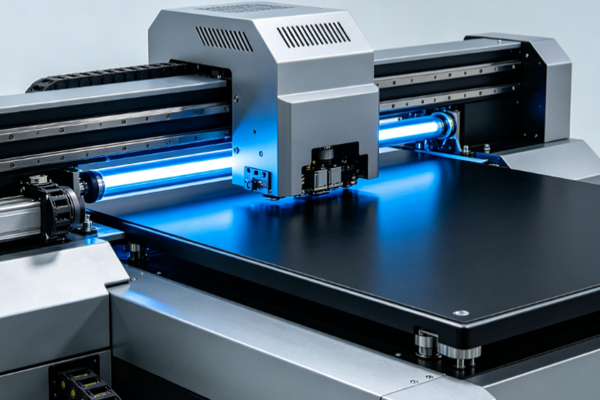
Industrial-grade equipment has stronger continuous production capability
Industrial production environments place higher demands on equipment operating efficiency, and one of the main reasons industrial-grade UV flatbed conveyor printers are favored by businesses is that they can adapt to long-hour, high-frequency, and batch production rhythms while maintaining good stability during continuous operation.
The automatic conveying system enables continuous production
Compared with traditional equipment, industrial-grade UV flatbed conveyor printers place greater emphasis on production continuity, which is also one of the key features that distinguishes them from ordinary models.
- After being equipped with a high-precision conveyor belt system, materials can enter the printing area more smoothly, reducing the time loss caused by manual handling and repeated positioning.
- Materials can automatically enter the printing area, and finished products can be automatically output after printing, making the entire process smoother and more suitable for assembly-line production.
- Automatic output of finished products after printing can effectively reduce loading and unloading waiting time, allowing the equipment to complete more orders within the same period.
- By reducing the time loss caused by frequent loading and unloading, companies can not only increase production capacity but also reduce manual involvement and make production management more efficient.
This continuous production mode can effectively improve overall output and is more suitable for batch order processing. For companies that need stable delivery and fast turnaround, the automatic conveying system not only saves labor but also makes the production process smoother and reduces efficiency losses caused by waiting and handling.
Supports long-term stable operation
Industrial production usually requires equipment to work for long periods of time. Whether the equipment can remain stable under high-load conditions directly affects a company’s production schedule and delivery capability.
- Meeting multi-shift production needs allows companies to flexibly arrange day shifts, night shifts, or even continuous operation according to order conditions, thereby improving equipment utilization.
- Reducing production losses caused by downtime helps companies lower the risk of delayed delivery and makes production plans easier to execute.
- Maintaining a stable printing state allows the equipment to preserve good output quality during long-term operation and avoid fluctuations that affect finished product quality.
- Improving equipment utilization enables companies to complete more production tasks within the same time frame, thereby increasing overall operational efficiency.
For companies with large order volumes, continuous operating capability is especially important. Industrial-grade equipment is designed with greater emphasis on durability and stability, enabling it to maintain good output performance during long-term operation and helping businesses reduce interruption risks while improving overall production efficiency.
Printing quality is more stable and reliable
High-quality output is one of the important characteristics of industrial-grade equipment. In many industries, the equipment must not only “print,” but also “print stably, clearly, and consistently,” which is the key difference between industrial-grade models and ordinary equipment.
High-precision printing meets industrial standards
Many industries have very strict requirements for image quality, especially in high-end packaging, electronic products, and appliance panels, where printing results often directly affect product grade and market competitiveness.
- When image details are clearer, text, lines, and patterns on the product surface can be reproduced more accurately, and the overall visual effect becomes more refined.
- Stable printing of small text can meet application scenarios with high clarity requirements, such as instructions, brand logos, and functional markings.
- Richer color layering makes gradients, shadows, and complex patterns more faithfully reproduced, giving the finished product a stronger sense of texture.
- After meeting the appearance requirements of high-end products, companies become more competitive when dealing with brand clients or customized clients and are more likely to gain recognition.
Whether for appliance panels or high-end packaging, excellent printing results can be achieved. High-precision output not only improves visual performance but also gives companies more confidence when facing demanding customers, allowing them to better meet the needs of branding, customization, and refined production.
Higher printing consistency
Industrial production places great emphasis on product consistency, especially in batch production, where color stability, small differences between batches, and controllable quality fluctuations are all important standards for evaluating equipment performance. For companies, consistency affects appearance uniformity and is also related to customer trust, rework rates, and delivery efficiency. If an industrial-grade UV flatbed conveyor printer can maintain stable output over long periods, it can reduce issues such as color deviation, missing prints, and ghosting, ensuring that each batch of products maintains a similar printing effect and thereby improving product quality stability. For companies pursuing standardized production, this stable performance is particularly important because it not only reduces rework costs but also helps build a more reliable brand reputation.
The equipment structure is more robust and durable
Industrial-grade equipment needs to adapt to long-term high-load operating environments. In terms of structural design and core component selection, it is usually more rigorous than ordinary equipment and places greater emphasis on reliability during long-term use.
Stronger machine structure stability
The overall structure of the equipment directly affects printing accuracy, especially during high-speed operation and continuous production. Whether the machine body is stable will directly determine the accuracy and consistency of the printed image.
- After adopting a high-strength frame design, the equipment can better resist vibration and external interference during operation, thereby maintaining a more stable working state.
- Reducing vibration during operation can effectively lower printing deviation and image jitter, making the output smoother.
- Improving positioning accuracy helps materials maintain the correct position more easily during conveying and printing, which contributes to a higher finished product pass rate.
- Ensuring long-term operational stability allows the equipment to maintain good performance even in high-frequency usage environments.
A robust structural design is an important foundation of industrial-grade equipment. A stable machine body not only improves printing accuracy but also reduces errors and losses caused by vibration, allowing the equipment to maintain good working conditions during long-term operation.
Longer lifespan of core components
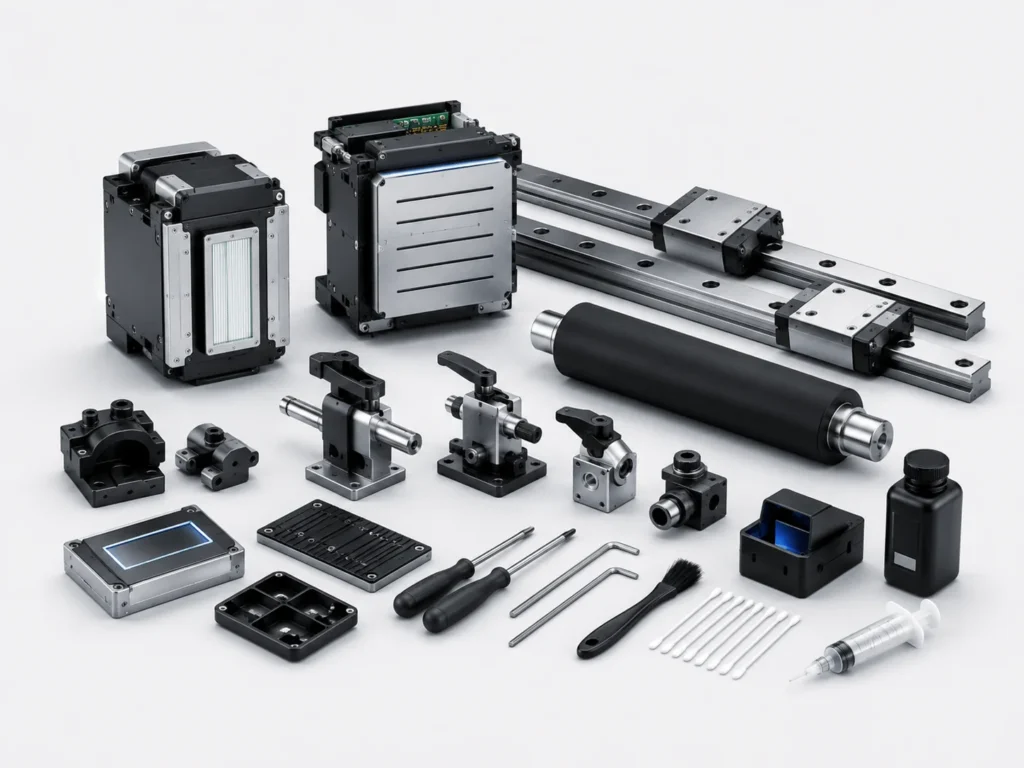
Long-term usage cost is an important concern for businesses. Industrial-grade equipment usually uses more durable key components, which can effectively reduce maintenance frequency, shorten downtime for repairs, and further improve the return on equipment investment. High-quality configurations help extend the service life of the equipment and also allow companies to achieve more stable operating performance in long-term production. For companies that want to control overall costs, a longer lifespan of core components means less maintenance pressure in the future and greater overall equipment value.
Automation level is significantly improved
Automated production has become an important development direction in modern manufacturing, and industrial-grade UV flatbed conveyor printers perform particularly well in this regard. They not only improve production efficiency but also make enterprise management more modernized.
Reduces manual involvement
Industrial-grade equipment places greater emphasis on automated management, which is not only a reflection of technological upgrading but also an important means for companies to reduce labor costs and improve production efficiency.
- After automatic feeding becomes more efficient, the process of materials entering the equipment becomes smoother, reducing the time consumption caused by manual handling and repetitive operations.
- Automatic positioning reduces errors, making printing positions more accurate and lowering quality problems caused by inconsistent manual placement.
- Automatic collection improves efficiency, making finished product output more continuous and reducing manual waiting and sorting steps.
- After reducing manual handling workload, employees can devote more energy to quality inspection and production coordination, thereby improving overall operational efficiency.
Automation upgrades help companies optimize production processes. By reducing manual intervention, companies can lower the error rate while allowing employees to focus more on quality management and production coordination, thereby improving overall operational efficiency.
Improves production management efficiency
Digital control systems make production more convenient. Operators can quickly complete parameter settings, image import, printing mode switching, and equipment calibration through a touchscreen interface, making operation more intuitive and efficient. The system can also precisely control printing speed, ink volume, and curing intensity, reducing quality fluctuations caused by human error. When dealing with multi-batch and multi-specification orders, task switching is faster, which shortens job changeover time and improves equipment utilization. At the same time, digital systems make it easier to manage production data in a unified way, helping companies record order information, operating status, and maintenance conditions, thereby improving the standardization and traceability of production management. For factories pursuing refined management, this intelligent capability not only improves efficiency but also enhances control over the production process.
Adaptable to more industrial application scenarios
Industrial-grade UV flatbed conveyor printers have strong material compatibility and industry adaptability, which allows them to be used not only in a single field but also across multiple industries, helping companies expand more business possibilities.
Supports printing on multiple materials
Rich material adaptability expands the application range and gives companies greater flexibility in product development and market expansion.
- Paperboard and corrugated board can be used for fast processing of packaging products, helping companies meet the needs of color boxes, gift boxes, and similar orders.
- Acrylic and PVC sheets are suitable for advertising displays and decorative applications, delivering good visual effects and surface texture.
- Metal decorative panels can be used for home appliances, industrial shells, and other products, allowing the equipment to play a role in more high-value-added scenarios.
- Glass and composite materials can also achieve good printing results, giving companies more options in special material processing.
Companies can develop more product types according to market demand. Multi-material compatibility means the equipment is no longer limited to a single type of order, but can quickly switch application scenarios according to different customer needs, improving equipment utilization and business scalability.
Meets production needs across multiple industries
Different industries have different requirements for printing equipment, and industrial-grade UV flatbed conveyor printers, with their stability and adaptability, can cover more practical application scenarios.
- In the packaging industry, when used for color box and gift box production, they can balance efficiency and appearance, helping companies increase product added value.
- In the advertising industry, when used for display boards and signage production, they can meet the needs of large format, high clarity, and fast delivery.
- In the appliance industry, when used for control panel decoration, they can achieve more refined pattern presentation and more stable batch output.
- In the building materials industry, when used for decorative panel processing, they can help companies expand personalized and customized business.
The wide range of industry applications further demonstrates the comprehensive value of the equipment. For companies that want to expand product lines and improve market competitiveness, this multi-scenario adaptability is undoubtedly a major advantage.
With the continuous advancement of smart manufacturing and digital production, industrial-grade UV flatbed conveyor printers are becoming important equipment for many companies to enhance competitiveness. With features such as continuous production, high-precision output, robust structure, and intelligent management, this equipment can help businesses improve production efficiency, optimize product quality, and reduce operating costs. Springyprinter focuses on the research, development, and manufacturing of industrial UV digital printing equipment and can provide customers with professional industrial UV printing solutions and comprehensive technical support services.