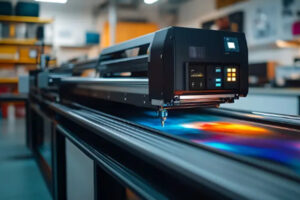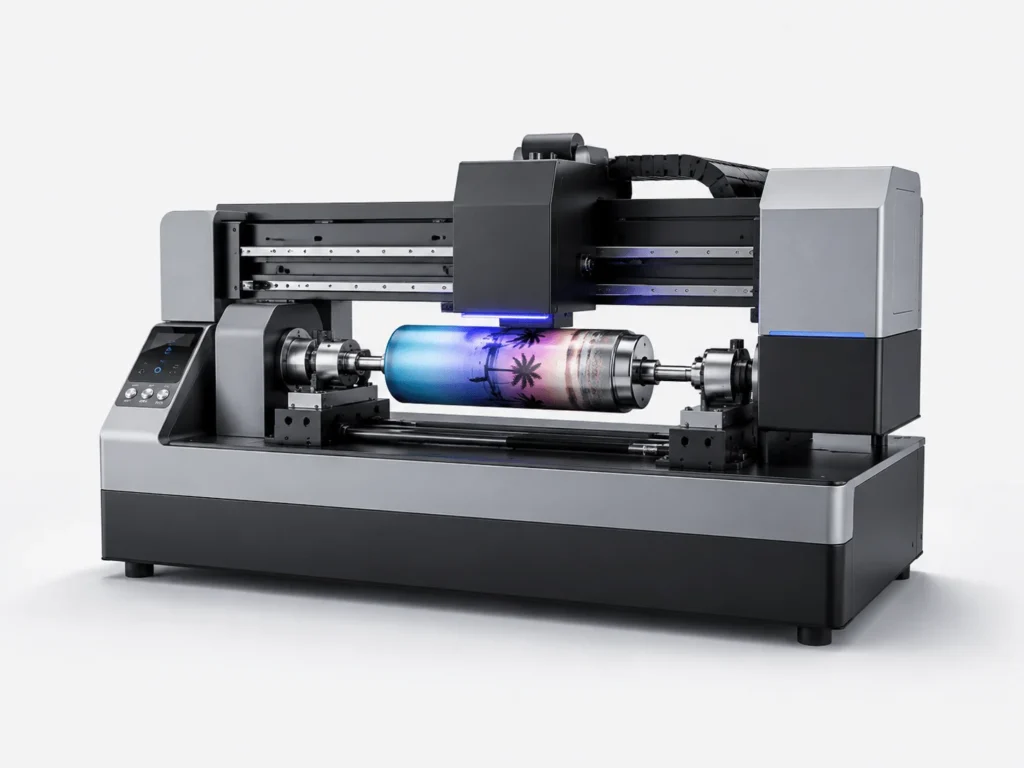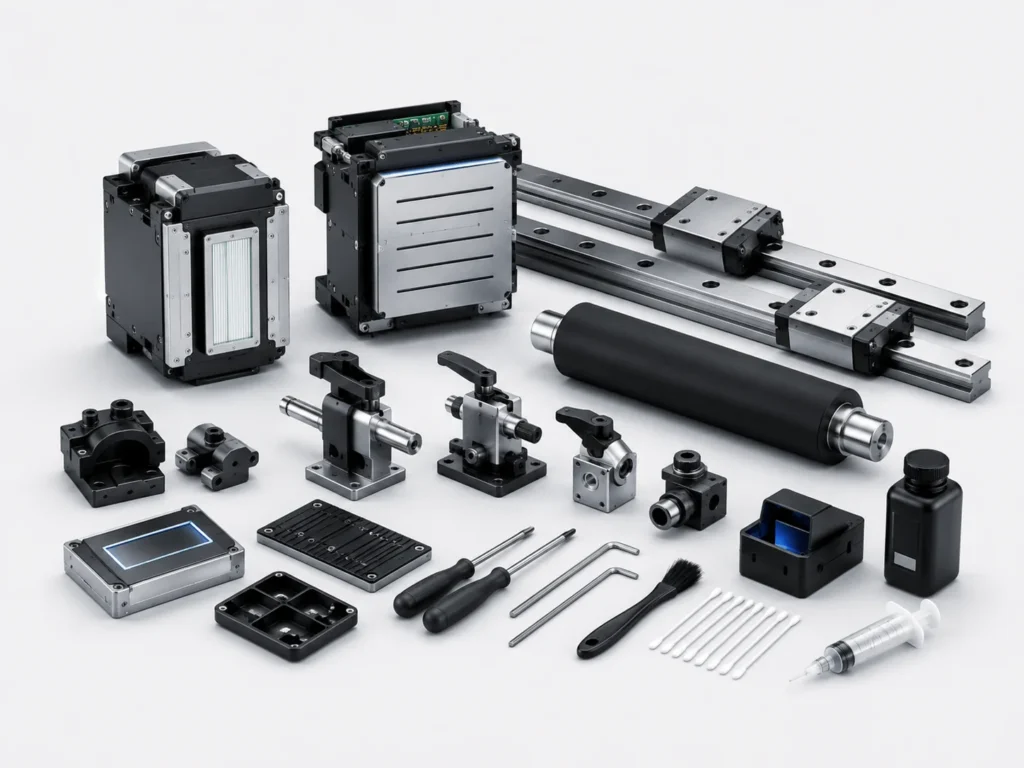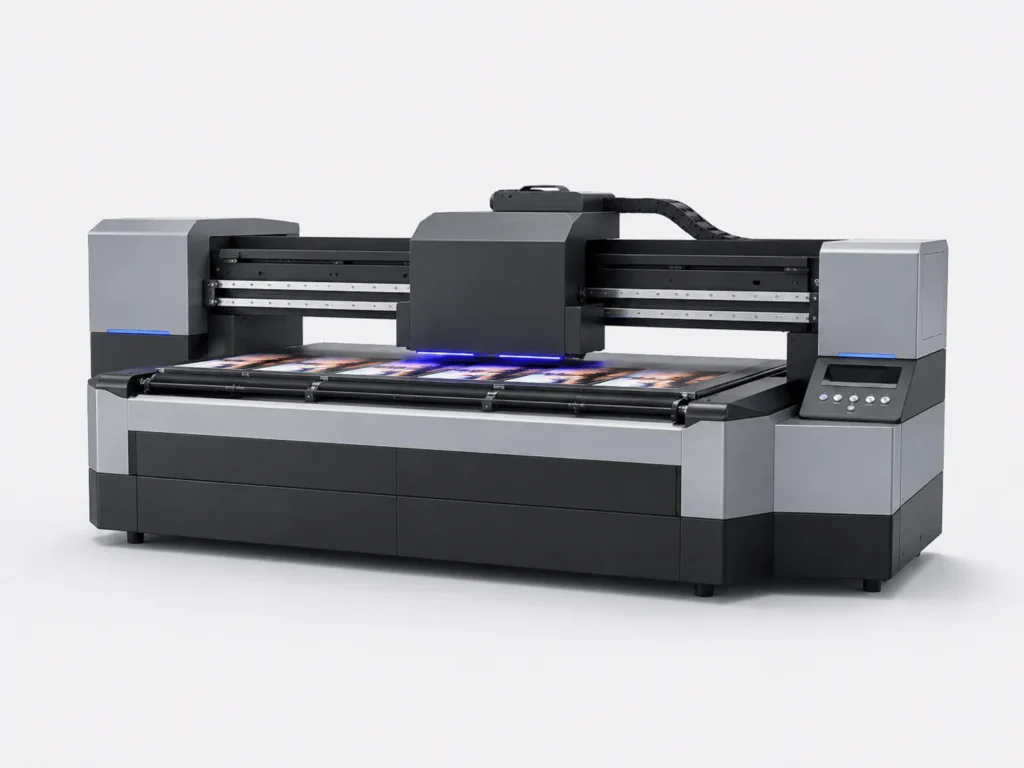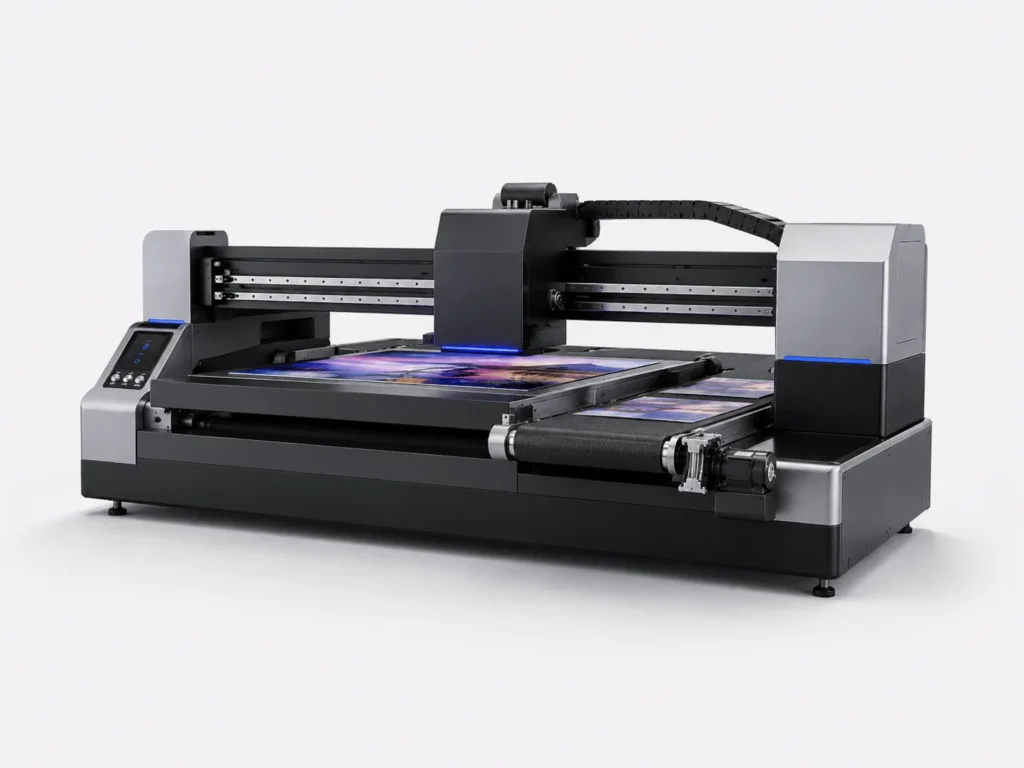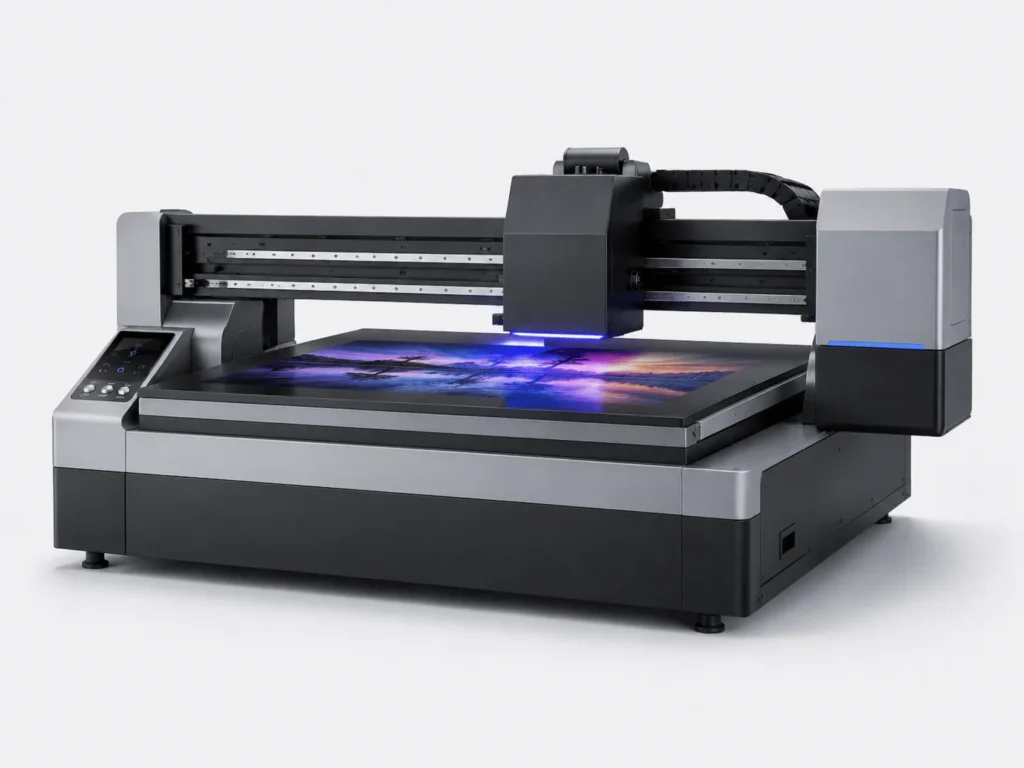
Against the backdrop of continuous upgrades in industrial digital printing, UV flatbed conveyor printers have become important production equipment in packaging printing, appliance panels, advertising production, and industrial customization. For enterprises, production speed is certainly important, but printing accuracy often directly determines product grade and market competitiveness. Once problems such as blurry patterns, color deviation, or inaccurate positioning occur, they not only affect finished product quality but may also cause material waste. “How to ensure printing accuracy” has become one of the issues most concerned by many users when purchasing and using UV flatbed conveyor printers.
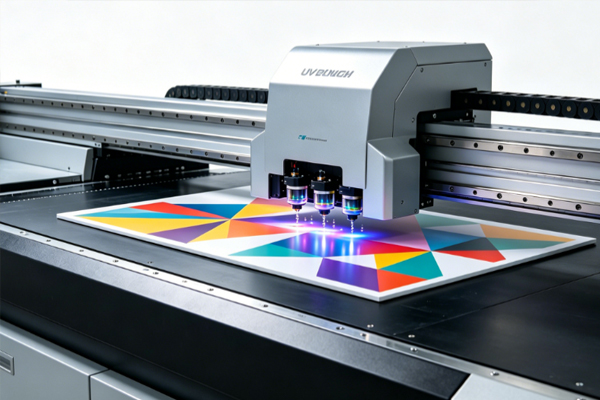
How Does Mechanical Structure Stability Affect Printing Accuracy
The foundation of printing accuracy comes from the stability of the overall equipment structure. The more stable the equipment, the more accurate the printhead movement trajectory, and the better the image reproduction effect.
Frame Rigidity Determines Operational Stability
During high-speed operation, even the slightest vibration can affect inkjet positioning, especially during long-term continuous printing, where this impact will be continuously amplified.
- A high-strength frame can reduce equipment deformation and prevent printhead deviation caused by structural looseness.
- A stable structure can reduce vibration during printing, allowing the printhead to maintain smooth operation at all times.
- A body with better rigidity helps improve the linear accuracy of printhead movement and reduces image streaking or ghosting.
- During long-term use, a solid frame can also prevent error accumulation and ensure consistency in batch products.
For industrial-grade equipment, structural stability is the first line of defense for accuracy assurance and an important foundation for determining whether the equipment can maintain stable production over the long term.
Precision Control of Guide Rails and Transmission System
The guide rail system directly affects the movement trajectory of the printhead, while the transmission system determines whether the positioning is accurate in each reciprocating movement.
- High-precision linear guide rails can ensure smooth printhead movement and reduce jamming and vibration.
- Precision lead screws or servo systems can improve positioning accuracy, making each printing point more precise.
- The smaller the mechanical clearance, the fewer deviations occur during printing, and the neater the image edges become.
- If the transmission system remains in good condition for a long time, the equipment can still maintain consistent output after extended operation.
The more precise the structure, the higher the reproduction fidelity of the printed image, making it especially suitable for packaging, electronics, and decoration industries with high detail requirements.
How Does the Printhead System Determine Image Detail
The printhead is one of the core components affecting printing accuracy. It not only determines whether the image is clear, but also affects color layering, detail performance, and overall image quality.
Ink Droplet Control Capability Affects Image Quality
The printhead controls ink droplet size and ejection method, directly determining the fineness and resolution of the image.
- Small ink droplets can achieve higher-resolution output, making fine text and complex patterns clearer.
- Multi-level grayscale technology can enhance image layering and make gradient transitions more natural.
- The more precise the ink droplet control, the less graininess and jagged edges appear in the image.
- For brand logos, QR codes, fine textures, and similar content, good ink droplet control is especially important.
The finer the ink droplet control, the closer the image is to the original design, and the better it can meet the visual requirements of high-end products.
Printhead Consistency and Calibration Capability
Multi-printhead systems need to maintain a high degree of consistency; otherwise, even if a single printhead performs well, the overall output may still show deviations. The printheads must maintain synchronized ejection so that color block misalignment or line breaks can be avoided. Automatic calibration functions can reduce color deviation and keep the output of different printheads uniform. Regular compensation and inspection can promptly correct minor errors and prevent problems from expanding further. For batch production, the higher the consistency, the smaller the differences between products and the higher the pass rate. A stable printhead system is not only an important guarantee for high-quality output, but also a key factor for enterprises to control rework rates and material loss.
How Does the Conveyor System Affect Positioning Accuracy
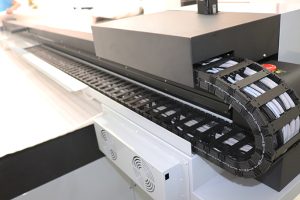
The conveying system of a UV flatbed conveyor printer is equally critical to accuracy. The stability of the material during the conveying process directly determines whether the pattern can be accurately placed in the designated position.
Conveyor Belt Running Stability
The stability of the material during transportation directly affects the image position, especially for large-format boards or continuous batch printing, where even slight deviations can affect the final result.
- Smooth conveyor belt operation can effectively prevent material from shifting or shaking left and right.
- Uniform conveying helps maintain a stable distance between the printhead and the material, reducing image stretching.
- If acceleration and deceleration are not properly controlled, positioning errors may occur, so a more precise drive system is required.
- For long-format printing tasks, stable conveying can significantly improve overall finished product accuracy.
Stable conveying is the key foundation for continuous production and an important condition for ensuring consistent quality in batch orders.
Positioning System and Correction Mechanism
Modern equipment is usually equipped with automatic correction functions, which can help the machine promptly correct deviations during operation and reduce manual intervention.
- The photoelectric positioning system can quickly identify material edges and ensure accurate printing start positions.
- Automatic detection functions can reduce repeated manual adjustments and improve production efficiency.
- The correction system can promptly adjust slight material deviations to avoid scrapping an entire batch.
- For repetitive and large-volume orders, precise positioning can significantly improve the pass rate of finished products.
The more precise the positioning, the neater the printed image, and the easier it is for enterprises to maintain stable quality during production.
How Does the Software Control System Improve Printing Accuracy
In addition to hardware, the software system also affects the final output. In many cases, differences in printing accuracy do not come entirely from the machinery itself, but from the control logic and image processing capability.
RIP Software and Image Processing Capability
Image processing is an important part of printing accuracy, and excellent software can better adapt the original design file to equipment output.
- RIP software can optimize image resolution output and make details clearer.
- By reasonably controlling ink volume distribution, local ink buildup or blurring can be reduced.
- Color management functions help improve color reproduction accuracy and make the finished product closer to the design draft.
- For complex patterns, gradient images, and high-precision text, software optimization plays an especially obvious role.
Software optimization not only improves visual effects, but also helps enterprises reduce proofing times and material waste.
Motion Control System Optimization
The equipment’s movement trajectory is determined by the control system; the more precise the control, the more stable the printing.
- Precisely controlling the printhead movement path can reduce edge errors and repeated printing deviations.
- Properly adjusting the balance between printing speed and accuracy helps achieve both efficiency and quality.
- During multi-layer printing, the control system can ensure that each layer is accurately aligned.
- An advanced motion control system can also improve overall equipment stability and reduce abnormal shutdowns.
The more advanced the control system, the better the printing consistency, making it more suitable for industrialized and standardized production scenarios.
How Do Environment and Maintenance Affect Final Accuracy
Many users easily overlook the impact of external factors on accuracy. In fact, even if the equipment configuration is excellent, it is difficult to maintain an ideal state for a long time if the environment and maintenance are not properly managed.
Stability of the Working Environment
Environmental changes directly affect equipment performance. Excessively high or low temperatures can affect ink fluidity and curing results, abnormal humidity may cause unstable material adsorption and reduced adhesion, and dust in the air may also affect printhead operation, causing clogging or image defects. Maintaining stable temperature helps ink spray normally, controlling humidity can reduce material warping and static interference, and keeping the working environment clean can lower the risk of contamination to the printhead and guide rails. Only under suitable temperature and humidity, clean air, and stable operating conditions can a UV flatbed conveyor printer better maintain accuracy and produce high-quality finished products.
Daily Maintenance and Calibration
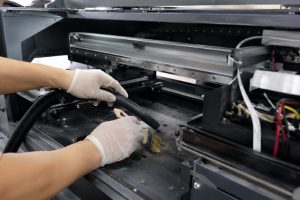
Equipment maintenance is the long-term guarantee for maintaining accuracy. Many accuracy problems are not caused by equipment failure itself, but by performance degradation due to a lack of maintenance over time.
- Regular cleaning of the printhead can prevent clogging and avoid broken lines, ink shortage, and missing image sections.
- Timely printhead calibration helps maintain spray consistency and accurate image alignment.
- Checking the condition of the guide rails and conveyor system can help detect wear, looseness, or deviation issues in advance.
- Updating software and parameter settings in a timely manner can keep the equipment operating at its best.
Continuous maintenance can effectively extend the accuracy cycle of the equipment and also help enterprises reduce maintenance costs and downtime losses.
The printing accuracy of a UV flatbed conveyor printer is not determined by a single factor, but by the combined effect of mechanical structure, printhead system, conveying control, software optimization, and environmental maintenance. Only by maintaining high standards in every link can long-term stable and high-precision industrial-grade output be achieved, thereby meeting the high-quality printing requirements of packaging, electronics, advertising, and industrial manufacturing industries. Springyprinter focuses on the research and manufacturing of industrial UV digital printing equipment and can provide customers with high-precision UV printing solutions and professional technical support services.