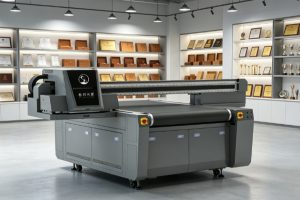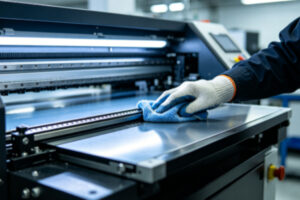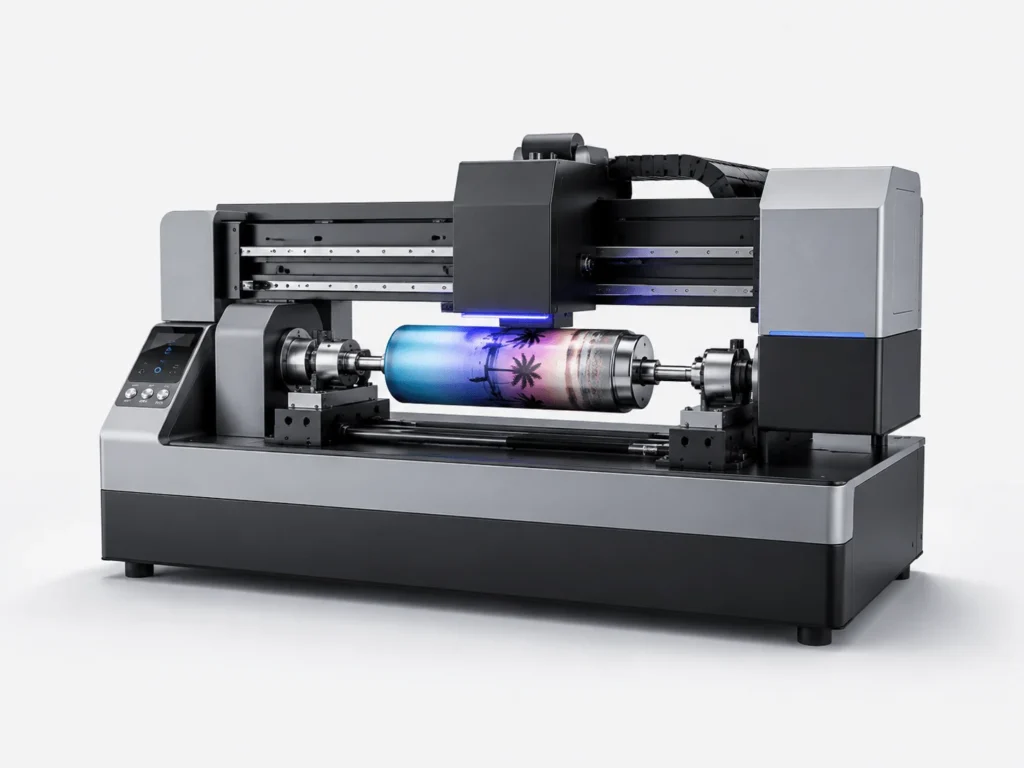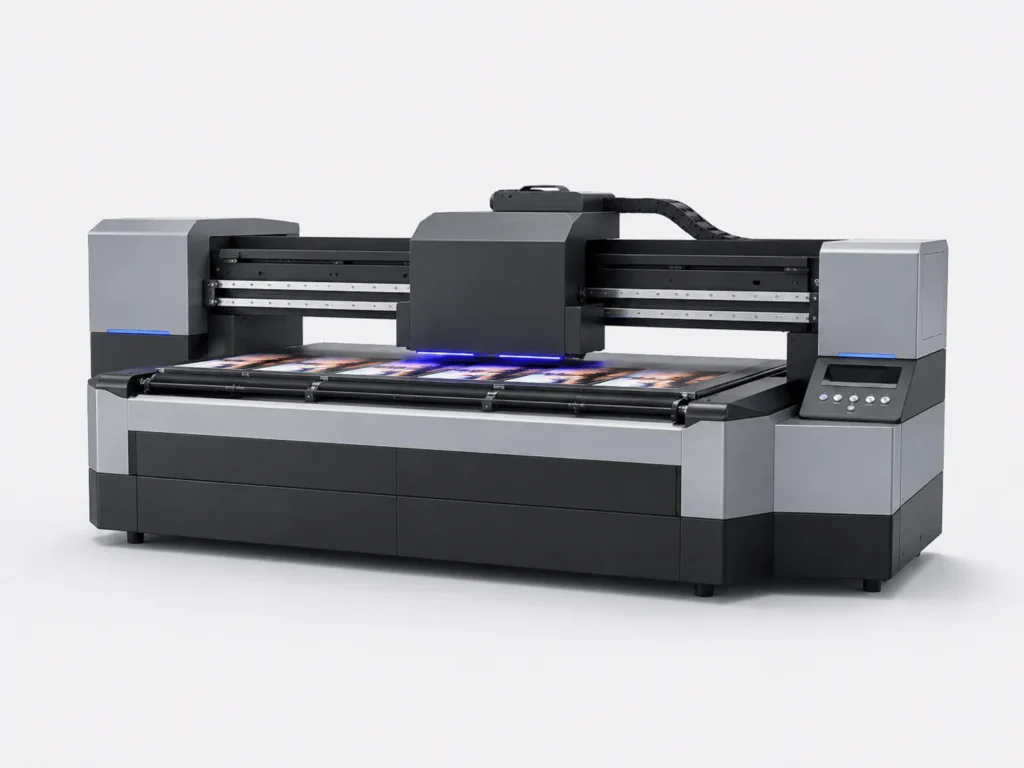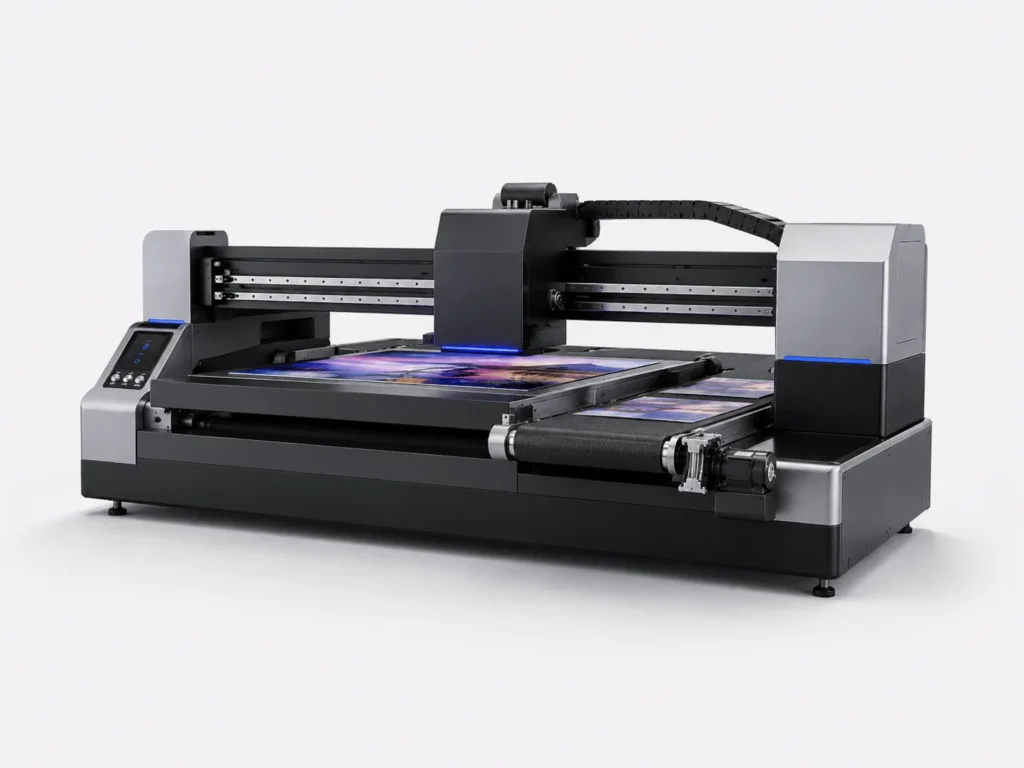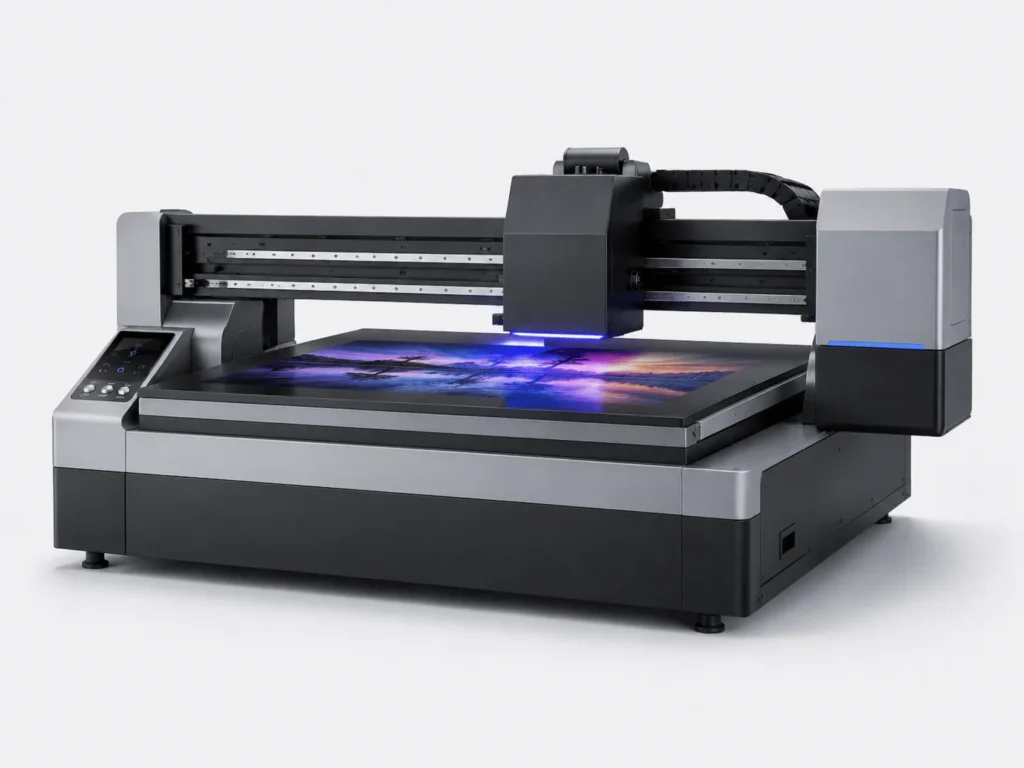
In today’s market, where orders are becoming more fragmented, delivery cycles are getting shorter, and customers are demanding more personalized products, businesses must have more flexible production capabilities to stay competitive. Traditional printing methods often struggle with multi-variety, small-batch, and frequent order changes because of complex preparation processes, heavy manual involvement, and limited material compatibility, which can reduce efficiency. With advantages such as digital output, automated conveying, and broad material compatibility, the UV flatbed conveyor printer is becoming an important piece of equipment in flexible production systems. It not only helps businesses respond to market changes faster, but also expands application scenarios while controlling costs.
Quickly Respond to Diverse Order Demands
The most important capability of flexible production is enabling businesses to enter production faster and adapt quickly to changing customer needs, thereby improving overall order fulfillment efficiency.
Shorten Production Preparation Time
A UV flatbed conveyor printer uses direct digital file output, which can significantly reduce the complicated pre-production steps found in traditional printing and help businesses move into actual production much faster.
- Printing can begin directly without plate making, greatly shortening the preparation cycle and making urgent or last-minute orders easier to handle quickly.
- Different graphic content can be switched immediately after file import, reducing repeated machine adjustments and waiting time, and making the production rhythm more compact and efficient.
- For small-batch orders, faster startup means lower upfront investment, allowing businesses to take on more types of jobs in a more flexible way.
- When customers add orders at the last minute, businesses can arrange production more quickly and are less likely to miss delivery opportunities due to long preparation times.
This highly efficient startup method gives businesses more initiative when facing market changes and significantly improves order response capability.
Meet Personalized Customization Needs
As consumer demand continues to upgrade, the market is becoming increasingly receptive to customized products, especially in packaging, gifts, advertising, and industrial decoration, where personalization has become a key competitive factor.
- The equipment supports fast switching between multiple styles and patterns, allowing different customers’ customization needs to be completed flexibly on the same production line.
- For limited editions, commemorative editions, or brand-exclusive products, the UV flatbed conveyor printer can complete small-batch processing more efficiently and reduce the limitations of traditional processes.
- Businesses can quickly adjust output content according to different customers’ brand styles and design requirements, thereby enhancing product differentiation.
- Personalized products usually carry higher added value, and this equipment helps businesses turn creative ideas into sellable products more quickly.
For businesses looking to expand their customization services, this type of equipment not only improves production flexibility but also strengthens market adaptability and profit potential.
Adapt to a Wide Range of Material Processing Needs
The stronger the material compatibility, the greater the room for businesses to operate in flexible production, and this is one of the key advantages that allows the UV flatbed conveyor printer to stand out.
Expand Product Application Range
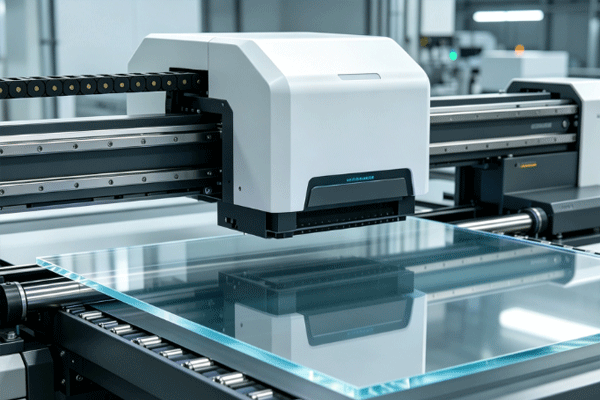
Flexible production requires not only speed, but also the ability to adapt to more materials and more industry scenarios. UV flatbed conveyor printers can be used on acrylic, glass, metal, wood, plastic, and many other substrates, covering a wide range of applications such as advertising signage, decorative panels, display props, appliance shells, industrial parts, packaging boxes, and gift boxes. They can complete high-quality printing quickly while enhancing the visual effect and added value of products. The stronger the material compatibility, the more product types businesses can develop, the greater the room for business expansion, and the more obvious the value of flexible production becomes.
Reduce Repeated Equipment Investment
In traditional production models, different materials often require different equipment, which not only increases procurement costs but also leads to idle machines and wasted resources.
- One UV flatbed conveyor printer can cover multiple processing scenarios, helping businesses reduce the pressure of repeatedly purchasing equipment.
- Because the equipment has broader applications, businesses can also achieve higher resource utilization in factory space, staffing, and daily maintenance.
- When the order structure changes, businesses do not need to replace the entire production line frequently and can quickly adapt to new processing requirements.
- This multi-purpose model better meets modern businesses’ comprehensive demands for high efficiency, low cost, and high flexibility.
By integrating equipment resources, businesses can not only reduce operational pressure but also make their production systems more compact and efficient.
Improve Small-Batch and Multi-Variety Production Efficiency
In flexible manufacturing systems, small batches, multiple runs, and frequent switching have become the norm. Improving production efficiency is not just about speed; it is also about whether a business can consistently handle complex orders.
Improve Proofing and Trial Production Efficiency
During new product development, businesses often need to quickly verify design effects, color performance, and market feedback, and the UV flatbed conveyor printer is well suited to this rapid prototyping demand. It can complete sample production faster, helping businesses shorten design validation and customer confirmation time. When adjustments are needed, it can quickly output new samples, making communication between R&D and sales more efficient. At the same time, shorter proofing cycles reduce material waste during trial production, lowering development costs. For businesses that need frequent proofing, this capability not only improves new product launch efficiency but also strengthens market responsiveness.
Optimize Multi-Batch Continuous Production
Flexible manufacturing emphasizes fast switching between different orders while maintaining stable output, and the UV flatbed conveyor printer performs well in continuous production, matching this requirement closely.
- The equipment supports continuous scheduling of different orders, reducing time loss caused by frequent shutdowns and repeated parameter adjustments.
- During multi-batch processing, the conveying system helps maintain a stable operating rhythm, making the production flow smoother and more consistent.
- For small- and medium-batch, high-frequency order patterns, the equipment can better leverage its efficiency advantages and avoid the high changeover costs common in traditional processes.
- This production method is especially suitable for custom factories, processing centers, and multi-category businesses, helping improve overall capacity utilization.
When businesses can efficiently handle multi-batch orders, the advantages of flexible production are truly transformed into real profit.
Reduce Management Pressure and Strengthen Market Competitiveness
Flexible production is not only about whether something can be made, but also about whether it is easy to manage and competitive enough, which is essential for long-term business growth.
Simplify Operation and Management Processes
Highly automated equipment reduces manual intervention, makes production management easier, and helps businesses establish standardized workflows more effectively.
- File management becomes more convenient, and operators only need to complete basic file import and parameter settings to quickly enter printing mode.
- Automatic positioning functions reduce human error and improve the accuracy and consistency of graphic output.
- Once the overall workflow becomes more standardized, businesses also save effort when training new employees and managing the production site.
- When production steps become simpler, businesses can focus more energy on order development, customer service, and market expansion.
Simplifying management processes not only improves efficiency but also helps businesses build a more stable operating system.
Improve Product Quality and Market Competitiveness
Flexible production must not only be fast, but also stable and high quality, and UV printing offers strong advantages in image clarity, color performance, and adhesion.
- The printing effect is more refined, allowing product surfaces to present stronger visual depth and greater appeal.
- Bright and stable color performance helps enhance brand image, making products easier to recognize and remember in the market.
- Strong adhesion and stability also make products more reliable in use, thereby increasing customer trust.
- When businesses can provide both high quality and high efficiency, customer repeat purchase rates and willingness to cooperate usually rise as well.
In a highly competitive market, stable quality and flexible delivery capability are often the keys to winning orders.
The UV flatbed conveyor printer supports flexible production systems through fast job switching, multi-material compatibility, efficient small-batch production, and automated management. It not only helps businesses improve efficiency and reduce costs, but also expands more customized and high-value-added business opportunities. Springyprinter specializes in the R&D and manufacturing of industrial UV digital printing equipment and can provide customers with professional UV printing solutions and technical support services.