With the rapid adoption of digital printing technology, more and more businesses are paying attention to the application value of UV flatbed conveyor printers in industrial production. Whether in packaging printing, advertising production, decorative material processing, industrial product customization, or personalized product manufacturing, these machines have gained widespread popularity thanks to their high efficiency, precision, and flexible production capabilities. For companies planning to invest in printing equipment, understanding the working principle of a UV flatbed conveyor printer not only helps in selecting the most suitable model for their production needs but also enables them to maximize equipment performance during operation, improve productivity, reduce operating costs, and enhance product quality. This article provides a detailed explanation of the machine’s structure, operating process, production advantages, and application fields.
What Is a UV Flatbed Conveyor Printer?
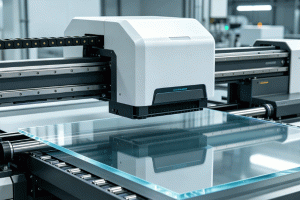
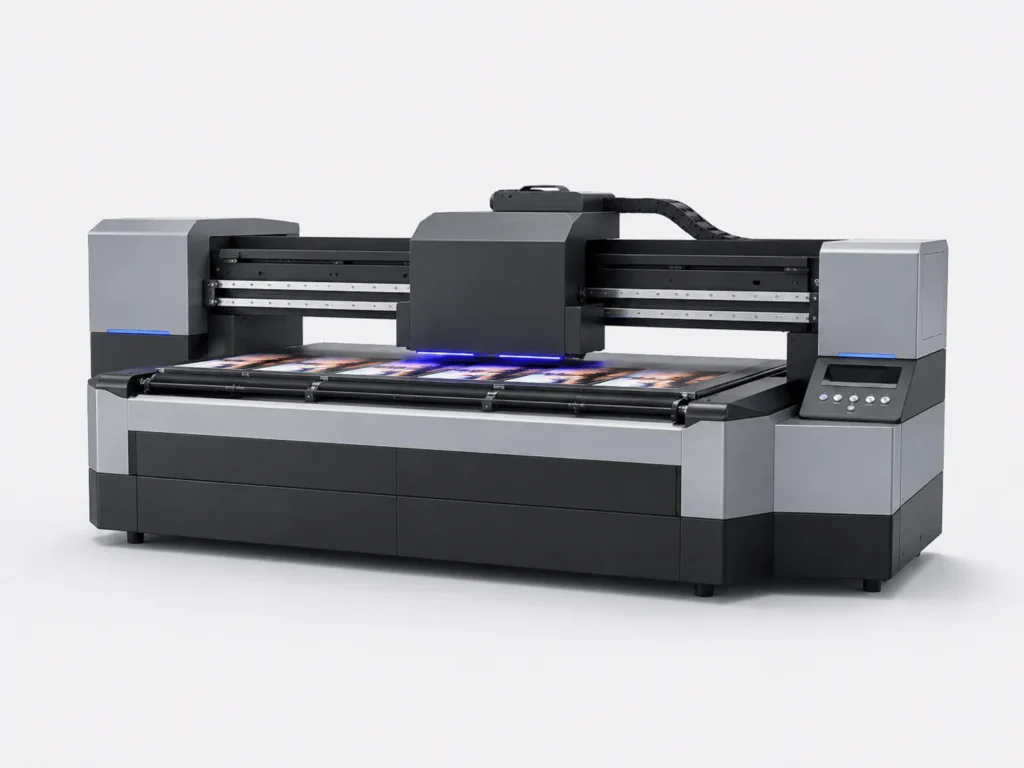
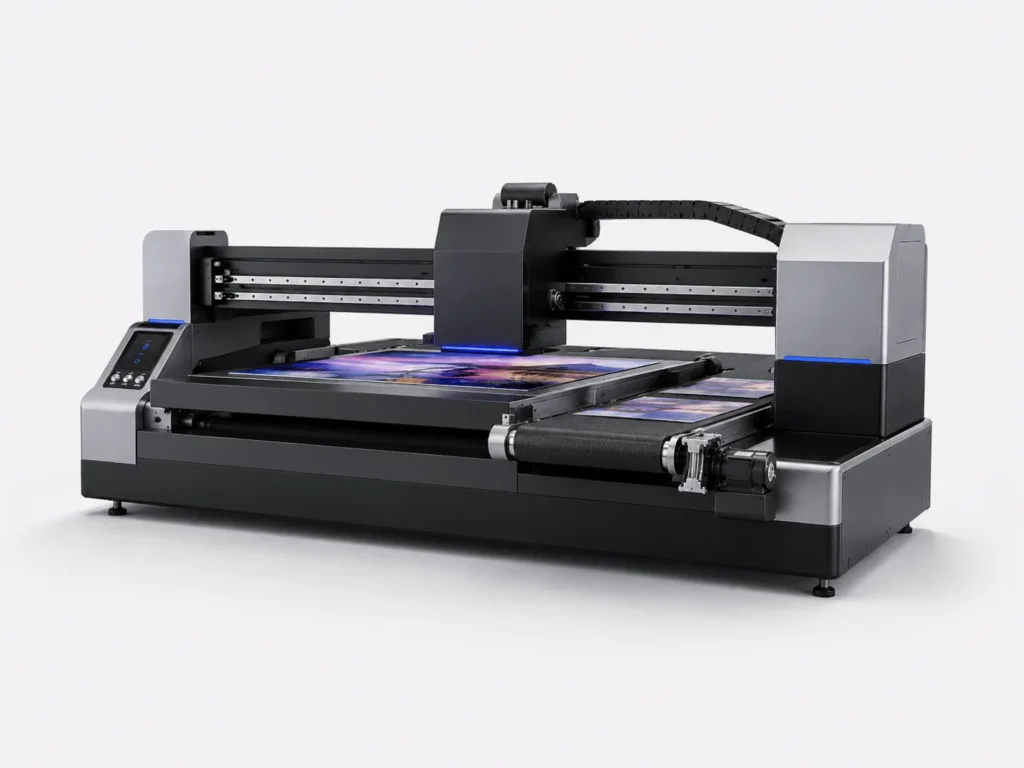
A UV flatbed conveyor printer is an industrial printing device that combines digital inkjet technology with an automatic conveying system, enabling continuous, efficient, and highly stable printing production. Compared with traditional printing equipment, it reduces complex production procedures and manual operations while meeting modern manufacturing demands for automation, flexible production, and fast delivery. As a result, it has been widely adopted across various industries and has become one of the key devices in the industrial digital printing sector.
Basic Components of the Equipment
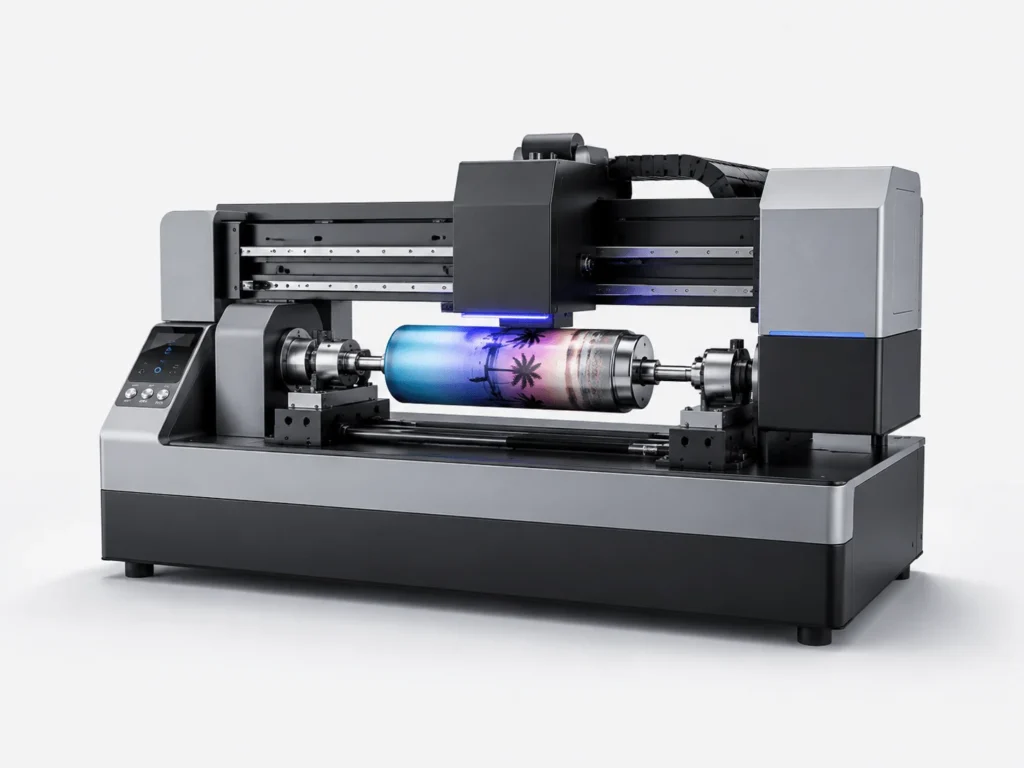
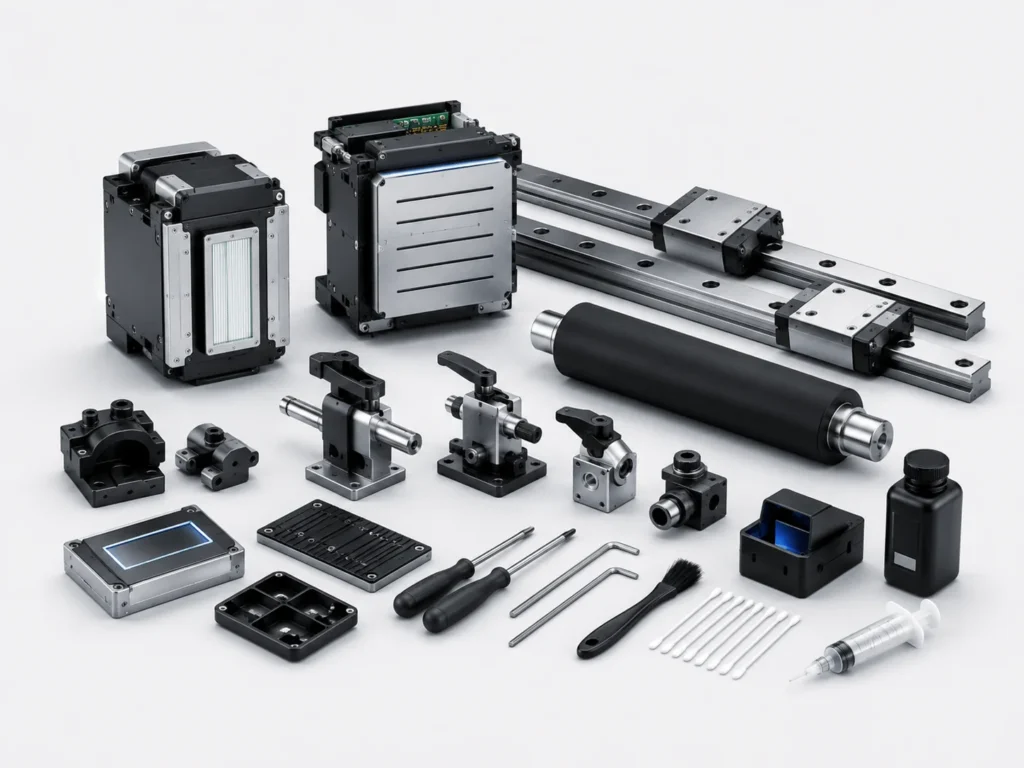
The long-term stable operation of a UV flatbed conveyor printer relies on the coordinated performance of multiple core systems. Each system serves a specific function and collectively determines print quality, production efficiency, and operational stability.
- The inkjet printing system is responsible for accurately outputting images, text, and complex graphics, serving as the core component for high-quality printing.
- The automatic conveyor system continuously transports materials, ensuring smooth movement throughout the printing process.
- The UV curing system instantly dries and cures the ink, allowing printed graphics to achieve stable adhesion in a short period.
- The intelligent control system manages machine operations and coordinates printing speed, inkjet precision, and conveying rhythm.
- The software system handles image processing, color management, and print job execution to ensure output consistency with the original design files.
- The mechanical structure system provides overall stability and reliable support for high-precision printing.
The close cooperation and efficient integration of these key modules ensure that the printer maintains stable, efficient, and accurate performance even during long periods of continuous operation, meeting the demands of industrial production.
Differences from Standard UV Flatbed Printers
Although both types of equipment utilize UV inkjet printing technology, they differ significantly in structural design, production methods, and application scenarios. Understanding these differences helps businesses choose the most suitable equipment based on their order characteristics and production requirements.
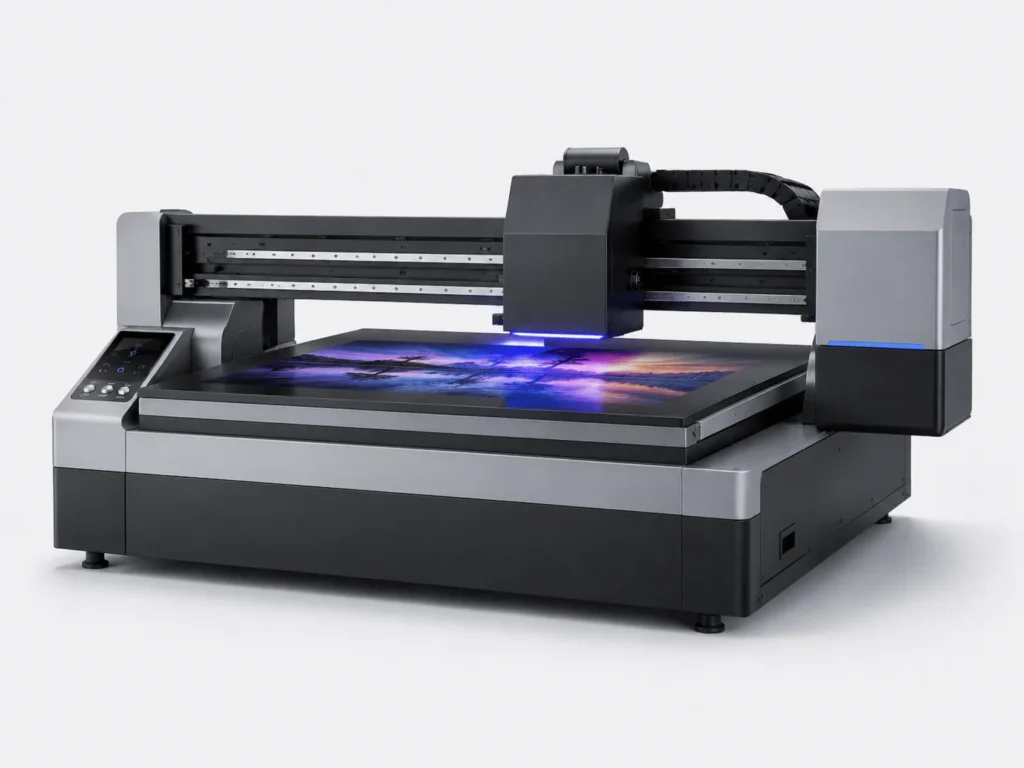
- Standard flatbed printers use a fixed printing platform where materials remain stationary during printing.
- Conveyor-type printers use an automatic transport structure that continuously feeds materials into the printing area.
- They are more suitable for continuous, high-volume, and assembly-line production.
- They effectively reduce manual loading and unloading time, improving overall productivity.
- They offer better compatibility with long-format materials, large panels, and roll-fed products.
- They can be more easily integrated into automated production lines for smart manufacturing upgrades.
In practical applications, UV flatbed conveyor printers align more closely with modern industrial automation trends, especially for businesses handling large order volumes, diverse product categories, or continuous production requirements.
The Core Working Principle of a UV Flatbed Conveyor Printer
During operation, all systems work together according to preset programs, completing the entire process from image input to finished product output. The highly automated workflow not only ensures printing accuracy and color performance but also improves production efficiency and product consistency.
Image Processing and Automatic Conveying Process
Before printing begins, the machine must complete data processing and material positioning. Although this stage does not directly produce printed graphics, it forms the foundation for print quality and production stability.
- Design files are imported into professional printing software and configured for size and layout.
- RIP software converts images into printable data recognized by the machine.
- Printhead control commands and inkjet paths are automatically generated.
- Printing and curing parameters are adjusted according to material type.
- Materials are placed on the conveyor platform and accurately positioned.
- The conveyor belt operates at a preset speed to ensure smooth material movement.
- Materials enter the printing area precisely, preventing misalignment and errors.
Through accurate data processing, intelligent control, and a stable conveying system, the printer provides reliable support for subsequent printing operations, reducing errors, minimizing waste, and improving productivity.
Inkjet Printing and UV Curing Process
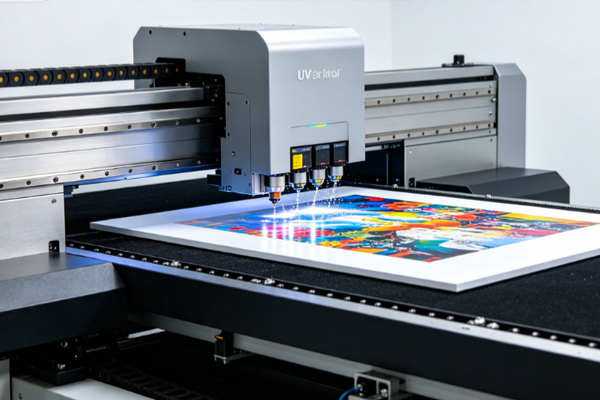
Once the material enters the printing area, the machine begins executing the print job. Inkjet printing and curing occur simultaneously, which is one of the key features that distinguishes UV printing technology from traditional printing methods and contributes to its high production efficiency.
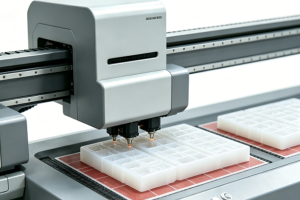
- The printhead precisely controls ink droplet placement and volume according to print data.
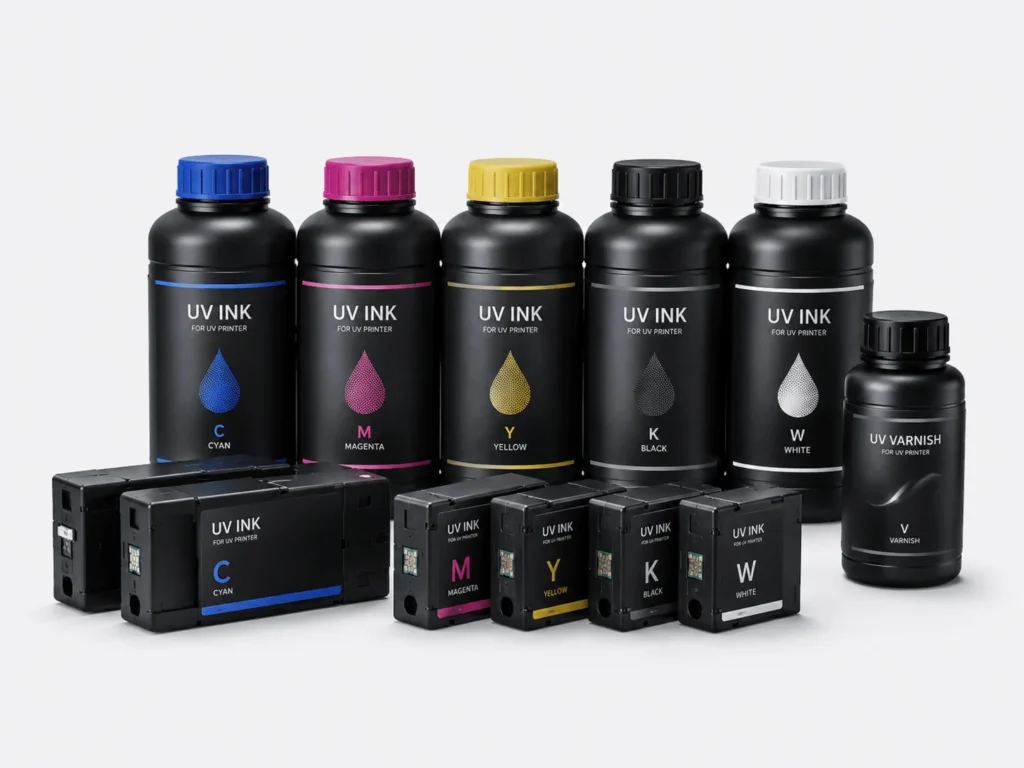
- Color inks, white ink, and varnish can be output simultaneously as required.
- Ink droplets are evenly deposited on the material surface to form complete graphics.
- High-precision printheads enable detailed text and complex graphic printing.
- UV lamps immediately illuminate the printed area to cure the ink.
- UV ink rapidly undergoes a chemical reaction under ultraviolet light, forming a solid film layer.
- Printed graphics dry instantly without requiring additional waiting time.
- Adhesion, abrasion resistance, and weather resistance are significantly improved.
This print-and-cure process not only shortens production cycles but also enhances adhesion, color vibrancy, and overall product quality.
Why Are UV Flatbed Conveyor Printers More Efficient?
Compared with traditional printing equipment and standard printers, UV flatbed conveyor printers offer significant advantages in production efficiency. As market demand for fast delivery, personalized production, and flexible manufacturing continues to grow, these advantages become increasingly valuable.
Advantages of Automated Continuous Production
The automatic conveying system is a key factor in improving productivity. By reducing manual intervention and machine downtime, it enables a smoother and more efficient production workflow.
- Materials automatically enter the printing area without frequent manual handling.
- Finished products are automatically discharged after printing, improving production continuity.
- Equipment waiting time and manual operation time are reduced.
- Overall production rhythm and equipment utilization are improved.
- Suitable for large-volume orders and long-term continuous production tasks.
- Reduces quality risks caused by human error.
Continuous production not only increases equipment utilization but also helps businesses maintain stable output during peak order periods, enhancing market competitiveness.
Advantages of Flexible Production and Cost Optimization
In addition to efficiency improvements, modern businesses place great importance on production flexibility and cost control. UV flatbed conveyor printers also offer significant advantages in these areas.
- No traditional plate-making process is required, reducing preparation time.
- Design files can be switched quickly to accommodate diverse orders.
- Multiple product versions can be produced simultaneously, improving order processing capacity.
- Inventory pressure is reduced through on-demand production.
- Labor and management costs are lowered.
- Faster response times and delivery efficiency are achieved.
- Ideal for personalized customization and short-run production.
This flexible manufacturing model enables businesses to adapt quickly to market changes while reducing operational risks and overall production costs, creating greater profit opportunities.
Which Industries Use UV Flatbed Conveyor Printers?
Thanks to their broad material compatibility, high-quality printing performance, and efficient production capabilities, UV flatbed conveyor printers have been widely adopted across numerous industries. Different sectors have varying printing requirements, and these machines can meet diverse production demands through their versatile applications.
Applications in Packaging and Advertising Industries
The packaging and advertising industries demand high print quality, production efficiency, and fast delivery, making them major application areas for UV flatbed conveyor printers.
- Color box packaging printing for brand packaging upgrades.
- Custom gift box production to increase product value.
- Corrugated packaging printing for personalized packaging designs.
- Advertising display board production for commercial promotions.
- Signage printing to enhance visual presentation.
- Promotional display material production for exhibitions and marketing events.
- Customized e-commerce packaging boxes to support brand marketing.
With capabilities such as rapid prototyping, short-run production, and mass manufacturing, these printers help businesses meet diverse and personalized market demands more effectively.
Applications in Industrial Manufacturing and Decoration Industries
As demand for product appearance customization and decorative applications continues to grow, industrial manufacturing and decoration sectors have become important markets for UV printing technology.
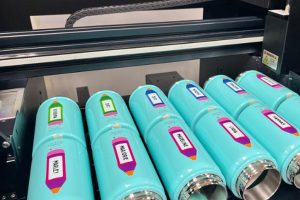
- Printing on electronic product panels for detailed graphic processing.
- Decorative component production for household appliances to enhance aesthetics.
- Manufacturing of architectural decorative materials for personalized interior design.
- Printing on wood panels and PVC boards for diverse decorative effects.
- Acrylic product processing to increase display value.
- Graphic printing on plastic products to improve market competitiveness.
- Customized craft and gift production for high-end personalization markets.
The wide range of applications not only expands market opportunities for the equipment but also creates more possibilities for product innovation and value-added services.
As industrial digitalization and smart manufacturing continue to advance, UV flatbed conveyor printers are becoming essential tools for businesses seeking to improve productivity and increase product value. By combining automatic conveying, precise inkjet printing, and instant UV curing technology, these machines deliver high-quality printing results while supporting personalized, short-run, and mass-production requirements, providing greater production flexibility and stronger market competitiveness. Springyprinter specializes in the research, development, and manufacturing of industrial UV digital printing equipment, offering professional and efficient UV printing solutions for customers worldwide.