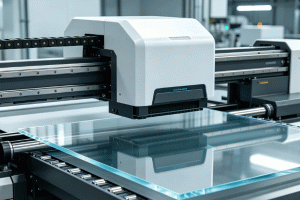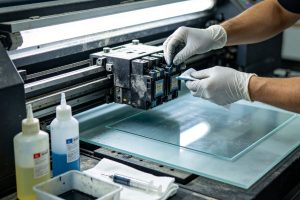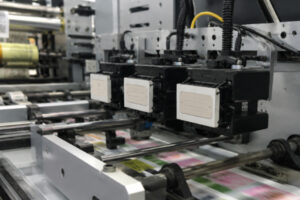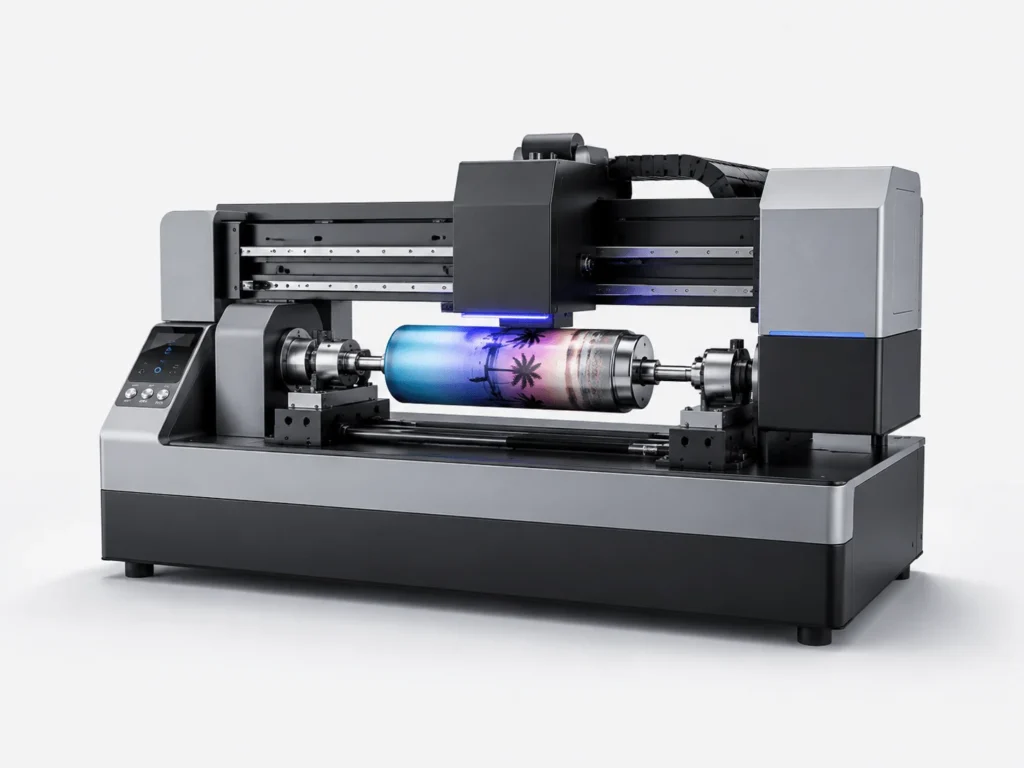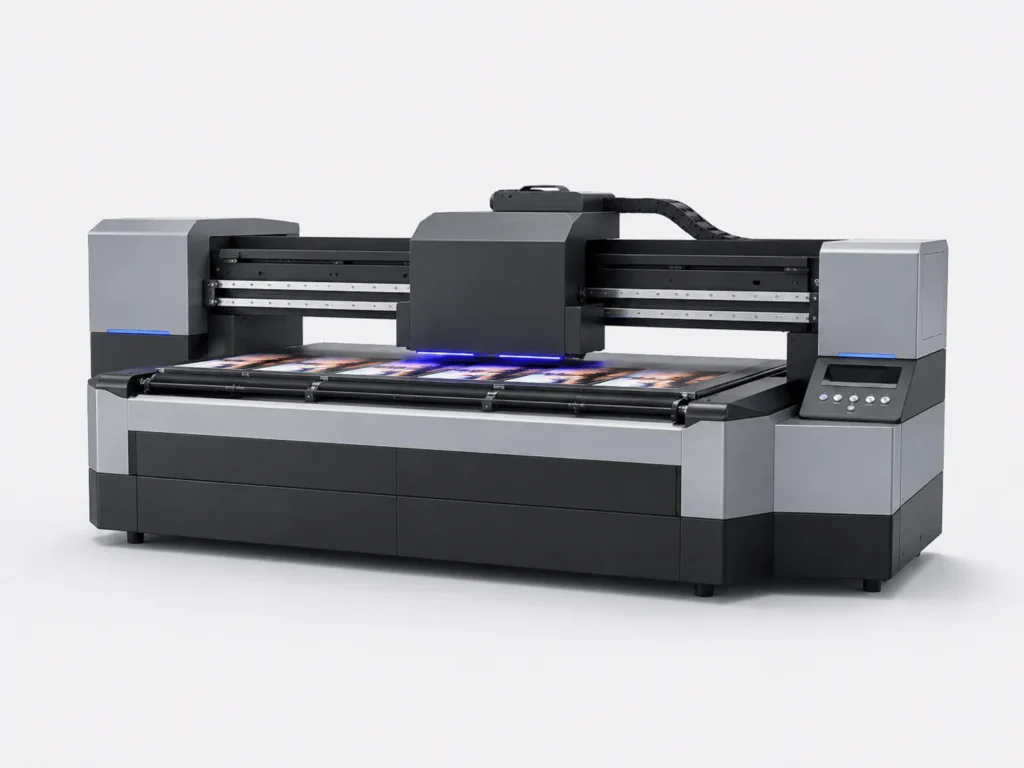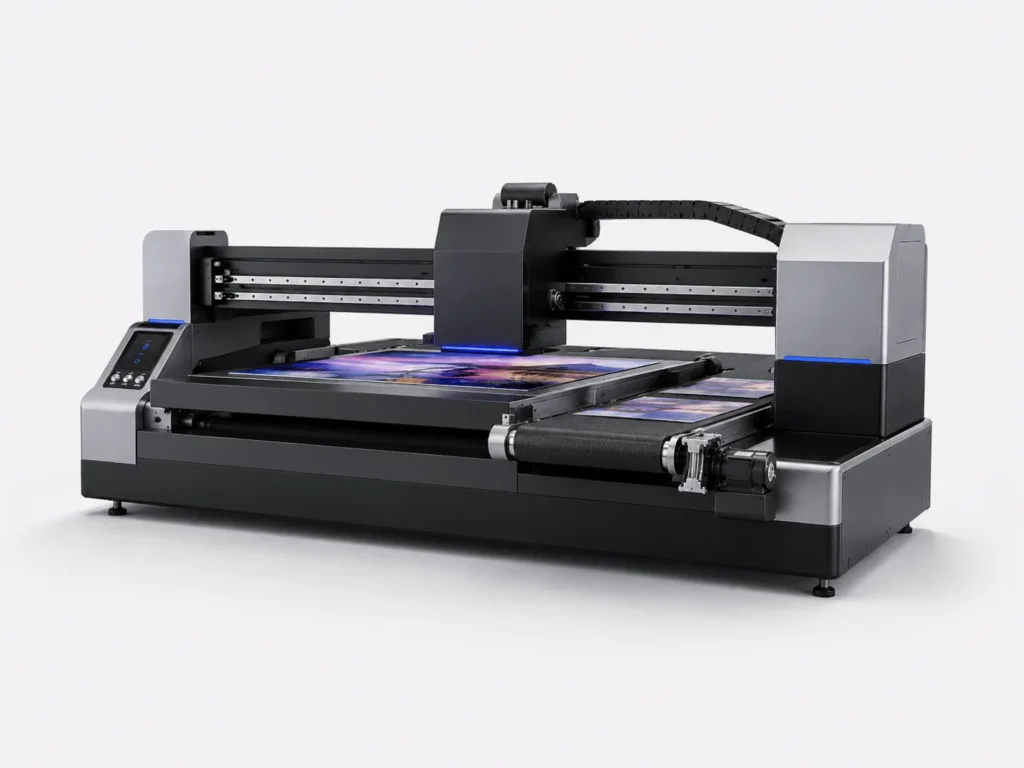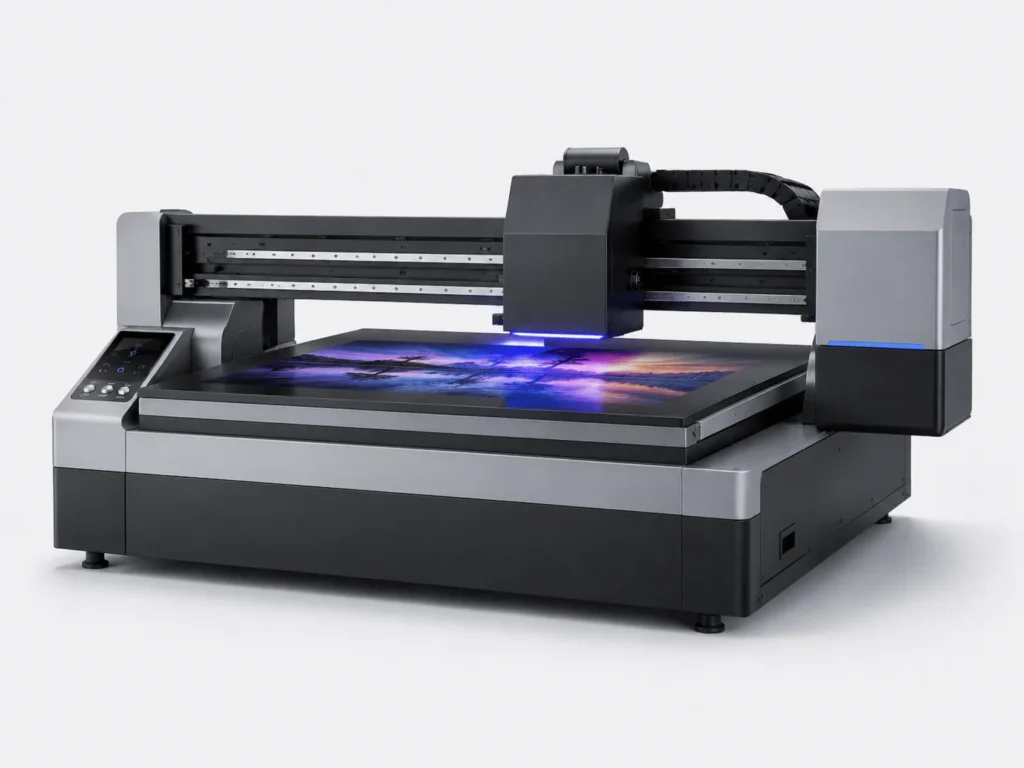
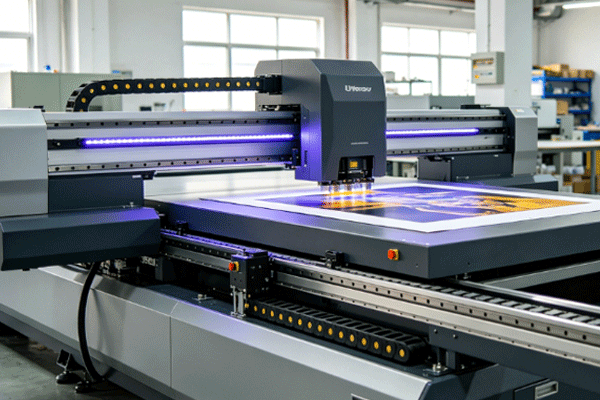
In today’s era of continuous upgrades in digital printing and manufacturing, companies no longer choose equipment based only on whether it can print, but more on whether it can save money in the long run and continuously create value. A UV flatbed conveyor printer combines flatbed printing with an automatic conveying system, which not only improves continuous production capacity but also reduces manual intervention. As a result, it is being used more and more in packaging, advertising, decorative materials, and personalized customization. The question many business owners care about most is: can this type of equipment really help enterprises reduce costs? The answer is not a simple “yes” or “no,” but depends on whether it is placed into the right production workflow and whether the company can turn its equipment advantages into stable output.
Start with Labor, and Directly Reduce Operating Costs
This is the part where the equipment’s practical impact is easiest to see, especially in batch production scenarios, because once manual steps are reduced, both daily expenses and management pressure will decline at the same time.
Automatic Conveying Reduces Loading and Unloading Labor
One of the biggest advantages of a UV flatbed conveyor printer is that materials can automatically enter the printing area without frequent manual handling and repeated positioning. For batch orders, this not only reduces physical labor, but also lowers errors caused by manual operation, while making the production rhythm more continuous and avoiding line delays caused by slow loading and unloading.
- After automatic material conveying, the number of manual handling operations is significantly reduced, allowing workers to spend more time on inspection and support tasks.
- Once the loading and unloading process becomes smoother, equipment waiting time is shortened and overall production efficiency improves accordingly.
- After positioning becomes more stable, the probability of rework and scrap caused by placement deviation decreases, and material waste is reduced as well.
- Processes that originally required multiple workers to cooperate can often be completed by fewer people after automation improves, thereby lowering long-term labor costs.
In the long run, the more obvious the reduction in labor input, the easier it is for enterprises to bring down daily production cost pressure, and this kind of savings is usually not one-time, but continuously reflected in every batch of orders.
Standardized Operation Lowers Training Difficulty
Traditional equipment often relies on the experience of skilled workers, while conveyor-type UV equipment is usually equipped with a smarter control system. The operation process is more standardized, and many parameters can be completed through system presets. New employees only need basic training to get started quickly, so enterprises do not need to rely on highly paid technical workers for a long time. This is especially important for factories with high staff turnover. Once the operation interface becomes more intuitive, the learning cycle for employees is significantly shortened, and training arrangements become easier to standardize. After the production process becomes more unified, operational differences between different shifts are reduced, and management can more easily control quality. Faster onboarding means that recruitment, training, and trial-and-error hidden costs all decline; when staff turnover occurs, job handovers are also smoother, and the entire production line is less likely to be affected by the departure of individual employees. For factories with high turnover, this ability to reduce training and management costs is very practical and also helps enterprises maintain stable operations and continuous delivery capacity.
Improve Production Efficiency and Increase Output per Unit of Time
Efficiency improvement often means cost reduction, especially in order-intensive production environments, where this advantage becomes even more pronounced, because completing more orders in the same amount of time means making fuller use of the value of equipment and labor.
Continuous Production Reduces Downtime
Traditional single-machine equipment is prone to downtime during material changes, alignment, and loading/unloading, while a conveyor structure allows production to be more continuous. Materials keep entering and output keeps flowing, equipment utilization is higher, waiting time is lower, and the entire production process becomes more compact and efficient, without wasting capacity on scattered actions.
- Continuous feeding reduces downtime, allowing the equipment to remain in effective working condition for longer periods.
- Faster material change rhythm makes production handoffs smoother, and order switching is no longer sluggish.
- Once equipment idle time is shortened, effective output per unit of time increases significantly, and capacity utilization naturally becomes higher.
- When the same labor and equipment complete more orders in less time, average cost is further spread out.
For enterprises, once equipment reduces idle time, output efficiency improves and hidden costs decline. This change is especially obvious when order volume remains stable.
Multi-Task Processing Improves Capacity Utilization
Some UV flatbed conveyor printers support zoned printing or parallel multi-task processing, allowing different orders to be completed on the same machine. In this way, enterprises do not need to purchase multiple machines for different products, and production planning becomes more flexible, making equipment investment easier to recover. For companies that process different types of orders on the same machine, scheduling becomes more flexible and efficiency is less likely to be affected by messy order structures; switching between multiple patterns and specifications is also more convenient, especially for enterprises with complex order structures and rapidly changing customer demands. At the same time, after reducing the need for repeated equipment purchases, fixed asset investment becomes more controllable and financial pressure is lower. In business scenarios with tight delivery schedules and diverse product categories, this capability can also significantly improve overall capacity utilization. For factories with complex business structures, this ability not only improves capacity utilization, but also makes equipment investment easier to recover and better aligned with the development trend of modern flexible manufacturing.
Reduce Waste and Repeated Purchases from the Perspective of Materials and Equipment Investment
Material loss and repeated equipment investment are often overlooked but very important sources of cost for enterprises, because although these expenses seem scattered, they can accumulate over time and have a major impact on profit.
High-Precision Printing Reduces Material Waste
UV printing requires high positioning accuracy, and conveyor-type equipment usually has more stable conveying and printing control capabilities, which can reduce misalignment, reprinting, and rework. Especially on high-value materials such as acrylic, glass, and metal sheets, even a small reduction in waste can add up to significant cost savings over time, while also reducing customer complaints and delivery delays.
- Once printing positioning becomes more accurate, pattern deviation and edge errors are reduced, and product consistency improves as well.
- After rework rates decline, enterprises save the time, ink, and labor consumed by repeated production.
- Higher utilization of high-value materials means each sheet and each substrate can deliver greater value.
- After scrap rates decrease, profit margins become more stable and enterprises can better control overall cost fluctuations.
The higher the material utilization rate, the easier it is for enterprises to control comprehensive costs, especially in production scenarios sensitive to waste and with high material unit prices.
One Machine for Multiple Uses Reduces Equipment Investment
A UV flatbed conveyor printer combines both flatbed and conveying functions and can adapt to wood, acrylic, glass, metal, and other materials. Enterprises do not need to configure multiple machines separately for different products. This not only saves procurement budget, but also reduces factory space occupation and later maintenance pressure, making equipment management more centralized and efficient.
- Once one machine covers multiple material applications, enterprises do not need to frequently add more equipment when expanding production.
- After reducing the financial pressure caused by purchasing multiple machines, enterprises can allocate more budget to order development and market expansion.
- After saving factory space and equipment placement costs, the production site becomes cleaner and logistics flow is easier to optimize.
- More centralized maintenance means spare parts management, repair arrangements, and technical support all become more convenient.
For enterprises that want to control fixed asset investment, this “one machine for multiple uses” model is very attractive and also better aligned with a light-asset operation mindset and flexible expansion needs.
Amplify Cost-Reduction Effects from Order Structure and Long-Term Operations
The real cost advantage does not come only from the equipment itself, but from whether it can help enterprises take on more orders and create a more efficient production rhythm, because only when it keeps running continuously can the equipment’s value truly be realized.
Small-Batch Orders Can Also Be Profitable Quickly
Many traditional machines are not suitable for small orders because the cost of plate making, setup, and line change is too high, making the order unprofitable. UV flatbed conveyor printers are more suitable for small-batch, multi-category, fast-delivery order models. Enterprises can more flexibly undertake customized business without giving up profit opportunities simply because orders are fragmented, and they can also expand into new customer groups more easily.
- Small orders do not require high upfront preparation, so enterprises can more easily accept trial orders and sample orders.
- Faster order switching makes the production rhythm more flexible and suitable for multi-category parallel business models.
- Customized business becomes easier to integrate, allowing enterprises to expand higher-value order sources.
- Once the order structure becomes more flexible, profit sources become more diversified and less dependent on a single customer.
The more flexible the orders, the easier it is for enterprises to find new growth points and truly maximize the value of the equipment, forming a virtuous cycle of “more orders, higher efficiency, lower costs.”
Equipment Utilization Determines the Final Return
Equipment itself does not automatically save money for a company. What really determines cost levels is its usage frequency and production efficiency. If the equipment remains idle for a long time, even the most advanced machine becomes a burden; if it can continuously take orders, schedule reasonably, and operate stably, then labor, materials, time, and maintenance costs will all be spread out, and equipment investment will be easier to recover.
- Only high utilization can spread out equipment costs; only continuous operation can reduce the cost per use.
- Reasonable scheduling improves overall efficiency and makes the handoff between different orders smoother.
- Stable operation helps reduce maintenance expenses and lowers delivery losses caused by downtime.
- Continuous orders are the key prerequisite for cost reduction and efficiency improvement; without stable business support, even the best equipment is difficult to fully realize its value.
In other words, the cost-reduction capability of a UV flatbed conveyor printer ultimately depends on whether the enterprise uses it within a high-efficiency production system, rather than simply looking at how high the equipment specifications are.
A UV flatbed conveyor printer does have the potential to help enterprises reduce costs, but this advantage does not appear in just one area. It is reflected in the comprehensive optimization of labor, efficiency, materials, equipment, and order structure. For enterprises that want to improve capacity, reduce waste, and strengthen order-taking ability, it is not just a printing machine, but a more efficient production method. Springyprinter focuses on industrial UV digital printing equipment R&D and manufacturing, and can provide customers with professional UV printing overall solutions and production optimization support services.