With the widespread adoption of UV digital printing technology, more and more businesses are paying attention to the performance differences among various types of UV printing equipment. During the purchasing process, UV flatbed conveyor printers and standard UV printers are two of the most common options available on the market. For industries such as packaging printing, advertising production, decorative materials, and electronic product manufacturing, understanding the differences between these two types of equipment can help improve production efficiency and enable companies to choose the most suitable solution based on their specific needs. Below is a detailed analysis of the key differences between these two printing systems.
What Are the Differences in Equipment Structure Design?
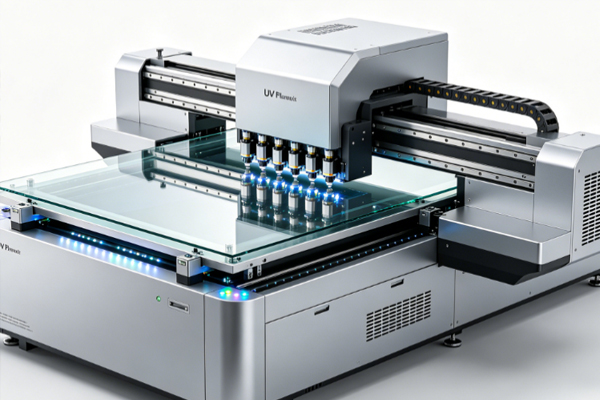
The structure of a printer is a critical factor that determines its printing method and production workflow. Different structural designs directly affect operating modes, production efficiency, and future scalability. Therefore, understanding the structural differences is the first step in comparing these two types of equipment.
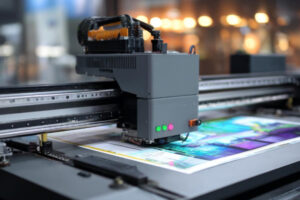
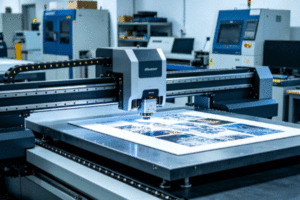
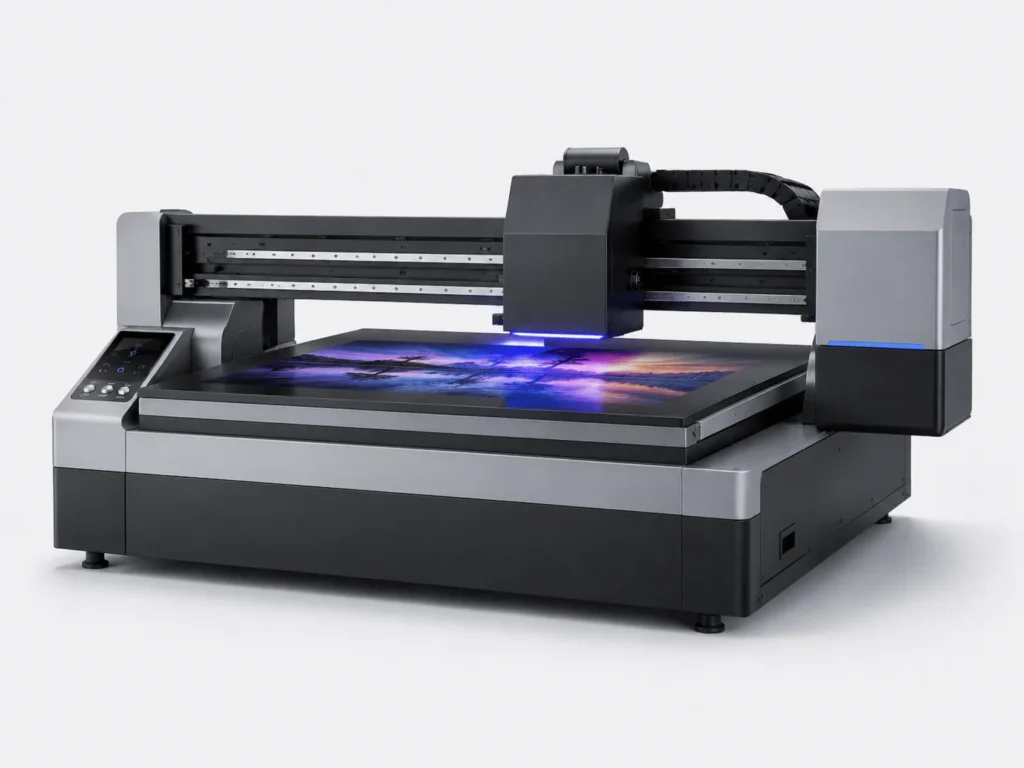
Standard UV Printers Use a Fixed Flatbed Design
Standard UV printers typically feature a fixed working platform structure. Their operating method is relatively straightforward and suitable for printing products of various sizes and specifications.
- Printing materials are placed on a fixed platform throughout the entire printing process.
- After each batch is completed, materials usually need to be manually replaced and repositioned.
- Printing dimensions are limited by the size and area of the printer platform.
- More suitable for production environments with diverse product types and frequent order changes.
Because the platform remains stationary, operators can flexibly position materials according to different product sizes and shapes. This type of equipment is widely used in personalized customization and multi-product manufacturing. For businesses with frequently changing orders and rapidly updated products, the fixed-platform structure offers excellent production flexibility.
UV Flatbed Conveyor Printers Use an Automatic Feeding Design
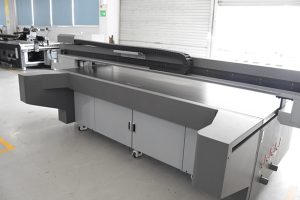
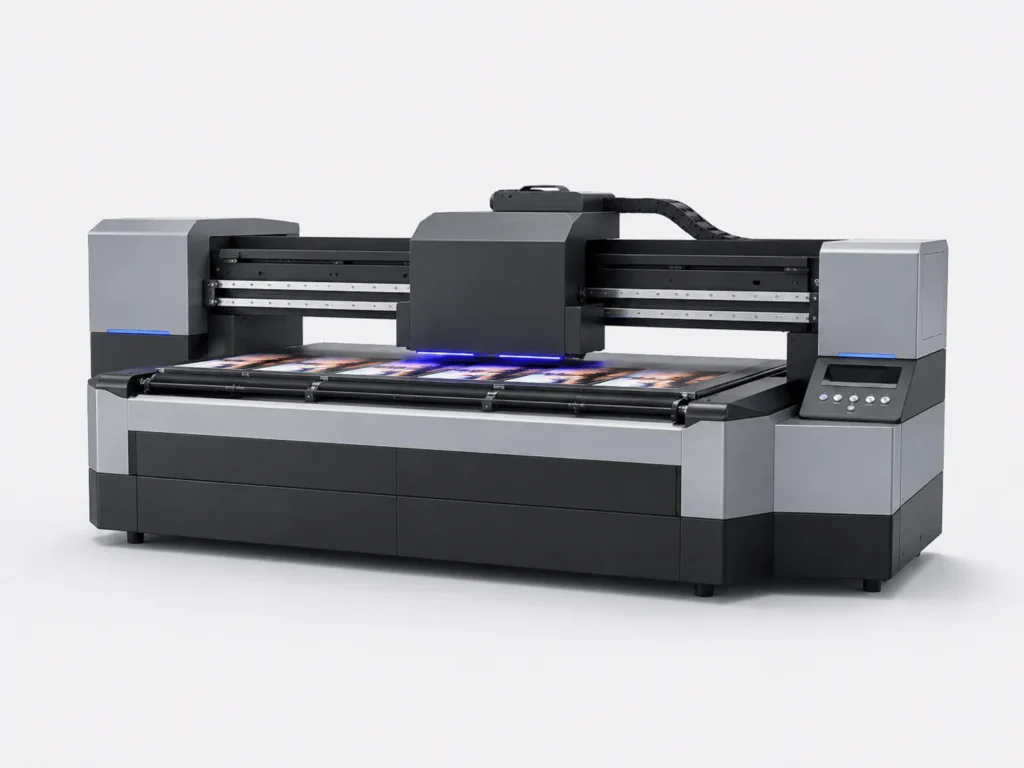
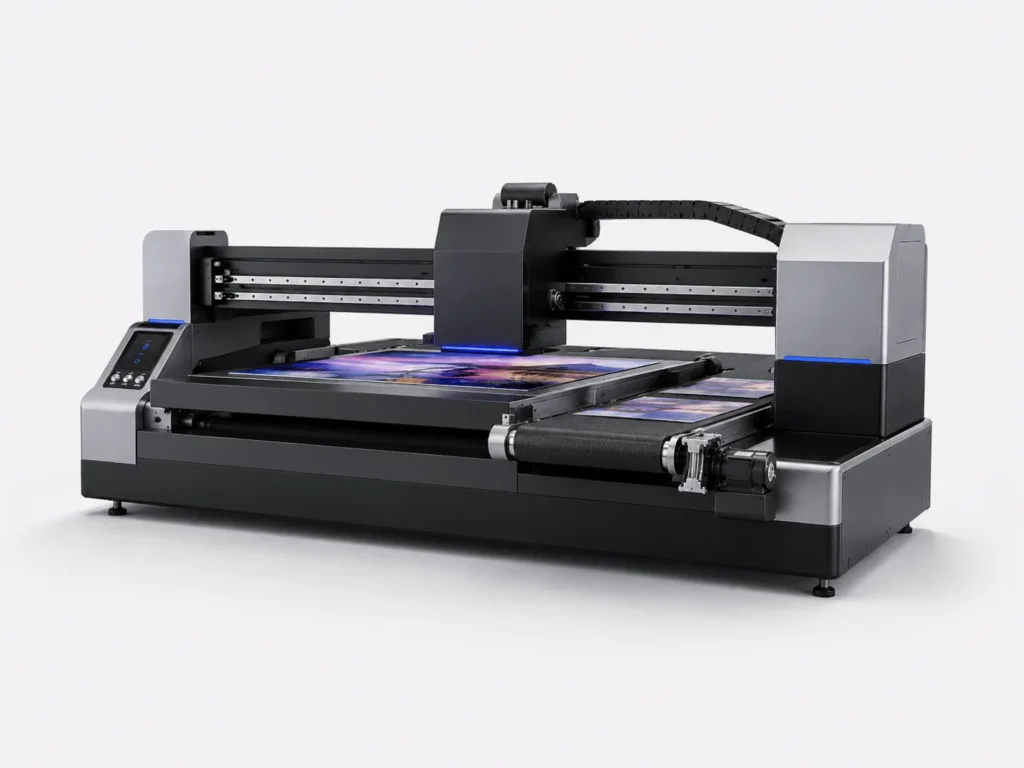
To meet industrial production requirements, UV flatbed conveyor printers incorporate an automatic conveying system into the traditional structure, enabling a more efficient production model.
- Equipped with a continuously operating conveyor belt system.
- Materials automatically enter the printing area at a preset speed.
- Finished products are automatically transferred to the next production stage.
- Can be seamlessly integrated with automatic loading/unloading systems or production lines.
Through automated material transportation, these printers significantly reduce manual handling and loading time, making the entire production process smoother and more efficient. For businesses requiring long-term continuous production, this structure can greatly improve operational efficiency and equipment utilization.
What Are the Differences in Production Efficiency?
Production efficiency is often one of the most important considerations when purchasing printing equipment. Different production methods affect not only order delivery speed but also labor costs and equipment utilization rates.
UV Flatbed Conveyor Printers Are Better for Mass Production
For companies handling large order volumes, continuous production capability is a key indicator of equipment value, and conveyor printers offer significant advantages in this area.
- Materials do not require frequent manual loading and unloading during production.
- Capable of maintaining stable operation during long periods of continuous printing.
- Effectively reduces downtime and machine waiting periods.
- Significantly improves overall order processing capacity and production efficiency.
Because the production process is more automated, the equipment can operate continuously and consistently, increasing output within a given timeframe. This advantage is particularly valuable in packaging printing, industrial panel processing, and standardized product manufacturing.
Standard UV Printers Are Better for Flexible Production
Not all businesses focus on large-scale production. Some industries place greater importance on product diversity and rapid job switching.
- Faster and more convenient transitions between different products.
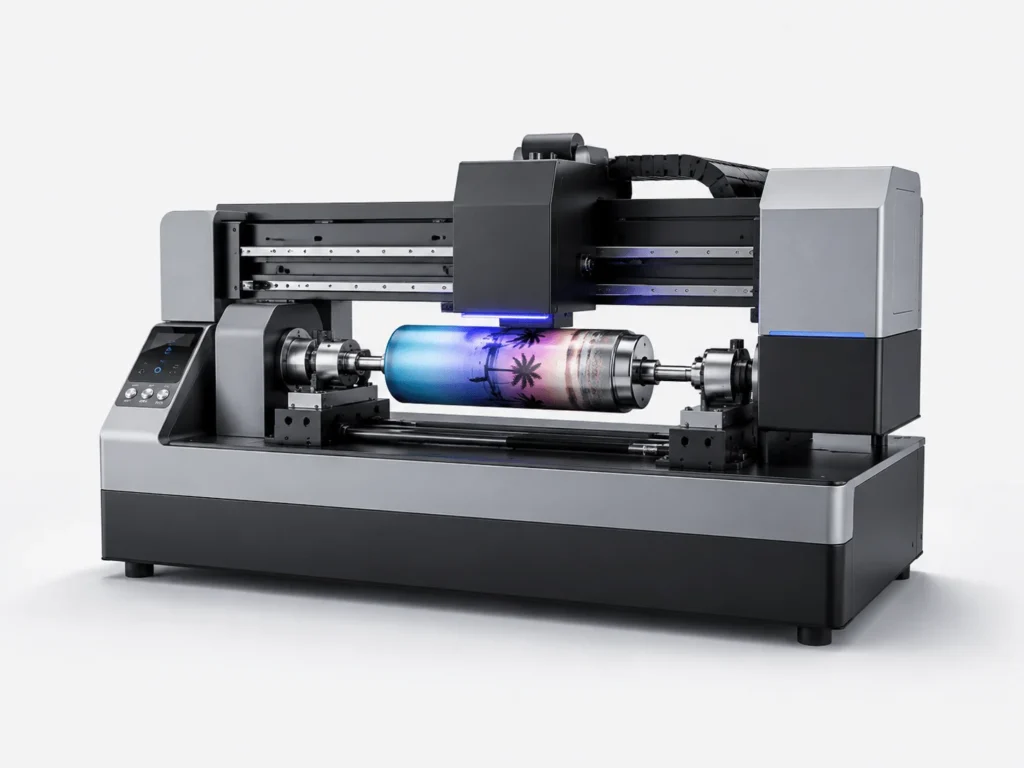
- Capable of printing irregularly shaped items and special workpieces.
- Ideal for personalized customization and creative product manufacturing.
- Particularly suitable for small-batch, multi-variety production models.
In advertising production, promotional gifts, and customized product markets, standard UV printers can quickly adapt to varying order requirements, maintaining strong competitiveness and practical value.
What Are the Differences in Materials and Applications?
In addition to production efficiency, material compatibility and industry applications are also important factors when selecting equipment.
Standard UV Printers Offer Broader Application Flexibility
Thanks to their fixed-platform design, standard UV printers provide greater flexibility in handling different materials.
- Suitable for high-precision printing on acrylic sheets.
- Capable of personalized printing on glass surfaces.
- Ideal for decorative wood panels and furniture panel graphics.
- Widely used for customized phone cases and promotional gifts.
Whether printing on flat materials or certain irregularly shaped products, these printers can achieve excellent results through proper positioning. They are commonly used in advertising, decoration, gift manufacturing, and personalized customization industries.
UV Flatbed Conveyor Printers Are Better for Standardized Production
For products with uniform specifications and large production volumes, conveyor printers can fully leverage their automation advantages.
- Suitable for color printing on packaging boxes and large-scale packaging production.
- Efficiently handles high-volume printing of advertising display boards.
- Widely used in appliance panel decoration and surface finishing.
- Ideal for industrial panel graphics and identification printing.
Because materials can be continuously transported through the machine, these printers are particularly suitable for highly standardized production tasks. In industrial manufacturing and packaging printing, an increasing number of companies are adopting this production model to enhance competitiveness and efficiency.
How Should Businesses Choose the Right Equipment?
When faced with different types of UV printing equipment, businesses should evaluate their actual production requirements rather than focusing solely on price or technical specifications.
Choose Based on Production Needs
Equipment selection should first align with the company’s current business model and production requirements.
- Small-batch customization businesses are generally better suited to standard UV printers.
- Large-volume production is more suitable for conveyor-type equipment.
- Companies with diverse product categories should prioritize flexibility.
- Standardized manufacturers should focus on automation and production capacity.
Only when the equipment matches the business model can its full value be realized, improving both productivity and market competitiveness.
Consider Long-Term Development Plans
In addition to meeting current needs, businesses should evaluate equipment from a long-term growth perspective.
- Highly automated equipment is more beneficial for future business expansion.
- Continuous production models help reduce long-term labor costs.
- Flexible production equipment supports diversified market development.
- Reliable after-sales service and technical support should also be carefully considered.
As market competition continues to intensify, printing equipment is no longer just a production tool—it has become a critical foundation for future business growth. During the purchasing process, companies should carefully evaluate budgets, order structures, and future expansion plans to select equipment with greater long-term value and development potential.
As digital printing and intelligent manufacturing continue to evolve, UV printing equipment is advancing toward higher efficiency and greater automation. Standard UV printers remain widely used in personalized customization thanks to their flexibility, while UV flatbed conveyor printers have become an important choice for industrial production due to their continuous operation and automated feeding capabilities. Before investing in equipment, businesses should fully understand the characteristics of both options and make informed decisions based on their actual production requirements. Springyprinter specializes in the research, development, and manufacturing of industrial UV digital printing equipment, providing professional UV printing solutions and technical support for customers worldwide.