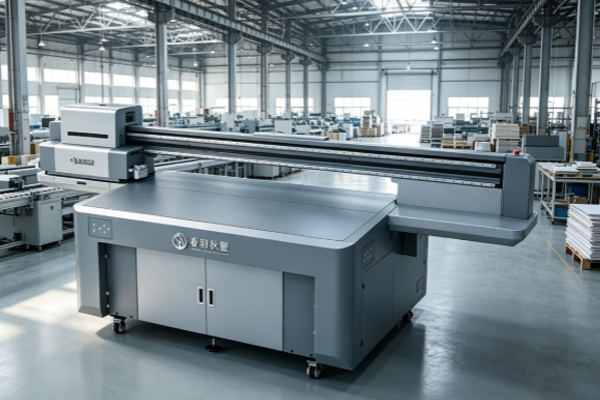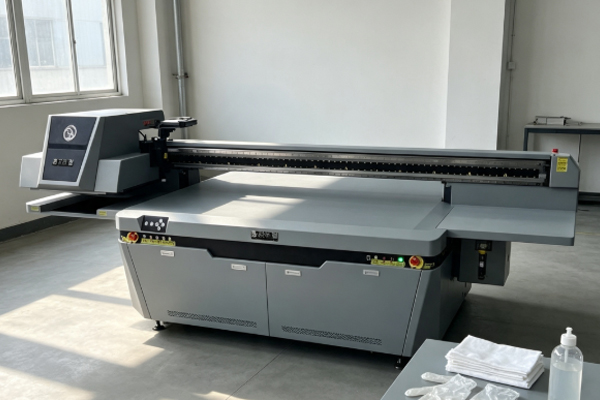
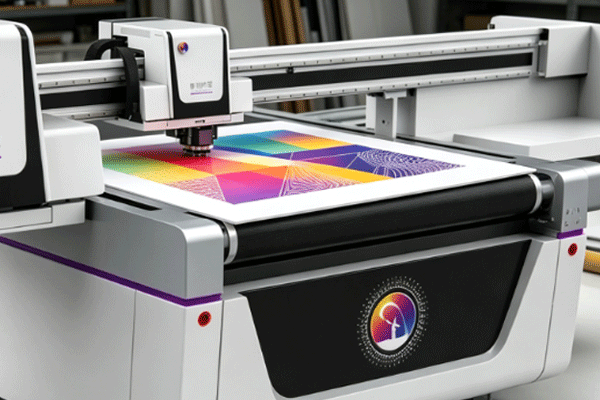
UV flatbed conveyor printers are being used more and more widely in industrial production. As an important consumable that affects printing results, ink management during long-term use is directly related to equipment stability, color performance, and production efficiency. In actual operation, many companies pay more attention to printing speed and finished product appearance, while easily overlooking ink storage, circulation status, and daily maintenance. This can lead to nozzle clogging, color deviation, uneven ink layers, and other problems. Only by managing ink carefully and consistently can stable production quality be maintained while extending the service life of the equipment.
Properly Manage UV Ink Storage and Use
The storage condition of ink before it enters the equipment directly affects the stability and consistency of subsequent printing, so front-end management is very important.
Control a Suitable Storage Environment
UV ink is relatively sensitive to environmental changes, so external interference should be minimized during long-term storage. The following points should be noted:
- Avoid high-temperature environments to prevent changes in ink viscosity.
- Avoid direct sunlight to reduce performance fluctuations caused by light exposure.
- Control temperature differences in the warehouse to avoid frequent hot and cold changes affecting ink condition.
- Keep the warehouse dry, clean, and well ventilated to reduce the impact of dust and moisture.
- Store unopened ink according to the manufacturer’s requirements to prevent performance degradation caused by improper storage.
Stable storage conditions help extend the usable life of the ink and provide a foundation for consistent printing results.
Standardize the Ink Usage Cycle
In addition to the storage environment, the order of ink use and inventory management are equally important. In actual operation, the following aspects can be addressed:
- Check the production date and shelf life, and prioritize products nearing expiration.
- Arrange usage according to the first-in, first-out principle to reduce long-term inventory buildup.
- Label opened ink clearly for easier tracking of usage status.
- Conduct regular inventory checks and promptly handle consumables that have been idle for a long time.
- Purchase reasonably according to order schedules to avoid excessive stockpiling.
By standardizing storage and usage cycles, the risk of printing problems caused by ink sedimentation, deterioration, or unstable performance can be reduced.
Keep the Ink Circulation System Running Stably
After ink enters the equipment, whether circulation is smooth directly affects the continuity and uniformity of nozzle output.
Regularly Check the Ink Supply Status
During long-term operation of a UV flatbed conveyor printer, the ink supply system should be continuously monitored to ensure normal operation. Pay close attention to whether there are air bubbles, ink shortages, or unstable delivery in the ink tubes, and also observe the working condition of the ink bags and filtration devices. If ink interruption, uneven color, or partial color loss occurs, the ink supply system should be checked immediately to prevent the problem from affecting the entire batch of production. Only when ink supply is stable can the nozzle maintain continuous output, and the printed image remain complete and clear.
Pay Attention to White Ink Circulation Maintenance
Because white ink contains a higher pigment content, it is more prone to sedimentation and layering, so circulation maintenance is especially important. In daily management, the following points can be noted:
- Keep white ink circulating continuously to reduce pigment settling.
- Avoid leaving white ink idle for long periods to lower the risk of layering and clogging.
- Regularly check the mixing function to ensure the ink remains uniform.
- Observe whether white ink output is stable and detect abnormalities in time.
- Check the circulation status during shutdowns or shift changes to reduce sedimentation risks.
Maintaining good white ink circulation not only reduces the risk of nozzle blockage, but also helps improve coverage and image layering.
Control the Impact of Ink on Print Quality
The goal of long-term ink use is not only to ensure that the equipment can run, but also to keep the finished product consistent in color and adhesion performance.
Avoid Mixing Different Inks
Different brands or models of UV ink may have differences in formulation, and mixing them can easily introduce instability. In actual use, the following should be noted:
- Do not mix inks from different brands or models directly.
- Before changing ink, confirm compatibility to avoid formulation conflicts.
- Clean the ink supply system after replacement to reduce the impact of residue.
- Perform test printing before putting new ink into use to confirm that the results are normal.
- Focus on adhesion, curing performance, and color expression to ensure they meet production requirements.
If the inks are incompatible, they may affect adhesion, curing quality, and equipment operation. Therefore, caution is necessary when replacing consumables.
Continuously Monitor Color and Curing Performance
During long-term production, both color stability and curing condition need continuous tracking. Management can be carried out from the following aspects:
- Print test charts regularly to check whether the colors are consistent.
- Observe whether the image surface shows incomplete curing or stickiness.
- Adjust color management parameters according to actual results.
- Save stable production settings for future batch reuse.
- Establish corresponding parameters for different materials to reduce repeated adjustments.
Continuous monitoring of color and curing performance helps detect abnormalities in time and reduces rework in batch orders. For companies that need to maintain brand consistency over the long term, this is also an important indicator of ink performance.
Combine Equipment Maintenance and Establish a Long-Term Management Plan
If ink management stays only at the consumable level, it is often difficult to maintain stable results over the long term. It also needs to be combined with equipment maintenance and production management.
Maintain the Printhead and Printing Environment Properly
The condition of the printhead and printing environment directly affects the long-term performance of the ink. As the core component for ink output, the printhead needs to remain clean and operate stably. It should be cleaned regularly on the surface, checked to ensure the nozzles are functioning properly, and protected from long periods of shutdown that may cause ink drying. At the same time, the workshop environment should maintain stable temperature and humidity, while reducing dust and strong airflow interference. This allows ink output to remain more continuous and uniform, thereby lowering the likelihood of printing abnormalities and equipment failures.
Establish a Long-Term Ink Management Mechanism
Companies should also establish a long-term ink management plan to form a sustainable usage and optimization mechanism. Specifically, this can be approached from the following aspects:
- Record the usage results of different materials for easier comparison and analysis later.
- Save commonly used printing parameters to reduce repeated adjustment time.
- Track ink consumption to understand actual usage costs.
- Record the causes of abnormal issues for easier troubleshooting and improvement later.
- Plan consumable procurement reasonably to avoid production delays caused by material shortages.
- Maintain a necessary safety stock to improve order delivery stability.
- Keep cooperation with stable suppliers to reduce the risk of consumable fluctuations.
Through standardized records and continuous review, companies can more quickly find an ink management method that suits their own production needs and continuously improve overall production efficiency.
Long-term management of ink in UV flatbed conveyor printers requires comprehensive control from multiple aspects, including storage, circulation, quality control, and equipment maintenance. Only by keeping the ink stable and combining it with standardized operation and continuous maintenance can printing abnormalities be reduced and product consistency improved. For companies relying on UV printing for batch production, scientific ink management not only reduces consumable waste, but also improves overall production efficiency. Springyprinter focuses on the research, development, and manufacturing of industrial UV digital printing equipment, and can provide customers with stable and efficient UV printing equipment solutions and technical support services.