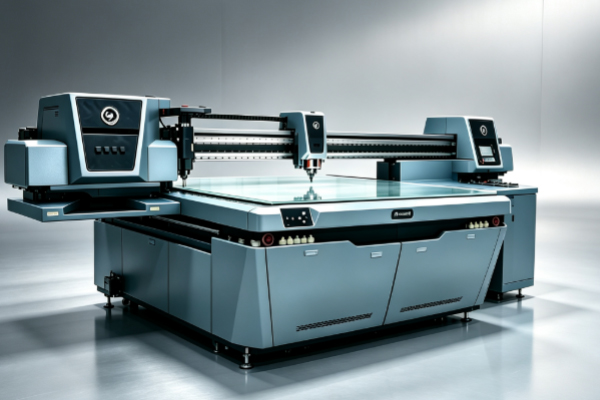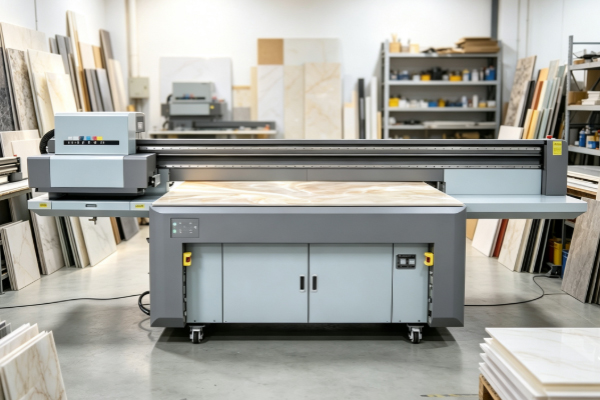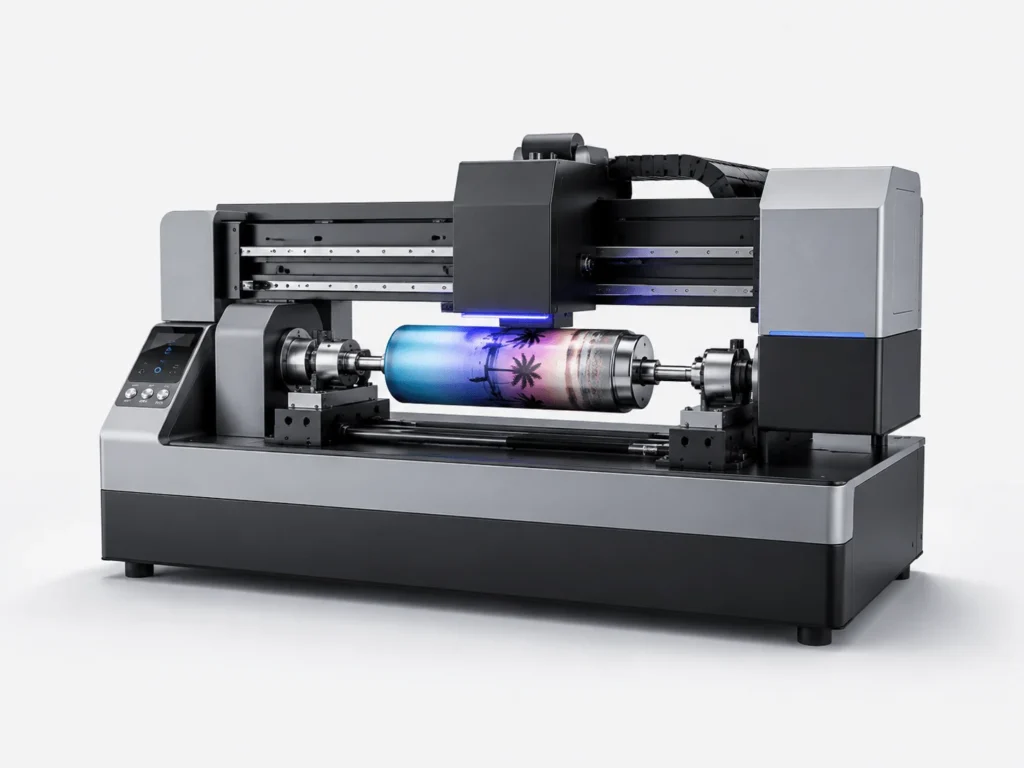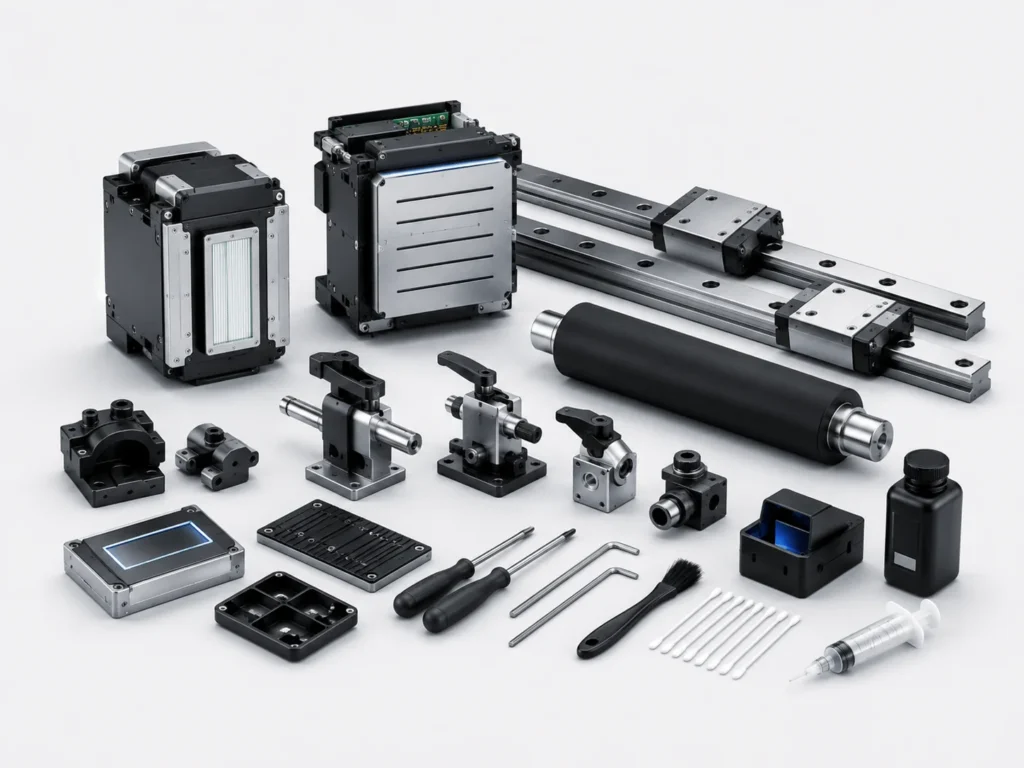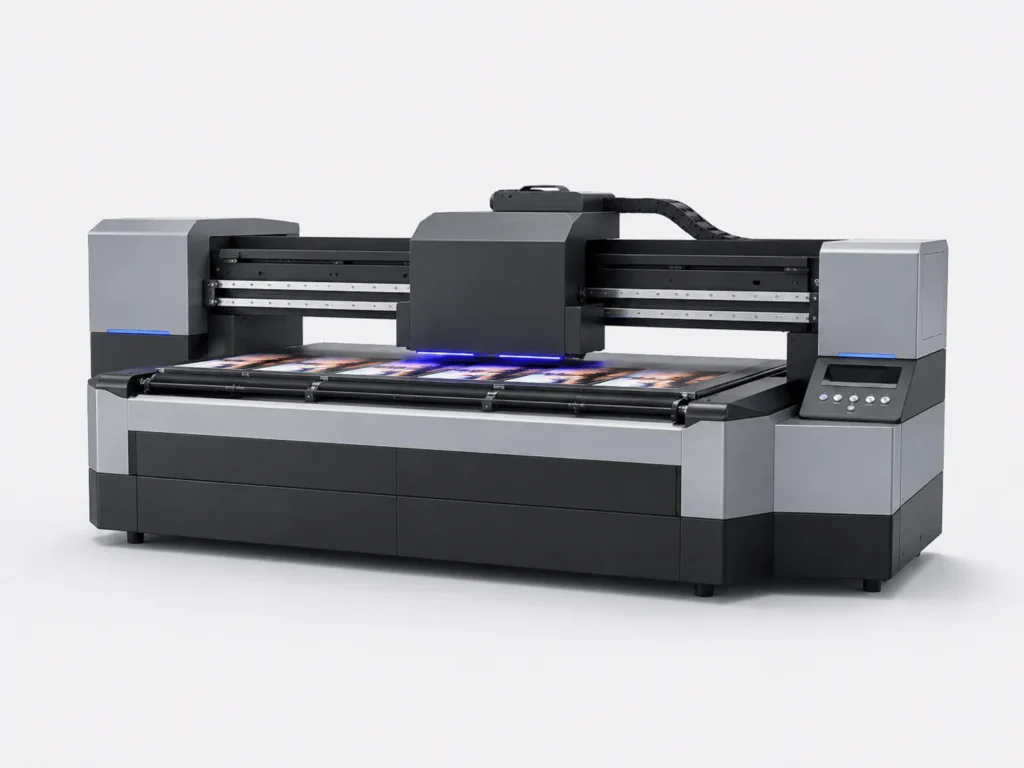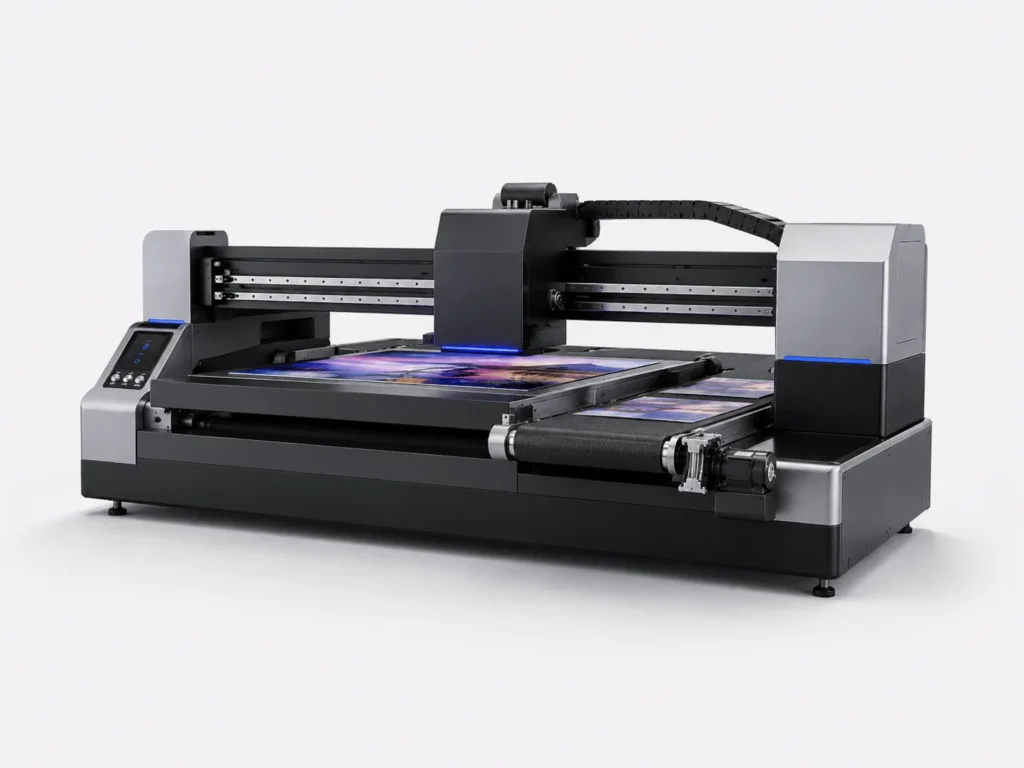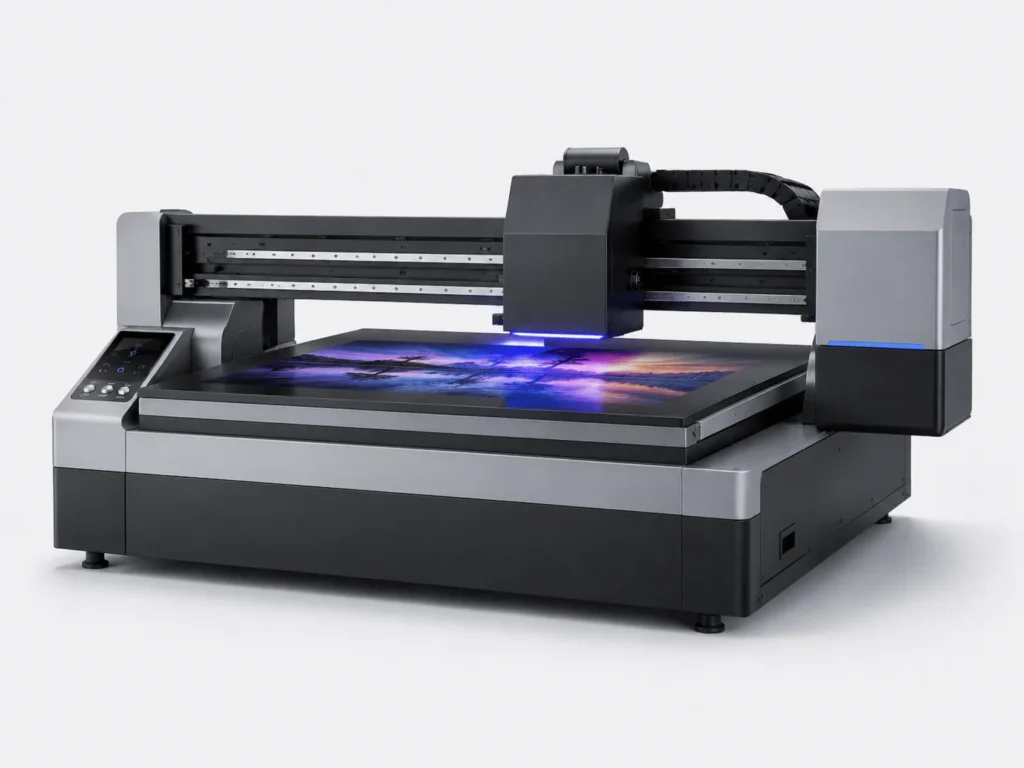
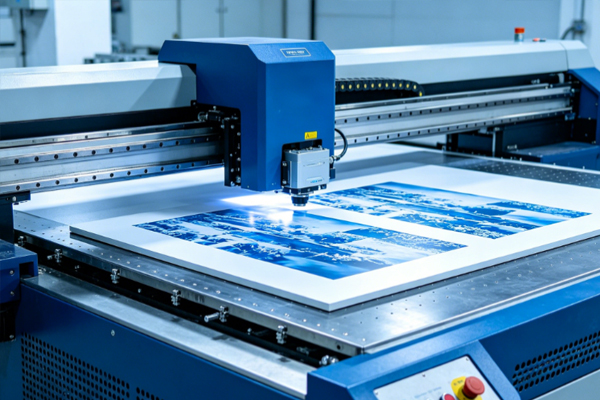
Against the backdrop of continuous upgrades in industrial digital printing, UV flatbed conveyor printers have been widely used in packaging printing, appliance panels, advertising production, and industrial customization. For businesses, image clarity is not only related to whether the product appearance looks refined, but also directly affects brand image, customer recognition, and subsequent order conversion results. Many users encounter issues in actual production such as blurred edges, insufficient sharpness in details, and weak color layering. To truly improve image clarity, it is necessary to start from both the overall performance of the equipment and the details of its use. Only by properly controlling the printheads, structure, conveying system, software, and environment can the final output be closer to the original design.
How Does the Printhead System Affect Image Detail Performance?
The printhead is the core execution unit that determines image clarity. The more stable the printhead performance is, the sharper the image edges will be, and the more complete the detail reproduction will be.
Ink Droplet Control Determines Fine Detail
Ink droplet size and spray control precision directly determine whether the image can present a sufficiently delicate visual effect, especially when printing small text, fine lines, gradient patterns, and complex textures, where the performance of the printhead becomes even more obvious.
- Small ink droplets can make image edges smoother, reduce graininess and jaggedness, and make the overall image look more delicate and natural.
- Multi-level grayscale output can enhance image layering, make color transitions smoother, and avoid obvious banding or abrupt color blocks.
- The more precise the ink droplet control is, the higher the readability of text and icons will be, making it especially suitable for industrial products and high-end packaging with high visual requirements.
- Only when the printhead maintains stable spraying at high speed can the image clarity remain consistent across different production batches.
The finer the ink droplet control is, the closer the final image texture will be to high-end printing standards, and the easier it will be to demonstrate the true strength of the equipment in detail-rich patterns.
Printhead Consistency Affects Overall Image Stability
For multi-printhead equipment, the most important factor in actual operation is not the performance of a single printhead, but whether multiple printheads can maintain synchronized output and stable cooperation.
- The printhead firing frequency must remain consistent; otherwise, local color deviation, ghosting, or unnatural image stitching may occur.
- An automatic calibration system can promptly correct minor deviations between printheads and reduce the accumulation of errors during long-term operation.
- In batch production, the higher the printhead consistency, the smaller the image differences between products, and the more stable the finished quality will be.
- For scenarios requiring continuous printing of large-format images, printhead synchronization directly determines the completeness and clarity of the final image.
The more stable the coordination between printheads is, the easier it is for the equipment output to remain uniform and clear, and the better it can meet the dual requirements of consistency and stability in industrial production.
How Does the Mechanical Structure Ensure Printing Accuracy?
Structural stability is the foundation of image clarity. Only when the mechanical operation is sufficiently smooth can the image output by the printhead be accurately positioned.
High-Rigidity Frame Reduces Vibration Interference
During high-speed printing, even slight vibration may cause the inkjet trajectory to shift, thereby affecting the sharpness of image edges and overall positioning accuracy.
- A high-strength frame can effectively reduce shaking during operation, allowing the printhead to maintain a more stable trajectory while moving.
- The stronger the frame rigidity is, the less likely the equipment is to deform during long-term continuous operation, thereby ensuring long-term printing accuracy.
- For high-resolution output tasks, a stable machine structure can significantly reduce displacement errors and make image details clearer.
- The more stable the overall machine is, the more accurate the relative position between the printhead and the material will be, and the better the visual effect of the final product will be.
The more solid the machine body is, the fewer errors will occur during printing, and the clearer the image will naturally be. It also makes it less likely for quality fluctuations to occur during long-term continuous production.
Precision Guide Rails Improve Motion Control Accuracy
Whether the printhead movement path is accurate directly determines whether the image can be placed precisely at the intended position, and the guide rails and transmission system are the key components affecting this process.
- High-precision linear guide rails allow the printhead to remain smooth and stable during operation, reducing image deviations caused by jamming and vibration.
- A servo system can further improve positioning accuracy, allowing the printhead to maintain high control precision even during high-speed movement.
- The smaller the mechanical clearance is, the fewer errors will occur during the reciprocating motion of the printhead, and the image edges will be neater.
- The better the guide rail precision is maintained during long-term operation, the stronger the consistency of the equipment output will be, making it especially suitable for batch production scenarios.
The more precise the guide rails and transmission system are, the more accurate the printhead landing points will be, and the more complete the image details will be. At the same time, the equipment can maintain stable output for a longer time under high-load conditions.
How Does the Conveying System Affect Stable Image Output?
The conveyor structure is an important feature of UV flatbed conveyor printers. The stability of the material during conveying directly determines whether the image is clear and whether the alignment is accurate.
Material Conveying Stability
The material must remain at a constant speed and stable during movement. Any shaking, deviation, or speed fluctuation may cause stretching, ghosting, or local blurring in the image.
- The smoother the conveyor belt runs, the smaller the positional change on the material surface will be, and the more accurate the printhead landing points will be.
- Constant-speed operation can avoid image deformation caused by acceleration and deceleration phases, making it especially suitable for long-format and continuous pattern printing.
- If the material shifts slightly during conveying, image edges are likely to become misaligned, so stable conveying is a prerequisite for clear output.
- For batch production, the more stable the conveying system is, the higher the consistency between products will be, and the lower the rework rate will be.
The smoother the conveying process is, the less likely the printed pattern will have deviations and blur, making it more suitable for industrial applications with high requirements for continuity and consistency.
Automatic Correction Systems Optimize Positioning
Modern UV flatbed conveyor printers are usually equipped with intelligent correction functions to help the equipment maintain higher positioning accuracy during continuous production.
- A photoelectric detection system can identify material position in real time, helping the equipment detect deviations promptly and make corrections.
- Automatic correction reduces the time spent on repeated manual adjustments, making production smoother and lowering the impact of human error.
- When the material slightly shifts off track, the system can quickly compensate to avoid overall image displacement or local misalignment.
- The more precise the positioning is, the neater the printed pattern will be, especially on products requiring high-precision alignment.
The more sensitive the correction system is, the stronger the image stability will be during continuous production, and the better it can help businesses reduce waste rates and improve overall delivery efficiency.
How Does the Software System Optimize Image Quality?
In addition to hardware performance, the software system also has an important impact on final image clarity. In many cases, differences in image quality are determined by parameter settings and image processing methods.
RIP Software Image Optimization Capability
The image processing stage is an important link in determining the upper limit of clarity. Excellent RIP software can give the original design file better visual performance during output.
- The software can improve the output resolution of images, making details sharper and reducing blur and distortion.
- By optimizing ink distribution density, color transitions can become more natural and avoid local over-darkening or over-lightening.
- For gradient patterns and complex textures, the stronger the RIP software processing capability is, the richer the layering of the final product will be.
- Proper image optimization can also reduce color banding, making the overall image look more complete and professional.
The more refined the software processing is, the easier it is to improve image clarity and layering, and the better it can help businesses demonstrate stronger competitiveness in high-demand orders.
Matching Motion Control with Printing Parameters
Whether the printing parameters are set reasonably will directly affect the coordination between printhead output and material movement, and thus affect image clarity.
- A balance must be found between printing speed and precision. Too fast may cause detail loss, while too slow will affect production efficiency.
- If the printhead movement path is controlled more stably, the image edges will be neater and the image will be less likely to appear blurred.
- During multi-layer printing, the more accurately the parameters are matched, the more natural the stacking effect will be, and the clearer the image layering will be.
- For high-speed printing tasks, reasonable parameter settings can effectively reduce blur and make the output closer to the original design.
The more reasonable the parameter settings are, the easier it is for the equipment output to remain sharp and stable, and the more suitable it is for flexible production under different materials and process requirements.
How Do Ink and Environmental Factors Affect Clarity?
Many users focus on the equipment itself while easily overlooking the impact of ink quality and the working environment on image clarity. In actual production, these two factors are also very critical.
Ink Quality Determines Imaging Results
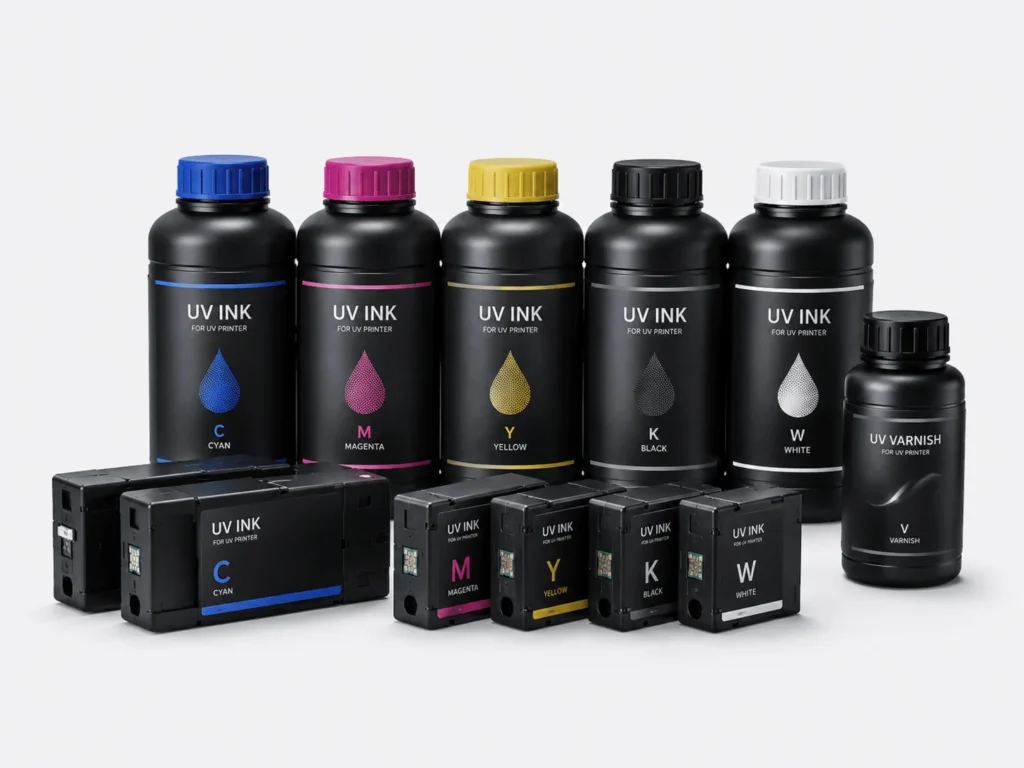
Ink affects color performance, and it also affects printhead spraying status, curing effect, and the sharpness of the final image edges. High-quality ink has stronger color reproduction ability, allowing the pattern to be closer to the original effect in the design file. Ink with stable fluidity is less likely to clog the printhead and can also reduce ink breakage and ink misting. After curing, the ink edges are clearer and the image outline is sharper, making it especially suitable for high-precision printing requirements. The better the ink adhesion is, the less likely the pattern will peel off or fade during later use, and the overall quality will be more secure. The more stable the ink quality is, the clearer the final imaging result will be, and the more it can reflect the true level of the equipment while also reducing additional costs caused by later maintenance and rework.
Working Environment Stability
The temperature, humidity, and cleanliness of the printing environment all affect the operating status of the equipment and the final product quality, especially in high-precision printing scenarios.
- Temperature changes affect ink fluidity; excessively high or low temperatures may make spraying unstable.
- High humidity affects the adsorption effect on the material surface, while low humidity may increase electrostatic interference.
- Dust entering the printhead or material surface can easily cause local ink loss, stains, or uneven images.
- A stable and clean working environment helps the equipment maintain good condition over the long term and also makes printing quality more consistent.
The better the environmental control is, the easier it is for the equipment to deliver stable and clear printing results, and the more it can help businesses maintain higher yield rates and more stable delivery performance over long-term production.
The improvement of image clarity in UV flatbed conveyor printers is not achieved by a single component alone, but by the combined coordination of printhead precision, mechanical structure, conveying system, software control, and ink and environmental conditions. Only by controlling every link properly can truly high-precision and high-fidelity industrial printing be achieved, thereby meeting the high-quality output requirements of packaging, electronics, advertising, and industrial manufacturing fields. Springyprinter focuses on the research and manufacturing of industrial UV digital printing equipment and can provide customers with professional high-definition UV printing solutions and technical support services.